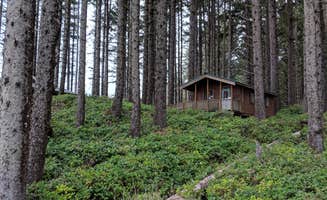
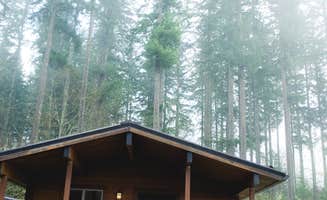
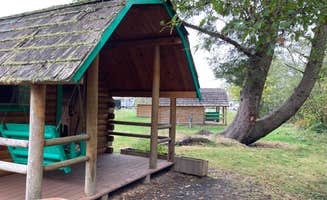
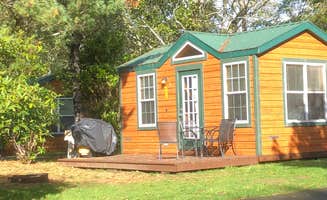
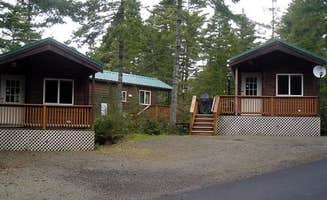
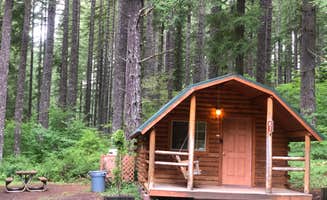
Cabin accommodations on Oregon's north coast provide year-round shelter within Tillamook State Forest's temperate climate, where winter temperatures rarely drop below 45°F and summer averages stay below 70°F. Most log structures sit within 15 miles of beach access and 30-45 minutes from the 364,000-acre forest. Several properties remain open during winter months when coastal storms bring 60-90 inches of annual rainfall to the region.
What to do
Crabbing at nearby bays: Jetty Fishery Marina & RV Park offers onsite crabbing with equipment rentals and cooking services. "We did a bit both! Staff is friendly and hard working," notes Jaime K., who enjoyed catching and eating fresh seafood during their stay.
Horseback riding on beaches: Beach trail rides operate near Nehalem Bay State Park Campground, allowing visitors to experience sand and surf on horseback. "Great dune area. Always horses riding on the beach too. Super neat experience," reports Jamie B., highlighting one of the area's unique coastal activities.
Tidepooling during low tides: Plan cabin stays around minus tides for optimal marine exploration. "The beach is only a five minute walk away," explains a Nehalem Bay camper, while Cape Lookout State Park Campground offers "steps from tidal pools means great beach combing in dry weather!" according to Vicki T.
Explore military history: Fort Stevens State Park Campground contains historical coastal defense structures spanning multiple wars. "Visiting the forts and cannons are fun," reports Gail S., who recommends bringing mosquito repellent when exploring the extensive grounds.
What campers like
Close beach access: Many cabins sit within walking distance of shore access. "Cape Lookout is beautiful, and it's just down the road from two jetties," mentions Aaron R., who combined crabbing with beach walks during his Nehalem Bay State Park Campground stay.
Indoor pool options: Some higher-end cabin properties include swimming facilities for rainy days. At Cannon Beach RV Resort, guests enjoy "a pool and spa. There's also a lodge with a game room and laundry," notes C M., making it suitable for extended stays regardless of weather.
Clean facilities: Cabin campers appreciate well-maintained bathroom buildings. "Free, very private showers! Soap in the bathrooms! Super nice and clean!" exclaims Kayla S. about Cape Lookout State Park, where recent renovations have improved comfort for overnight guests.
Paved bike paths: Several campgrounds feature smooth riding surfaces for children and casual cyclists. "Good paved loop for kids to ride bikes," reports C M. about Nehalem Bay State Park, while others mention similar amenities at Fort Stevens and Barview Jetty.
What you should know
Winter storm watching: Coastal cabins provide prime viewing during stormy months. "Cabins are safe and stormproof for great storm watching in winter/spring months," explains Vicki T. about Cape Lookout State Park Campground, making off-season visits appealing for weather enthusiasts.
Tide awareness: Beach access varies throughout the day with tidal changes. "Look up the tides tho, since there's such a short beach to the water, during high tide the beach disappears," warns Trina C. about Cape Lookout's shoreline conditions.
Varied privacy levels: Site layout significantly impacts the camping experience. "Our site was the biggest so we picked it but there was some trash in it when we got there," reports Leah R. about Paradise Cove, while at Barview Jetty County Campground, "Large campsites! At a lot of camp sites there is even room to have tents and an RV!" according to Kayla M.
Additional pet fees: Most parks charge extra for animals. "They charge a pet fee per pet, per night, I think it is a few dollars," explains Kelly P. about Barview Jetty's policy, similar to what's found at other coastal cabin providers.
Tips for camping with families
Playground considerations: Equipment quality varies between parks. At Seaside RV Resort, "the playground was rusted over and had pieces that were missing to it, the swings were broken as well," reports Erika T., suggesting families check amenities before booking.
Group facilities: Some parks offer meeting spaces for larger gatherings. "We also rented the meeting hall in C loop, and we were really impressed with the space! It had tables, chairs, a gas stove, kitchen sink, small fridge, microwave, outlets, and lots of counter space!" shares Trina C. about Cape Lookout's group accommodations.
Campground size impacts: Larger properties may require more supervision. At Fort Stevens, Jenny M. notes, "We have been there multiple times, it's one of my favorites. So much for kids to do from exploring, riding bikes, fishing and going to the amphitheater for some stories."
Marine wildlife exploration: Coastal cabin locations provide educational opportunities. "When we went the tide had gone out leaving little tide pools around. It was very nice," explains Deanna F. about experiences at Nehalem Bay State Park.
Tips from RVers
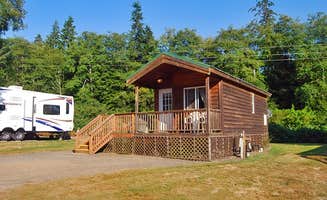
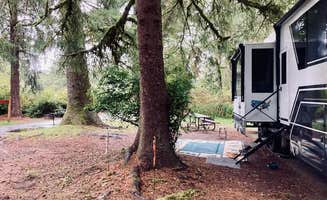
Cabin alternatives: Many parks offer both RV hookups and cabins on the same properties. "The campground is huge, probably some 400+ spaces; well cared for & clean," notes Gary M. about Fort Stevens State Park Campground, which maintains cabins alongside extensive RV facilities.
Seasonal consideration: Winter camping offers unique experiences with fewer crowds. "Right now in February it is very quiet," reports one camper about Nehalem Bay, while another mentions, "We come down here to get away from the heat, inland, area. It's usually 20-30 degrees cooler, than inland."
Utility variations: Hookup quality differs significantly between parks. At Harborview Inn and RV Park, "the power was rock solid. There is free WiFi that works great early in the day but slows to a crawl at night. ATT reception is very limited," explains a visitor, showing the importance of checking connectivity before booking.
Site positioning matters: RVers recommend specific areas within larger campgrounds. "We had a place along the wedge and it appeared to be less windy. That's totally anecdotal, though," advises C M. about Nehalem Bay's layout and wind exposure.












 Traveler


