Northern New Jersey's wooded highlands near Oak Ridge sit at elevations between 800-1,200 feet, offering cooler summer temperatures than nearby urban areas. The region features deciduous forest dominated by oak, maple, and birch trees, with numerous lakes and ponds scattered throughout the landscape. Camping areas typically offer sites on varied terrain, with some campgrounds situated on slopes requiring careful tent placement.
What to do
Hiking and trail exploration: The Stokes State Forest area connects to the Appalachian Trail system, providing extensive hiking networks for all skill levels. "There are 21 marked trails that cover over 63 miles within the boundaries of Stokes State Forest. Twelve miles are part of the Appalachian Trail," notes one visitor to Stokes State Forest. Another camper recommends, "We hiked the Tillman Ravine trail (tip: make the trail a loop and visit both the ravine and the nearby old cemetery)."
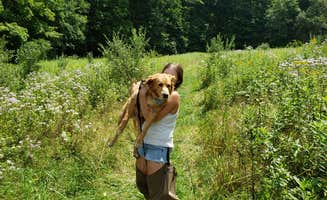
Water recreation opportunities: Many campgrounds offer lake access for swimming and boating during summer months. At Great Divide Campground, campers appreciate the "free kayaks and pool" according to one review. Another camper mentions, "We found plenty of trails to hike with our two dogs. They had live music which was actually really good!!! A reggae band."
Historical exploration: High Point State Park features the High Point Monument marking New Jersey's highest elevation. A camper notes: "The view from the lighthouse is worth it," when describing their visit to High Point State Park Campground. The park offers educational displays about the region's natural and cultural history.
What campers like
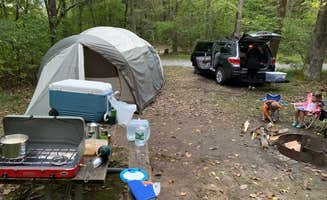
Secluded camping spots: Many area campgrounds offer private sites despite being at capacity. At Stokes State Forest, campers appreciate that "The Steam Mill Camping Area is tucked out the of the way and is the most primitive. It is the smallest of the campgrounds with 27 sites only suitable for tents or small trailers/campervans." Another notes, "Each large campsite has a picnic table, fire pit, and lantern hook. Some sites also have a tent platform."
Accessibility to nature: Several campgrounds offer direct trail access from campsites. At Swartswood State Park Campground, "There are several trail hikes that you can do from the campsite. The longest is 3 miles but you can connect between each trail to make a longer hike." The park also offers "picnic spots right on the lake if you want to spend the afternoon at the lake."
Budget-friendly options: Compared to private campgrounds, state parks provide affordable camping. At Beaver Pond Campground, "The campground was clean and quiet. RV hook-ups, tent platforms, and rustic tent sites were available. Our rustic tent site had a few good options for pitching a tent, as well as picnic table and fire ring." Another camper notes it's "about 30 minutes from sleepy hollow and tarrytown NY and only an hour to central park!!"
What you should know
Bear activity: This region has active black bear populations requiring proper food storage. At Stokes State Forest, campers are reminded: "Remember, this is bear country so proper food storage is a must. Bear lockers are not provided. The area also has ticks and rattlesnakes."
Variable bathroom facilities: Campground bathrooms range from primitive to modern. A camper at High Point State Park Campground mentioned: "Bathrooms are spaced out. No running water except for pump founded outside of the bathrooms. Toilets are pump flushed. Showers are only located INSIDE High Point State Park, not throughout the campsites."
Limited cell service: Many campsites have poor or non-existent coverage. One camper noted at Wawayanda State Park Campground: "No phone service at campsite, but could get phone service by the kayak hut or the main entrance." This limited connectivity affects emergency communications and navigation.
Tips for camping with families
Look for organized activities: Some campgrounds schedule family-oriented events. At Pleasant Acres Farm RV Resort, "There were some organized activities which was nice, not as much as a Jellystone Park." Another camper notes, "Playground, hayride, animals to feed (goats, chickens, donkey and pony)."
Choose sites near playgrounds: Many campgrounds have designated play areas for children. At Swartswood State Park Campground, families benefit from "a nice lake, with seating every so often and a boat dock ramp thing in the campground. There was also a playground, beach, pavilion, and picnic tables."
Select camping loops with bathroom proximity: For families with young children, bathroom access is crucial. At High Point State Park, "Camping for summer is pretty limited to Sawmill Lake, as the other locations are for groups or winter camping. Camps are secluded from each other and most if not all have an elevated space to put tents or chairs."
Tips from RVers
Check site levelness: Many campgrounds in this mountainous region have sloped sites. At Panther Lake Camping Resort, "We stayed in the center lawn and it was lined with seasonal campers. If you can score a secluded spot in the woods that would be perfect but anywhere else can be a bummer."
Water hookup logistics: Prepare for varied water access at campgrounds. At Mahlon Dickerson Reservation, "Website lists water hook ups at long distances but they have hose reels to help with that. Our site (15) said 75' however the 50' hose reel made it to our rv connection."
Consider seasonal traffic patterns: Many campgrounds experience significant crowds during peak season. In off-season times, campers enjoy much quieter experiences. At Beaver Pond Campground, "Ranger said that during summer weekends the grounds fill up and can be quite noisy, but mid-week during the off-season it was great."



 Legend


