Tent camping near Calhoun, Missouri centers around several conservation areas and public access points within the region. The area sits at approximately 850 feet above sea level in west-central Missouri, where the Osage Plains transition to the Ozark Highlands. Summer camping conditions regularly reach 90°F with high humidity, while spring brings seasonal flooding that can impact lower-lying campgrounds.
What to do
River fishing access: Fiery Fork Conservation Area provides direct access to the Niangua River. "The river access is really amazing. It's a great place to launch a boat from or just to wade in a bit and fish. Fly fishing can be done easily from the bank or just by wading in a bit," notes Amanda from Fiery Fork Conservation Area.
Family beach play: The shoreline at Fiery Fork offers natural beach areas for children. Amanda reports, "We decided it would be a nice place to bring our kids since there is quite a bit of 'beach' at the river access for them to play and see nature."
Wildlife observation: Multiple conservation areas provide opportunities for wildlife spotting. According to Amanda, "We were able to see some wildlife while staying there as well. Armadillos, deer, and a few different bird types could be found easily."
What campers like
Privacy and spacing: The campground layout at Fiery Fork allows for personal space. Shannon M. mentions, "Nice area to camp not crowded, plenty of space between camp sites, and peaceful. A nice place if your on a budget and just need a get away."
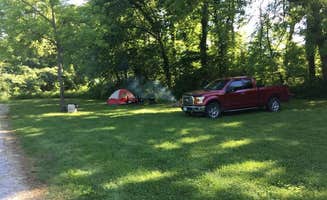
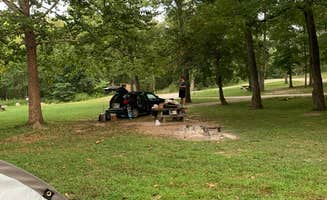
Natural hammocking spots: Fiery Fork Conservation Area offers ideal tree configurations for hammock campers. Whitney L. confirms, "The area was mowed, had a rock fire place, concrete picnic tables, a vault toilet, shade, grass for dogs to play frisbee, parking right beside your spot, trails, access to the river, good hammock trees, flat-level surface!"
Maintained facilities: Despite being primitive, many sites receive regular maintenance. Jenny D. describes Fiery Fork as having "two camp areas with many sites that are mowed/maintained with fire pits (and some concrete tables)."
Convenient amenities: The bathrooms at Farrington City Park are well-maintained. Mike G. from Farrington City Park reports, "The shower and bathroom facilities were basic, but more than adequate. There is a sizable pavilion near the campground."
What you should know
Road conditions: Access to some campsites requires navigating unpaved roads that may be challenging for certain vehicles. Chrischelle N. advises, "I recommend smaller RVs due to the 2 miles of gravel and high water areas you go through to get there."
Cell service limitations: Connectivity is minimal or non-existent at most conservation area campsites. Erick H. from Fiery Fork Conservation Area warns, "Be prepared to have no cell signal. Had to drive a couple of miles for a signal. That is with Spectrum, I believe they use Verizon."
Seasonal crowding: Camper density varies dramatically by season. Nick G. shares, "I stayed here for a few days in April. There were a few campers, but I'd be very surprised if this place isn't loud and packed in the summer."
Trail maintenance issues: Some trails may be overgrown during peak growing seasons. Chrischelle N. cautions, "The road nearest the first camp site leads to the River Glade trailhead. I don't recommend taking it until it gets some maintenance. It is overgrown and HIGH tick contact probability."
Tips for camping with families
Wildlife education opportunities: Bledsoe Ferry offers family-friendly camping with wildlife viewing. Sarra W. simply states it's "What a great place for the family. Awesome."
River wading spots: Identify safe, shallow areas for children to explore aquatic environments. Amanda notes, "We decided it would be a nice place to bring our kids since there is quite a bit of 'beach' at the river access for them to play and see nature."
Pack extra trash bags: Many sites lack waste disposal facilities, requiring self-management. Wally B. advises, "Much of the area was covered in trash. Bring extra trash bags!"
Monitor weather forecasts: Seasonal flooding can affect access roads and campsites. Jenny D. warns, "If the waters too high, there's a bridge into the site that could be flooded so watch the weather."
Tips from RVers
Size restrictions: Larger rigs face challenges on narrow, unpaved access roads. Chrischelle N. from Fiery Fork Conservation Area advises, "I recommend smaller RVs due to the 2 miles of gravel and high water areas you go through to get there."
Generator considerations: Noise travels in open camping areas. Whitney L. mentions, "We camped at Firey Fork in the autumn of 2021. It was during deer hunting season and we only had one neighbor that looked to be there for quite a while hunting. We could see them with our eyeballs but they were perfect neighbors and we didn't hear a peep other than their generator for a bit."
Vehicle clearance requirements: Low-clearance vehicles may struggle on conservation area access roads. Ry M. shares, "The road down was very sketchy for my 2008 Mazda 3. It's a very simple campground but in a great location near the ozarks."



 Scout
Scout


