Seasonal camping at Sleeping Bear Dunes requires understanding the varied terrain within the 71,000-acre national lakeshore. The region transitions from dense maple-beech forests to dune ecosystems with 450-foot sand formations. Temperatures often drop 20+ degrees between daytime and nighttime, creating unique camping microclimates depending on proximity to Lake Michigan, tree cover, and elevation.
What to do
Kayaking and tubing: Platte River Campground offers prime access for water activities. "We do a lot of camping all throughout Michigan... We camp on full moon nights and hit the river for night kayaking," reports Nikki M. Another visitor shares, "Easy access to Platte River - kayaked the North branch, which was winding and fast moving. Go when they release the salmon from the hatchery - you feel all the salmon brush against your kayak as they swim upstream!"
Lighthouse exploration: Weather Station Campground on South Manitou Island provides access to historic maritime structures. A visitor explains, "The island has a Light house that has daily tours, a ship wreck and old growth ceder trees you can hike to along with the dunes." Daily tours run throughout the summer season.
Bike trail access: The recently expanded trail network connects multiple camping areas. According to a visitor at Betsie River Campsite, "There is a paved trail that runs by the campground, and it's less than a 3 mile walk/bike ride to downtown Frankfort and the lakeshore, which has a ton of things to do." Trail maps are available at most campground offices.
What campers like
Off-season experiences: Fall camping offers unique advantages at D.H. Day Campground. As Doug P. describes, "Went there in late October of 2022 and man was it a cold night to stay in a tent. We got there late, put tents up in the dark, ate dinner late from a local watering hole. But once we got situated, we went to the beach to skywatch and it was beautiful and worth every second."
Privacy among sites: Empire Township Campground offers more secluded options. "We stayed at site 20 which was large, and super spacious. There was our own private trail to the vaulted toilets which were always clean, stocked with T.P. And had a clean trash bag in place. Site 20 was very secluded," notes Justyna E.
Water access points: Many visitors appreciate the varied water access. A camper at Leelanau Pines shares, "We stayed in Site #50 and could carry our kayaks across a small grassy field to put in at the edge of the lake. All the sites were full hookup." Most waterfront sites fill 3-5 months in advance during peak season.
What you should know
Wildlife awareness: Bear activity varies across campgrounds. One camper at Platte River Campground notes, "Was told a black bear visits the campgrounds at least once a week, but is not much a nuisance as long as campers store their food in the car." Bear activity increases in late summer and fall when berries ripen.
Island logistics: South Manitou Island Group camping requires careful planning. A visitor cautions, "I'd also recommend bringing more food than you think you need, in case the weather turns and the ferry can't pick you up on the day planned." Ferries run daily from May-October, weather permitting.
Varied shower facilities: Bathroom and shower amenities differ significantly between campgrounds. At Empire Township Campground, "Showers are .50¢ for three minutes and water was hot." Several campgrounds require coins for showers while others include them in camping fees.
Tips for camping with families
Educational programs: The D.H. Day Campground offers ranger-led activities. Jeffrey R. notes, "The amphitheater with kid focused programs was a great bonus." Programs typically run Wednesday through Sunday evenings during summer months and require no registration.
Swimming safety: Interlochen State Park campers should be aware of potential water conditions. One camper warns, "The sites are not real big, and all dirt. Not quiet time inforced. And swimmers itch in the lake." Swimming areas with lifeguards can be found at several Lake Michigan beaches within 15-30 minutes of most campgrounds.
Playground access: Play facilities vary widely between locations. A visitor to Interlochen State Park observed, "The playgrounds have gotten a little worse/non-existent as time has gone on. The campsites are HUGE and you can have lots of space and privacy." Families should consider bringing additional recreational equipment.
Tips from RVers
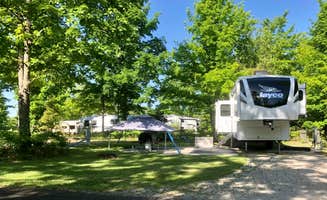
Site selection challenges: At Indigo Bluffs RV Park, proximity affects experience. "The spaces are tight unless you get into the back rows set back sites. This is a terrific way to solve the tight spacing. The staff is great. The bathrooms are clean and the pool is decent. Lots of trees," advises Jeff G.
Hookup differences: Power options vary between campgrounds. At Traverse City State Park, "Basic state park facilities, with a fire ring and picnic table combo at every site, as well as electric. There are three loops with a bathhouse centrally located in each loop." Most campgrounds offer 30-amp service, but 50-amp availability is limited.
Vehicle placement rules: Enforcement of parking regulations varies. At Platte River Campground, one camper received "a warning because his truck tire was two inches on the 'vegetation', which was really the gravel next to the paved pad." Rangers regularly patrol all National Lakeshore campgrounds to enforce regulations.














 Guide
Guide


