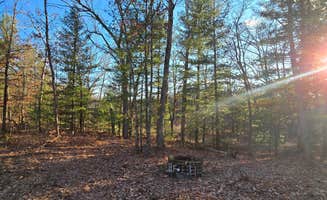
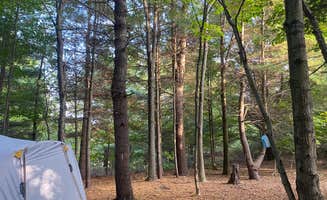
Dispersed camping spots in Huron-Manistee National Forests offer backcountry experiences across 978,906 acres of public land spanning Michigan's Lower Peninsula. Most rustic sites sit on sandy soil with mixed hardwood and pine forest cover, resulting in firm ground that drains well after rain. Trail access varies seasonally with spring thaws creating muddy conditions on unpaved forest roads.
What to do
Hiking the Manistee River Trail loop: A 23-mile circuit combining the Manistee River Trail and North Country Trail offers multiple dispersed camping opportunities. "I've hiked and kayaked this trail on a few occasions and I can confidently say this is one of my favorite trails in all of Michigan. You have the option to do the loop, they allow dispersed camping, and there is plenty to see and do. Waterfalls, river bends, wildlife, this trail has it all," reports Colin E. from Manistee River Trail Dispersed Camping.
Fishing at smaller lakes: The forest contains numerous fishing spots away from more crowded areas. "Amazing fishing and spacious campsites fire away from everybody. Fires were allowed ample firewood available for processing multiple lakes great hiking. Literally, some of the best fishing I have ever done. We caught so many bass we lost count," notes Dan K. about Sand Lakes Quiet Area Backcountry Campsites.
Beach access at Lake Michigan: Several rustic camping areas provide access to Lake Michigan's shoreline. "We loved being a short drive away from Lake Michigan and plenty of hiking trails," reports Kimberly S. from her stay at Nordhouse Dunes Wilderness. Forest Service roads lead to less-trafficked beach access points where camping is permitted in designated areas.
What campers like
Privacy between sites: Rustic camping near Huron-Manistee National Forests offers separation between campers. "These dispersed sites in the national forest are fantastic! Level for tents. Spread out enough that you aren't on top of neighbors. We couldn't see anyone from our site," writes Evelyn K. about Green Road Dispersed - Manistee NF.
Waterfront camping options: Many campers prefer sites near rivers or lakes. "Sites along the bluffs tended to be farther from a water source, but never too far. No matter where you end up setting up camp, you're in for a beautiful and gentle hike," shares Shelagh R. about the Manistee River Trail area. These waterfront spots fill quickly during summer weekends.
Off-season availability: Visiting during shoulder seasons provides better site selection. "You can reserve in the summer, but during offseason it is free/first come first serve. Scenic spot right on the pond/dam backwaters. Very spacious and spread out sites," explains Kevin D. about Government Landing Campground.
What you should know
Road conditions vary significantly: Forest roads range from well-maintained to challenging. "Roads are great until you get to the road to camp. There are very large holes and dips, thankfully we found a spot right away before we got in far," cautions Bobbi Jo K. about Nordhouse Dunes Wilderness - Green Road. Higher-clearance vehicles perform better on many access roads.
Cell service is unpredictable: Coverage varies across the forest. "We had our car parked right up next to our site. We explored a bit walking around on the foot traffic trails, which is beautifully wooded and shaded," mentions Alyssa A. about Sand Lakes Quiet Area. Service tends to be stronger at higher elevations and near larger towns.
Some sites require permits: Regulations differ across forest sections. "There are signs on the sites saying permit required, but no info for that purpose. No one else had them so I stayed. May be ramping up to making it a paid site," reports Ileene R. about Sawkaw Lake. Contact ranger districts before arrival to confirm current requirements.
Tips for camping with families
Choose sites with swimming access: Several areas offer kid-friendly water activities. "The pond was warm/comfortable swimming temp even on a cold day but was full of seaweed which made swimming difficult/not enjoyable," notes Kevin D. about Government Landing. Areas with gradual shorelines work better for children than steep riverbanks.
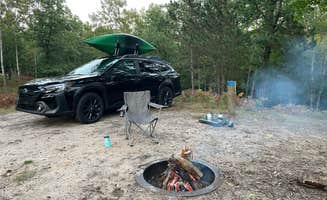
Look for established spots: Pre-existing clearings and fire rings make setup easier. "The campsite was very large with lots of spots to camp. Trails and a sizeable lake made it even better. Great location and only about 15 minutes from Sleeping Bear dunes," says Mike W. about Lime Lake.
Avoid hunting seasons with children: Be aware of seasonal hunting activity. "We went in mid September only stayed in this spot for a night. We took the 3rd open space i think. It was close to others but not too close. It is definitely around hunting land so wear bright colors if going during season," advises Jade M.
Tips from RVers
Smaller trailers work best: Full-size RVs struggle on forest roads. "Had a 19 foot trailer with high clearance (only trailer brave enough to camp here!). Very peaceful off the grid camping. Even had cell service," shares Bobbi Jo K. about Nordhouse Dunes. Trailers under 20 feet with good clearance navigate forest roads more successfully.
Back-in practice helps: Limited turn-around space challenges larger vehicles. "This was a very difficult site to turn around in with a trailer, would not advise anyone to bring a trailer down unless they are very confident," warns Brittany D. about Government Landing.
Scout sites before committing: Road conditions deteriorate further from main routes. "There are actually quite a few that are harder to find or even get a vehicle to without 4WD, but most of it is easily accessible in a 2WD vehicle," explains Andrew G., adding that free dispersed camping comes with tradeoffs.










 Guide
Guide


