Primitive campsites near Lake Panasoffkee offer dry, sandy terrain that rises only about 40-50 feet above sea level, creating a subtropical camping environment with mild winters and humid summers. The region's mix of wetlands and pine flatwoods supports diverse wildlife viewing opportunities, with temperatures ranging from 45-70°F in winter and 75-95°F during summer months. Most campgrounds in this area sit on flat ground with minimal elevation changes, making them accessible for all types of camping setups.
What to do
Paddling opportunities: Launch directly from Flying Eagle Preserve where the Withlacoochee River system offers miles of paddling routes. "You can paddle far down and ride back. And have a lunch at the campsite afterwards. Perfect area for this," notes Tracy from Crooked River Campground. Consider bringing your own kayak as rentals are limited in the area.
Trail exploration: Crooked River Campground features multiple hiking options including a nature trail and boardwalk. "Connects to hiking trails in the Croom Tract. Also near many other Forest camp areas, trails, and launch sites. So many options available for nature fun," reports Tracy H. The trail system ranges from short 2-mile loops to longer 7+ mile routes.
Fishing spots: Multiple access points along the Withlacoochee River offer bank fishing or boat access. "We loved exploring the trail and then letting the kids play in the water while we tried to catch some bass," shares Danae N. Early mornings provide better catches when water temperatures are cooler, especially during summer months.
What campers like
Secluded sites: Lake Panasoffkee primitive area features both open and shaded camping options. "There's also more shaded camp spots towards the back which is where I ended up. Beautiful trees for shade but room to get some solar too," writes Abby M. The campground has distinct areas for equestrian campers in open fields versus wooded sites for those seeking shade.
Wildlife viewing: Morning and evening hours offer the best wildlife spotting opportunities. "Get up early in the morning and take walk and you are sure to see some deer," recommends Lynn S. from Hog Island Campground. Many campers report seeing armadillos, rabbits, and various bird species throughout the camping areas.
Clean facilities: Most campgrounds maintain basic but functional restrooms. "The bathrooms are maintained daily by an on-site host who ensures facilities remain clean for all visitors," states one review. At Crooked River Campground, visitors appreciate that "Got to say it was nice to have a clean bath house with showers!"
What you should know
Road conditions: Access to some campgrounds requires navigation on unpaved roads. At River Junction Campground, "The road in called SW 113 ST was hardcore off road muddy driving... Potholes all the way to the site." Plan accordingly with appropriate vehicles, especially after rain.
Reservation systems: Several campgrounds require advance booking while others offer walk-up sites. "Site 1 is that way and you could paddle into it. 14 and 16 can be reserved and also paddled into," explains Ranae C. about River Junction Campground. For Lake Panasoffkee, "You need a permit, but it's free," notes Ethan B.
Seasonal considerations: Summer camping means dealing with Florida heat and insects. "Mosquitoes but that is Florida camping bring bug spray and keep the fire going helps," advises Tianay F. Winter months (November-February) offer the most comfortable camping conditions with temperatures between 45-70°F.
Tips for camping with families
Water play options: Kids enjoy cooling off in the river at several campgrounds. At Holder Mine Campground, "The kids really loved cooling off in the river and catching frogs, they all agree that this was there favorite part," shares Danae N. The shallow areas near designated campsites provide safer play spots.
Site selection: Choose sites based on proximity to facilities when camping with children. "We had site 74 and really enjoyed it. It was huge and secluded! Our kids were able to run around and be noisy and we weren't worried about annoying our neighbors," reports a family camping at Crooked River Campground. Corner sites often provide more buffer space.
Nearby conveniences: Most needed supplies are available within a short drive. "Right in between two towns so can easily get groceries or gas with a 15 minute drive," explains Abby M. Plan for basic provisions as camp stores are limited in the area.
Tips from RVers
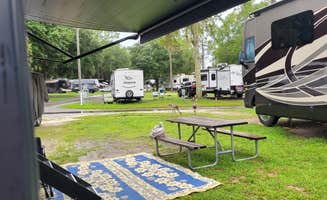
Site dimensions: Thousand Trails Three Flags offers spacious sites for larger rigs. "Sites were huge!! Semi shaded with picnic tables and great full hookups. Nice roads to walk your dog," notes Charles F. Most sites can accommodate RVs up to 40 feet, though corner turns within some campgrounds may be tight.
Hookup options: Electric and water connections vary by campground. "The campground has large sites. They are for RVs/Tents so if you have both and a pop up, everything will fit!" writes Malaney H. about Cypress Glen Campground. Note that some sites may be on slopes, affecting leveling needs.
RV-friendly amenities: Dump stations are available at select locations. "Nice new dump sites," reports Steve N. about Cypress Glen Campground. Many campgrounds offer 30/50 amp service, though amp availability should be confirmed before arrival as not all sites provide both options.











 Traveler


