


Elsie R. Guide
Guide
GuideHenry Flats Dispersed Spot
Henry’s Acess
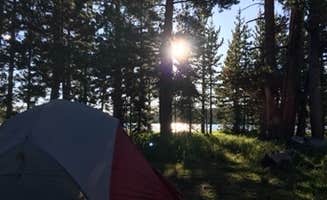
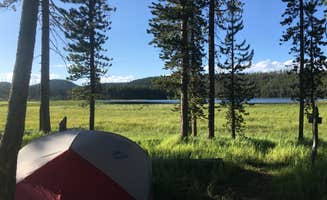
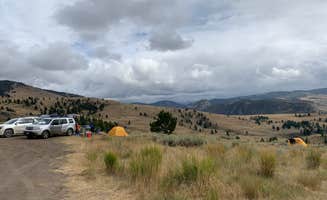
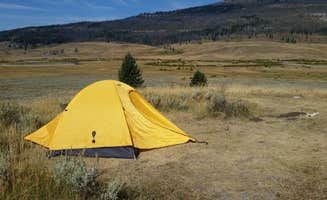
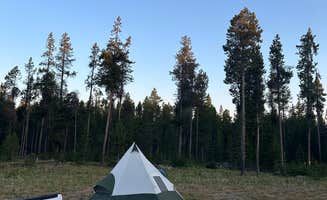
Make sure you use Henry’s access road. The one Google Maps takes you on before is private property. There’s around 14 designated spots, flat, new deep blm firepits.
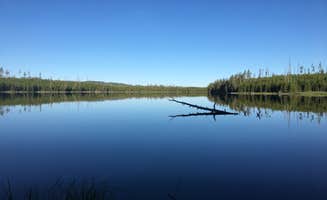
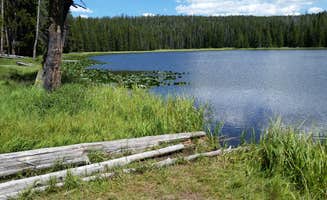
The backcountry around Yellowstone National Park works well for dispersed camping if you're prepared to handle completely undeveloped sites. You can stay at locations like the 4G2 Yellowstone National Park Backcountry area for just $3 per night, or try the 4D2 site near Ice Lake if you want a primitive camping experience. Following Leave No Trace practices is absolutely necessary when using these areas. Campers need to know the rules about camping distances from water and roads before setting up. Since bears are common throughout the region, proper food storage isn't optional - it's essential for safety. Many of the access roads to these dispersed sites get rough, requiring vehicles with good clearance, especially after rain. The nearest town with supplies sits about 30-45 minutes away from most sites, and you'll need to bring everything with you - water, food, toilet supplies - since nothing is provided at these backcountry locations.
Compare 2 top campgrounds at a time to find your favorite!


Round 1 of 5
"No amenities, so pack in everything you need and leave no trace. Would 100% come back for the views alone. One of the best dispersed sites I’ve stayed at."
"Nice quiet spot a little bit off the beaten path, but not too far from Yellowstone National Park."
$3 / night
"We hiked in from the Cascade Creek trailhead and stayed here on our first night of five in the backcountry. A fairly gentle 5mi in with buffalo sightings along the way."
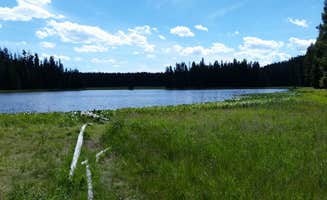
"Gorgeous lake with a incredible sunset and sunrise. Lots of wildlife sounds"
$3 - $15 / night
"Back Country campsite 4D2 - Ice Lake East is a large flat camping area on the east shore of Ice Lake. "
"If you’re doing backcountry in the canyon, this site is a must. It was our third night entering from Cascade Creek, but you could also enter at Ice Lake for a much shorter hike."
"This Forest Service road provides tons of neat pull offs and campsites! The view up the road is DROP DEAD GORGEOUS... you can see Mammoth Hot Springs in the distance!"
"We arrived to the Yellowstone area in the evening, and since we had been traveling around the U.S. for almost a year, we were well-versed in finding alternative camping options near national parks."
$3 / night
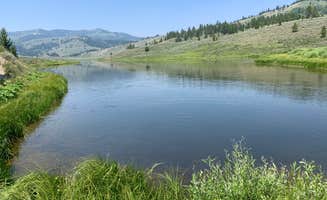
"Peaceful spot posited near the lake and lily pads with proximity to beautiful meadows. Come with plenty of deet as the mosquitos are voracious!"
$3 - $15 / night
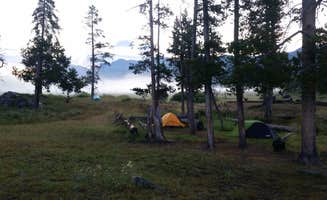
"Yellowstone NP back country campsite 4R1 is a nicely shaded wooded campsite located close to Ribbon Lake's lake shore which makes for easy water access."
"Sleep on Ribbon lake. Fire ring and bear hangers there. Very secluded."
$3 - $15 / night
"Yellowstone NP back country campsite 4R2 is a campsite located on the north shore of Ribbon Lake set among a lodge pole pine forest. The proximity of the lake makes for easy water access."
"Bring your bug spray because the mosquitoes are terrible. This site is at the head of the trail so you won’t get all the passerby’s. Permit IS required to stay at this site"
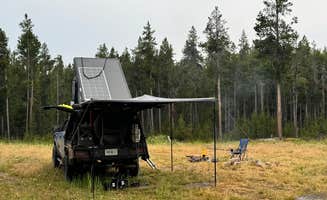
"Perfect pull outs off Travertine up Trail Creek/FS 1701 just 7-10 minutes out of Gardine. We ended up at the very end of the road where it loops back on itself in our truck camper."
"Road should be accessible with a good clearance suv. No one around."
$3 - $15 / night
"Back Country campsite 4D1 - Ice Lake North is a small campsite right on the norther shore of Ice Lake. Plenty of flat clear ground for setting up tents right on the shore. "
"The trail is hard to follow in some areas. Starts out flat then you go up Mary Mountain where the cabin is located. The Mary mountain cabin is small but has enough bedding for up to 5 or 6 people."




 Guide
GuideMake sure you use Henry’s access road. The one Google Maps takes you on before is private property. There’s around 14 designated spots, flat, new deep blm firepits.


 Traveler
Right between Grand Teton and Yellowstone National Parks. You don't have to share this spot with anyone. It comes with a bear box to store your food, a bear proof trash can, picnic table, metal fire ring, and last but not least, your own private pit toilet. Tons of space also.
 Guide
GuideNice quiet spot a little bit off the beaten path, but not too far from Yellowstone National Park.
 Scout
ScoutAbsolutely stunning spot. The mountain views from camp were unreal — especially at sunrise. Super peaceful, with minimal noise. No amenities, so pack in everything you need and leave no trace. Would 100% come back for the views alone. One of the best dispersed sites I’ve stayed at.
 Legend
Camp among wide meadows, lush forests, towering peaks and wildlife
Yellowstone National Park's back-country site 2S1 is definitely the most amazing back-country site our Venturing Crew has backpacked to this summer, and we have been to quiet a few. Back-country site 2S1 is located along Slough Creek in a beautiful valley where Sandhill Cranes calls fill the valley in the evening and early morning. It is a 4.3 mile hike along the Slough Creek Trail to the spur trail for site 2S1, then a.6 mile hike to the campsite. Being.6 miles from the trail would usually mean solitude, but this site appears to be a popular fishing location as well as their was always someone fishing in the area. But don't worry, the campsite is fairly hidden from the creek and those fishing were very considerate. The campsite has numerous flat locations to pitch a tent. Their is a pole suspended between two trees for handing your food, but you don't need to use it as a bear proof locker has been placed at the site. A rock fire ring is available for fires and has large logs on two sides to sit on. Plenty of firewood is available in the form of large trees that are scattered on the ground through out the area, just find one of the older ones that are rotting and pull them apart and in a few minutes you have a nice pile of wood that will start easy. You don't need much wood at any one time on the fire to have a nice hot fire as this dry rotted wood really burns hot. If you are planning on having a fire be sure to bring a container to bring water from the creek to put it out with, as you are at least 50 yards from the creek. The view is amazing from camp, a wondering creek going though a wide valley with steep mountains on each side. In the evening we were treated to the alpine glow on the mountain tops for a good 15 minutes. Do you want to see wildlife, well we say plenty on this backpack trip. Hundreds of bison on the drive to the trail head, watched a black bear munching on various vegetation 100 feet from the trail, a young fox walked right by us on the trail, squirrels, chipmunks, a badger, sandhill cranes and other song birds as well. To get to back-country site 2S1 start at Slough Creek Trail head(2K5) and hike the 4.3 miles to the spur trail to the campsite. You will have one hard climb right of the bat, the first.7 miles is a steep climb, after that it is a easy hike. A warning, don't be shocked when you see lots of tourist heading out on the trail completely unprepared. We are talking about hiking in flip flops, no water, no bear spray, and this on a steep trail to start where we spotted the bear along the trail edge.8 miles in.
Ranger review of the Morsel Spork XL
We have been using the Morsel XL spork with out Scouts on several backpacking trips this summer and the unanimous opinion is a big thumbs up. We have used our Morsels with MRE's, and they truly out perform compared to the plastic spoon those meals provide. With backpacking dehydrated meals we are able to get out every little bit out of the corners of the bag without getting our hands messy. Bowls, cups, and plates, no problem getting to all the food, which makes clean-up after a meal easier. The variety of colors is helpful as well, as we can give each scout a different color so no one confuses their Morsel with anyone else, and we can quickly figure out who dropped theirs or left it laying around. The Morsel Spork XL is now our go to utensil for our backpacking adventures.
 Guide
GuideThis is an excellent spot. Unfortunately, sites are limited, but you have access to bathrooms and bear-proof dumpsters at all the camps! Vehicles longer than 20ft might have a hard time getting down the road and into camps; just take it slow, be aware, and know your limits.
Road Quality
Good. The gravel road has minor potholes and rippling; just about any clearance vehicle can get down the road. It's a single-lane road with tight turns; there are some pull-off points where you can let folks pass you. Just take it slow, as the vegetation can get thick, and it can get harder to see what's ahead of you and if someone is coming.
Site Quality
Excellent. This location has camps, and in those camps are sites where you camp. Camps are marked with a sign and will also tell you the number of sites in that camp, which, from what I have seen, can have one to four sites per camp. Camps with multiple sites will have folks camping next to one another. There’s a good distance between camps. Single-site camps are relatively private. Sites are level for the most part; bathrooms, bear-proof dumpsters, and fire rings are provided at all sites. There are designated parking spots at the sites. The site's roads are gravel and in good condition.
View Quality
Excellent. Views of the mountains, a river nearby, sunrises, and sunsets are beautiful; the night sky is incredible on a clear night.
Noise Quality
Excellent. It’s quiet, just the sound of the wind blowing through the trees and birds chirping. Neighbors have been respectful and quiet.
Internet Quality
Average. Two to three bars on LTE.
 Guide
GuideWe were driving into Yellowstone from Billings and wanted something that would give us early access to the park. This was perfect. A nice pull off with several options to park a van, tent, or small trailer or RV. We fell asleep to the sound of the river and were into the park within 20 minutes the next morning. We were able see moose and a bear because of the early access to Lamar Valley. Wish we could have seen the surrounding area in the daylight but we got in late and were out early. From what we saw we highly recommend it!! It is dispersed Forest Service camping so you will need to have all of your own supplies and be sure to leave no trace (including your poop)
TravelerNice with wonderful pine trees but getting up the rutted road needs high clearance. If you are towing a trailer it also needs high clearance. Right next to the road but no traffic probably due to rough road.
ScoutPerfect dispersed camping. Note it is a windy dirt road, so a pickup or camper van can make it, but don't try a Class A or Class C RV. Our 20 footer made it fine. Also wouldn't want to drive it if rain forecasted as I bet the dirt turns to impassible mud real fast.
The spots themselves are wonderful, some very open, some tucked away along the rocks, all very spread out from each other. Super quiet. I can't believe how quiet it was.
If you want to feel like you are camping on a mountain in the middle of no where, this is it.
Dispersed camping around Yellowstone National Park provides rustic, unimproved sites where campers must be self-sufficient with all supplies. Most backcountry areas require permits costing $3 per night and are accessible via hiking trails ranging from 1-5 miles in length. The terrain includes pine forests, meadows, and lakeshores at elevations between 6,000-8,000 feet where summer nights often drop below 40°F.
Fishing at remote lakes: Ribbon Lake backcountry site offers exceptional fishing opportunities. "Cutthroat trout literally jump out of the water at the lake and we found a nice spot for our tent down by the water within easy walking distance to the fire pit and bear hang," notes Rachel A. about 4G2 Yellowstone National Park Backcountry.
Wildlife viewing from dispersed sites: From certain sites, you can spot diverse wildlife without entering the park. "We made our trip a loop hike, starting at Wapiti Lake Trail Head. This loop will take you through about every ecosystem in the park, from open grass fields, pine forest, lakes, wetlands, and thermal features," reports Dexter I. about 4R2 Yellowstone National Park Backcountry.
Stargazing from mountain viewpoints: Elevated dispersed sites provide exceptional night sky viewing. "We found a perfect overlook where we pitched our tent and watched the most gorgeous sunset. The best part? No people around for miles and miles," explains a camper at Custer-Gallatin Forest dispersed sites.
Quick access to northern park entrance: Dispersed sites near Gardiner provide convenient park access. "Great free camping pullout. You have to drive about 3 miles from town on the gravel road as camping along road before that is not allowed. Signs act as a reminder," notes Caroline E. about Little Trail Creek Road.
Isolation from crowds: Many prefer backcountry sites for solitude. "Camping area is just a few feet past the sign. For your return trip take the Clear Lake-Ribbon Lake trail all the way back to Wapiti Lake Trail head," details Dexter I. about 4R2 Backcountry Campsite.
Mountain panoramas: The elevated sites outside park boundaries offer expansive views. "One of the most beautiful places I've stayed! The sites are straight up from Gardiner on your usual rocky, washboard road. There were quite a few spots and it wasn't busy at all," shares Sharon H. about Travertine Road Dispersed.
Vehicle requirements for access roads: Some dispersed sites require appropriate vehicles. "Great but difficult to access. The dirt road you have to drive on to access it is super bumpy due to many potholes and large rocks. This is likely no problem for a truck or SUV but my sedan had a difficult time," explains Jeremiah L. about Travertine Road.
Campsite availability timing: Arrive early to secure prime spots. "Stayed overnight while exploring Yellowstone, it appeared to filled up overnight but we arrived at 5ish and all spots were open," reports Joseph K. about Travertine Road Dispersed.
Temperature fluctuations: Be prepared for extreme temperature changes. "It was absolutely freezing though, the inside of the truck bed had frost in the morning (22°!)," warns Ellie M. from Custer-Gallatin National Forest dispersed camping.
Beginner-friendly backcountry options: Some backcountry sites work well for families new to primitive camping. "Back Country campsite 4D2 - Ice Lake East is a large flat camping area on the east shore of Ice Lake. Only 1.5 miles from the Ice Lake trailhead makes this a great campsite for those just getting in to backpacking," explains Dexter I. about 4D2 Yellowstone National Park Backcountry.
Insect protection essential: Multiple reviews mention mosquito problems. "Make sure to bring lots of deet spray, your water filtration system and your fly fishing gear!" advises Rachel A. about Grebe Lake.
Limited shade at some sites: Plan for sun exposure with proper gear. "No trees so it gets pretty hot without shade. There are random animal bones scattered around the sites from what I assume previous hunting trips, which is a bit eerie," warns Viet N. about Little Trail Creek Road sites.
Length limitations on forest service roads: Most dispersed sites cannot accommodate large RVs. "I would say about two people could camp there. As always, PLEASE clean up after yourselves. I always find too much trash at campsites, like I did at this one," notes Bruce S. about Custer-Gallatin National Forest.
Safe pullouts for smaller vehicles: Some areas have designated pullouts for smaller campers. "Several roadside sites along this road that branches off Travertine Rd. A few sites are large enough for multiple tents/vans. We snagged the last site available the night we stayed, first site on left as you drive in. It is small but worked for our Sprinter," shares Don&Becca W. about Little Trail Creek Road.
Alternative access points: Finding less-traveled roads can lead to better sites. "Just passed the Eagle Creek Campground on Jardine Road. Take a left and drive in 3 miles on National Forest Road to areas where camping is allowed. There are mile marker signs," explains Aaron A. about dispersed camping options.
Frequently Asked Questions
What is the difference between BLM camping and dispersed camping near Yellowstone?
BLM camping near Yellowstone refers specifically to dispersed camping on Bureau of Land Management property, while general dispersed camping can occur on various public lands including National Forests. Little Sunlight Camping Area exemplifies Forest Service dispersed camping with rough sites but spectacular Wyoming views. In contrast, BLM lands typically have fewer restrictions on stay duration (often 14 days) and may allow camping in more places. Ashton-Flagg Ranch Road represents a typical dispersed area. Both types generally lack amenities like running water or toilets, though some established dispersed sites have fire rings. The key similarity is that both are typically free, while the main differences involve the governing agency, specific regulations, and sometimes the terrain characteristics.
Where can I find dispersed camping near Yellowstone National Park?
Numerous dispersed camping opportunities exist near Yellowstone National Park. Beartooth Scenic Byway Camping offers pull-off sites with river sounds and quick park access (about 20 minutes). Travertine Road Dispersed - Yellowstone provides stunning mountain views, especially at sunrise, though the dirt road requires high-clearance vehicles and becomes impassable when wet. Other options include Targhee Creek (about 20 miles west of Yellowstone in Idaho), Little Sunlight Camping Area (12 miles up Sunset Road), and dispersed sites along Ashton-Flagg Ranch Road. Most of these areas have established fire rings but minimal to no facilities, so come prepared to be self-sufficient and practice Leave No Trace principles.
What free camping options are available near Yellowstone National Park?
Several free camping options exist near Yellowstone National Park. Targhee Creek offers beautiful dispersed sites about 20 miles west of Yellowstone in Idaho, with established fire rings and even bear boxes at some locations. The road becomes rougher as you travel deeper in. Snake River Dispersed - Rockefeller Memorial Parkway provides private sites between Grand Teton and Yellowstone with amenities like bear boxes, picnic tables, fire rings, and pit toilets. Bootjack - Dispersed Camping has numerous sites, though larger rigs may struggle with turnaround space. Most free camping is on Forest Service or BLM land surrounding the park, requiring proper waste management and adherence to fire regulations.
Is dispersed camping allowed inside Yellowstone National Park?
Dispersed camping is not allowed inside Yellowstone National Park in the traditional sense. Instead, Yellowstone offers designated backcountry camping through a permit system. 2S1 Yellowstone National Park Backcountry features meadows, forests and wildlife viewing opportunities. 9U1 Yellowstone National Park Backcountry offers a flat camping area near Mountain Ash Creek in southwest Yellowstone. Backcountry permits must be obtained in advance, with some sites allowing pack animals. Most backcountry sites have designated food storage areas to minimize wildlife encounters. These are hike-in sites only – roadside car camping outside of established campgrounds is strictly prohibited throughout the park.
Keep Exploring