Camping in George Washington National Forest near Star Tannery places visitors in a landscape where elevations range from approximately 1,000 to 4,000 feet in the northern Shenandoah Valley region. The area experiences distinct seasonal changes with summer daytime temperatures typically reaching the high 80s while nights cool to the 60s. Fall brings vibrant foliage displays from late September through October when many campers prefer visiting for moderate temperatures and reduced insect activity.
What to Do
Hiking with varied difficulty levels: Several trails near Elizabeth Furnace Campground offer options for all experience levels. "Great hiking trails taking off from the campground and a stocked trout stream, will keep the kids and kids at heart busy," notes Michael H., while other campers mention "both tent and dry camp area" options with "plenty of hiking trails to be completed around the campgrounds of various levels from beginner to more strenuous."
Water activities on Passage Creek: Fish for trout in stocked waters or cool off during summer months. "There is a pretty creek running through the campground," reports Matt P., which many campers use for wading during hot weather. Sites closest to the creek are most desirable but fill quickly on weekends.
Shooting range access: Visitors to The Cove Campground can utilize their outdoor shooting range along with other activities. One reviewer explains, "On top of them having an outdoor gun range... they have a small beach, picnic tables everywhere, a volleyball sand court, a dock, you can fish in the lake, rent non motorboats, ATVs welcome."
Stargazing opportunities: Clear nights at higher elevation campsites offer excellent night sky viewing. Several campers mention the quality of star visibility, particularly at Little Fort Campground where light pollution is minimal. "The stars at night were breathtaking," notes a visitor who recommends bringing red-light headlamps to preserve night vision.
What Campers Like
Creek sounds for sleeping: Sites near waterways provide natural white noise and cooler temperatures. At Gooney Creek Campground, "The creek flowing along the campsite was gorgeous and it was great listening to the running water at night," according to Dani H., while another camper mentions "beautiful mountain stream flows around the campground on one side and mountains with high steep cliffs on the other."
Wildlife encounters: Multiple campgrounds report regular deer sightings with some bear activity. In Mathews Arm Campground, one camper reports, "We even had a doe and fawn right in our campsite! Just be careful of the black bears," while another notes "Many deers, frogs, snakes, moths, flies, birds, turtles, bears."
Off-grid experience: Limited or no cell service creates a true disconnection opportunity. Several campers mention "no cell service throughout the George Washington National Forest area" as a feature rather than drawback. One notes, "Verizon prepaid plan and I had no service at all starting from about 20 minutes away from the site, so I wouldn't count on having any reception."
Reasonable fees: Many dog-friendly campgrounds near Star Tannery maintain affordable rates compared to larger commercial facilities. "For the price ($10/night and 50% off if you have a National Park Pass), it was pretty good," writes Taylor about Elizabeth Furnace Recreation Area, while another camper mentions "Only $1o due to Covid" with "loads to do."
What You Should Know
Reservation systems vary widely: Some campgrounds require advance booking while others operate first-come-first-served. Big Meadows Campground uses a mixed system: "Non-reservable sites! This makes it easier to travel without a plan other than arriving early at a campground. The entire A section (A1-A116) and a small part of C (C143-C145) cannot be reserved. Sites in B (B117-B141), the rest of C (C146-C164), and D (group sites D165-D167) can be reserved."
Road conditions impact access: Some campgrounds require navigating gravel roads potentially challenging for certain vehicles. Christopher K. notes about The Cove: "The road is gravel and could use some work, I'd recommend 4x4 drive," while another camper mentions "long and winding road to get there with no service so be cautious" about Little Fort Campground.
Weather preparation essential: Higher elevation sites experience significant temperature drops at night even in summer. "It was an especially cold night hitting a low of 14F. Very happy for the nearby heated restrooms with hot running water," reports Carol B. about a late-season stay at Big Meadows.
Bear safety protocols: Food storage requirements vary by location but are strictly enforced. "There are no bear boxes at this campground, but there are indeed bears, so keep all food in your car," advises Eric K., while other campers note "You can be fined for leaving food out" in certain areas.
Tips for Camping with Families
Kid-friendly water features: Shallow creek areas provide safe play spaces during warmer months. At Creekside Campground, families enjoy "lots of ducks wandering around kept us entertained" along the waterfront, though parents should note "Due to the creek it isn't a good place for kids to run around without supervision, there isn't a playground or pool."
Educational opportunities: Several campgrounds offer ranger programs or historical features. "Nice amphitheater with interesting ranger programs," notes Kim L. about Big Meadows, while another mentions the historical aspects: "you can hike to Overall Run Falls from a trail in the parking lot near the campground and turn this into a loop hike."
Consider proximity to facilities: Sites nearest to bathrooms provide convenience but may experience more foot traffic. Veronica S. observes, "The bathroom was a nice short walk away, but the proximity did have some drawbacks. The vent sounds like a diesel truck idling nonstop. At night people using flashlights and headlamps walking away from the bathroom shine them into your tent."
Pet-friendly trail selection: Most hiking trails allow dogs on leash but vary in difficulty levels. Trails at Elizabeth Furnace Recreation Area receive consistent praise from pet owners for their accessibility, with one camper noting "Great trails for both riding and hiking" that accommodate dogs of various fitness levels.
Tips from RVers
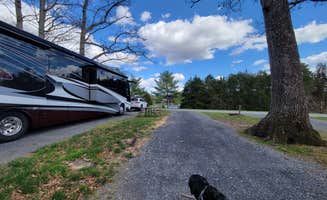
Site size considerations: Many dog-friendly campgrounds near Star Tannery have limited space for larger rigs. "Sites are large but many are lined up right next to each other. I recommend staying away from A72 to the end of A. They're lined up too closely for my taste, and there isn't much shade," advises Mary S. about Mathews Arm Campground.
Water access logistics: Not all sites with hookups have convenient water connections. Christopher K. notes at The Cove: "There are 4 water spigots in camp 1. However all the travel trailers hooked up, which means you either had to make friends or disconnect their water in order to have access."
Navigation challenges: Some campgrounds have specific arrival instructions. About Creekside Campground, Seth P. advises, "If you're coming into town from I-81 don't follow Google Maps to the left on Main St, but rather follow the signs to turn right– it makes for an easier access to the campground."











 Traveler


