Doc’s Medow
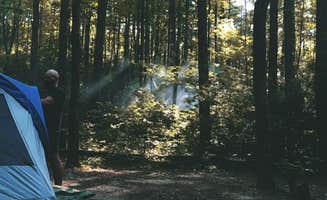
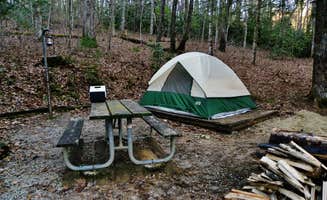
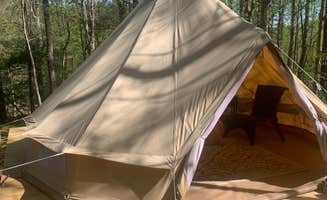
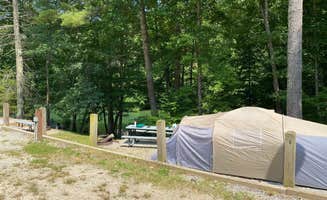
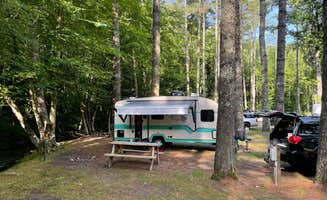
Free Dispersed Camping - Meadow
Easy walk in from parking lot to meadow with free dispersed camping spots along the Sam Knob Trail
Campgrounds around Sapphire, North Carolina provide access to the diverse mountain terrain of western North Carolina, with options ranging from developed facilities to backcountry sites. Gorges State Park Campground offers year-round camping with tent sites, RV spaces, cabins, and glamping accommodations. Nearby Panthertown Valley Backcountry Area provides free primitive camping with walk-in and hike-in access for those seeking a more remote experience. The region includes both state park campgrounds with amenities like showers and electric hookups, as well as national forest lands with more basic facilities.
The western North Carolina mountains experience significant seasonal variations that affect camping conditions. Many campgrounds remain open year-round, though facilities may be limited during winter months. A review mentioned that "Gorges State Park is one of the newest State Parks in North Carolina established in 1999 and is the only State Park west of Ashville. Excellent hike-in campsites and beautiful waterfalls." Roads in the area can range from well-maintained paved access to rough forest service roads requiring high-clearance vehicles. Campers should prepare for elevation changes that bring cooler temperatures even during summer months. Cell service varies throughout the region, with better coverage near developed areas and limited or no service in backcountry locations.
Several visitors note the natural water features as highlights of camping in the Sapphire area. Creeks, rivers, and lakes provide both scenic backdrops and recreational opportunities. Based on reviews from The Dyrt, campgrounds like Davidson River are appreciated for their proximity to water: "The sites are plenty big, a little tight to back into, but not a big deal." Wildlife viewing opportunities include bear sightings, which require proper food storage at all camping locations. Most developed campgrounds in the region provide fire rings, picnic tables, and access to toilets, while primitive sites require self-sufficiency and adherence to leave-no-trace principles. Proximity to hiking trails, waterfalls, and the Blue Ridge Parkway makes these camping areas popular bases for exploring the surrounding mountains throughout the warmer months.
"We had reserved a walk-in tent sight and absoulty loved it."
"This hidden gem is a few miles off a major highway but well worth the journey. I would consider it among my top ten 'near a lake' spots in the entire US."
$37 - $84 / night
"Once again, interested in checking out as many waterfalls and cascades we could locate, the water flow will be so much more dramatic amidst heavy rainfall."
"We had a quick nights stay in Davidson River Campground after picking up our new SylvanSport GO tent trailer in nearby Brevard, North Carolina."
"The alternatives #5 and #6 were close to the entrance and therefore exposed to the road, and #49 was next to the restrooms, but similar to #60, so stayed with #60."
"One drawback is that from the campground there is no easy access to the lake- you can either drive and park (and hope to find parking) or walk on a busy road . "
"There are primitive, walk-in sites that had the benefit of added privacy, but with 3 little kids, bathroom proximity was a higher priority this time around. "
"There are multiple cabins scattered around the lake but they are a good distance apart from each other so you won't be disturbed by your neighbors."
$7 - $26 / night
"There are 3 trailside primitive campsites that are on a peninsula overlooking Lake Keowee."
"The trail was relatively short, but the hills were bigger than expected. However, the payoff at the trailside campground is incredible. The sites are out on a point on Lake Keowee."
"Our plan was to start on the north end of River trail and hike for a few days camping in between. The Ranger there sold us a map of the trail since the ones online were not so great."
"Arrived to parking lot with bathroom (outhouse) with about a mile walk to campsites and river. We found semi secluded campsite beside the river equipped with firepit lantern post."
$27 - $75 / night
"This is one of North Carolina’s best waterfall parks. Rainbow Falls, Turtel Back Falls and Bust your Ass Falls."
"There are six designated backpack sites along the Foothills Trail near the southern boundary of the park."
$20 / night
"We fished right next to our camp site and then relaxed with a camp fire listening to the sound of the River."
"We were looking for a place that was wooded and near a river or stream and lucked up at Lazy J. The staff answered our call right away and were both friendly and informative."
$15 - $116 / night
"We mainly confined our time to our site and Lake Keowee, so this review is only commenting on those observations and not other areas or accommodations within the park."
"Mile Creek Campground is a string of 3 islands connect by narrow straights and surrounded by water. It's hard to get a spot here without great views of Lake Keowee and the Blueridge Mountains."
"The first campsite we stayed at was on the Green Valley Trail, the second one was on the Panthertown Valley Trail right near the Schoolhouse Falls Trail, and the third was on Mac's Gap right past the Granny"
"The sites near the middle of Macs Gap trail are huge and there is easy access to a couple streams. Bring a good map and stick to the trails that your map covers."


Easy walk in from parking lot to meadow with free dispersed camping spots along the Sam Knob Trail
Loved this campground... Extra clean facilities. The atmosphere here felt serene and calm. Thoroughly enjoyed this relaxing trip. Would recommend this place!
The Van Hook Glade campground was very well maintained and offered an abundance of privacy and seclusion with close access to Highlands, showers, and a large public recreation area. The entire site was well kept and the camp hosts were diligent in their duties, while providing privacy. I stayed for two nights and thoroughly enjoyed my time there. We went the first week of May and were able to enjoy the campground practically alone.
The river nearby this campsite was absolutely unreal! Definitely made staying here worthwhile. Upon arrival, our site (02) has a tag with my name and our reserved days we are staying, and there was no need for us to check in. We reserved our site via recreation.gov, where it was $33, which is different than previous reviews but still very much worth it nonetheless. The campsites are snuggled in, but only in one line (only neighbors to your sides, not in front and behind you). Many small RVs and some tent campers too. Seemed to be a place well loved by families with its large picnic tables and shaded grassy areas. There were some educational signs around the area, including one about how the area can be prone to flash floods.
The river by the campground can be heard, but not seen from camp, but is a short walk down to the swimming area. The river was stunning and many folks were there enjoying it for the day & weekend. You can hear the river all night, with only accompanying vehicle noise from the main road next to the campground.
We were surprised to find the restroom facilities were not operational, and fallen into kinda rough shape but there was a portalet (portable toilet) available for the public visiting the swimming area and the campers staying overnight. Not the end of the world but something to keep in mind. Also, we had no signal in this area (which was a plus for us haha!), but there seemed to be a satellite nearby if needed. Overall, this little remote roadside & riverside site was well worth the adventure.
From the lake, to the kind folks who ran the campground, Lake Powhatan was a delight. Closer to the city than we usually go for (~20 min from Asheville, NC), but still felt like true wilderness. All the campsites come equipped with a bear box for campers to use free of cost and the sites ask that you back in vehicles & rigs. We are in a small truck cap camper, so we had lots of room at this site. You can still see your neighbors, but are not on top of one another which is nice. There are also clean & convenient showers and restrooms at the sites (with hot water! Made us feel fancy! Haha). Speaking of convenient, they also have ice and firewood for sale on site when you arrive in case you forgot or needed something. Ice was $5 a small bag and firewood was $10 a bundle.
There is also nice hiking trails on site that we enjoyed, including a small dam and a small manmade waterfall on the other side. Trails wrap around to the lake’s little beach for visitors to swim (there isn’t always a lifeguard on duty, and wasn’t anyone swimming this trip due to it still being a little cool out). Listened to many birds throughout the trip and there wasn’t many bugs out this time of year. Great place for families to bring their kiddos, or for anyone looking to get away for a little bit. Definitely recommend checking it out.
Great location. Right across the street from Pisgah Coffee Roasters, 10 minutes to downtown shops and restaurants, and minutes from the entrance to Pisgah National Forest and hiking trails. Sites are big enough for our 40 ft rig and suburban. Lots of space alongside the creek to spread out. Beautiful park. Will be back.
There are two campsites here seven and eight and there’s one across the road six I believe. They are very nice sites, but not a lot of room for parking. You could set up a number of small tents or a large tent on either site. There is a campfire ring and a creek that runs right alongside.
At this koa there's alot of stuff to do on the property. One cool this is the axe throwing thing and the big jumping pillow and the pool and hot tub. I tent camped at the sand pad with water and electricity. It was right in front of the lake. There where frequently duck in it . This koa was also very close to tiwn/in town.
Spent 3 nights in loop 1 #14. Site was smaller than expected but made it work. Campground is clean and well maintained, bathrooms clean with good water pressure and hot water. Rangers did the rounds every few hours in truck, but only in office 4-5 pm daily. Site held up well (no rivers) during thunderstorms.
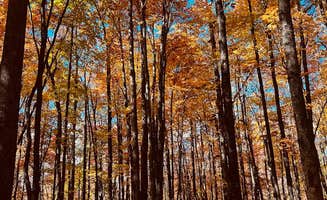
Camping near Sapphire, North Carolina puts visitors in the heart of the Nantahala National Forest at elevations ranging from 2,000-4,500 feet. The region features granite cliffs, numerous waterfalls, and dense hardwood forests that provide vibrant fall colors from mid-October through early November. Summer nights typically cool down to the 50s, even when daytime temperatures reach the 80s, making extra layers essential for campfire comfort.
Kayaking on Lake Jocassee: At Devils Fork State Park Campground, the clear waters offer excellent paddling opportunities. "Beautifully located on Lake Jocassee! Camp sites paved, wooded and nicely spaced. The lake is gorgeous. Boat ramp and trailer parking. Kayak rentals available," notes Carissa D.
Mountain biking trails: Davidson River Campground serves as an ideal base for bikers. "Located right inside Pisgah National forest this campground is perfectly set for all adventures. If you're looking to ride the mtb trails you're in luck. They start literally across the davidson river from the campground," according to Travis S.
Waterfall hikes: Within a 30-minute drive from most campgrounds, dozens of waterfalls range from roadside accessible to multi-mile hikes. "The hikes to the waterfalls are easily accessible and totally worth it," reports Todd S. about trails near Gorges State Park.
River campsites: Burrells Ford offers free primitive camping along the Chattooga River. "Great for swimming and Hammocking!" notes Elise W. The sites require a short quarter-mile walk from the parking area but reward with riverside solitude.
Panoramic views: Camping at higher elevations provides exceptional vistas. "This spot is the highest on the third 'island' out from the mainland. It has epic 360 views," writes Adam V. about site #49 at Mile Creek County Park.
Heated facilities: Winter campers appreciate that many campgrounds maintain comfortable bathhouses year-round. "Bathhouses are nice and have hot water and are heated," Jennifer K. reports about Mile Creek County Park, while another camper notes Davidson River has "heated bathrooms" during winter months.
Bear activity: Bears are common throughout the region, especially in backcountry areas. "Be aware that the bears here are extremely bad. I actually had an encounter with a very large bear who charged my group and destroyed a tent," warns Phoebe A. about Panthertown Valley Backcountry Area.
Reservation timing: Popular campgrounds fill quickly, especially for waterfront sites. "Book your trip a few months in advance so we got all the spots we wanted," advises one camper about Mile Creek County Park, while another notes Devils Fork requires reservations "well in advance."
Trail navigation challenges: Some areas have confusing trail systems. "Bring a good map and stick to the trails that your map covers. It's an easy place to get lost because of all the unofficial trails," advises Tony E. about Panthertown Valley.
Accessible swimming: Look for campgrounds with gradual entry swimming areas. "The area very serene, quiet and pretty. Nice hiking area and swimming area. If you need to get ahold of someone though you'll have to drive 10 to 15 minutes into town," notes Ashley S. about Oconee State Park Campground.
Playground proximity: Several campgrounds feature play areas for children. "Each campsite has wonderful views of the water. There is a playground by the entrance and near the farthest campsites as well," reports Jake S. about Mile Creek County Park.
Cabin options: For families new to camping, cabins provide comfort with outdoor access. "We spent 2 nights in one of the cabins in this beautiful state park during a road trip through South Carolina. And let me say, 2 nights was not enough! The cabin itself was very well kept. There was air conditioning, 2 bedrooms, 1 full kitchen, 1 full bathroom, and a fire place," shares Jessica S. about Oconee State Park.
Satellite challenges: Tree cover at most campgrounds limits satellite reception. "Being regular tent campers, we understand that sometimes you are at the mercy of your neighbors," notes Jay B. about camping at Oconee, though he adds this particular campground has good cellular service.
Site levelness: Many campgrounds in the mountains feature uneven sites. "Be aware, however, that camper pads on the odd-numbered tent sites (5, 7, 9, 11, 13, and 15) are not level, but Sites 1 and 3 plus the even-numbered sites have level parking pads," advises Lee D. about Gorges State Park Campground.
Access roads: Some campgrounds require navigating steep, narrow roads. "While the spot is very level, be very weary that the drive up to this spot is steep and curved. We barely made clearance with a 23' trailer that has a lift kit on it. This spot requires backup skills and the right equipment," warns Adam V. about certain sites at Mile Creek County Park.

Frequently Asked Questions
Where can I find Sapphire gemstones in Montana?
Montana has several famous sapphire mining locations where visitors can dig for their own gems. The Philipsburg area is home to multiple mines including the Gem Mountain Sapphire Mine. In southwestern Montana, you'll find the Spokane Bar Sapphire Mine near Helena. The Rock Creek area is another significant sapphire source. For an immersive experience, stay at Balsam Mountain Campground — Great Smoky Mountains National Park which offers similar pristine natural surroundings. Many locations operate seasonally (typically May-September) and offer gravel buckets for purchase that you can sift through to find sapphires. Most mines provide equipment, instruction, and gem identification services.
What colors do natural Sapphires come in besides blue?
Natural sapphires come in virtually every color of the rainbow except red (which are classified as rubies). Montana sapphires are particularly renowned for their unique color palette including teal, green, yellow, pink, purple, and the coveted cornflower blue. Some sapphires display color-change properties, shifting hues in different lighting. While enjoying the natural beauty of colorful gems, consider staying at Lake Powhatan — National Forests In North Carolina where the changing light through forest canopies creates its own natural color display. Parti-colored sapphires, displaying multiple colors in one stone, are especially prized among collectors and are a Montana specialty.
How much do Montana Sapphires cost compared to other gemstones?
Montana sapphires typically range from $200-$10,000+ per carat depending on color, clarity, cut, and size. They generally command higher prices than commercial sapphires from places like Australia but less than premium Kashmir or Burma sapphires. The most valuable Montana sapphires are those with exceptional cornflower blue or teal colors in larger sizes (1+ carats). While exploring gem country, consider camping at Tallulah Gorge State Park Campground where you can appreciate other natural treasures. Montana sapphires' value has increased significantly in recent years due to growing interest in American-sourced, ethically-mined gemstones. Self-mined stones typically cost significantly less than retail prices, making sapphire hunting both recreational and potentially valuable.
What equipment do I need for sapphire mining in Philipsburg?
For sapphire mining in Philipsburg, you'll need minimal equipment as most mines provide the essentials. Basic supplies include a water spray bottle, tweezers, small containers for your finds, sunscreen, and comfortable clothes that can get dirty. Most operations offer complete mining kits with screens, sieves, and classification trays. For a comfortable base while mining, consider staying at Smokemont Campground — Great Smoky Mountains National Park or Jackrabbit Mountain which offer clean facilities after a day of digging. Many Philipsburg mines operate seasonally, so check operating hours before planning your trip. Most importantly, bring patience and a keen eye for spotting the subtle gleam of sapphires among ordinary gravel.
Keep Exploring