Uwharrie National Forest dispersed camping spans elevations between 500-1,000 feet across a landscape characterized by rolling hills and rocky outcrops in central North Carolina. The region receives approximately 45 inches of rainfall annually, creating seasonal streams that fluctuate dramatically between dry periods and heavy flow. Fall camping season typically runs from late September through early November when temperatures average 50-70°F during daytime hours.
What to do
Creek fishing opportunities: Multiple streams throughout the forest provide fishing spots where campers can catch small bass and panfish. At Deep Water Trail Camp, visitors report productive fishing. "My friends both caught a couple of channel cats. One enormous female catfish we released because she had eggs on board," notes Vincent S.
Mountain biking trails: Forest roads connect to dedicated biking routes with moderate difficulty ratings. "There are some great trails through here as well, that you don't have to share with the motorized enthusiast," according to Shari G.'s experience at Uwharrie Hunt Camp.
Paddling access points: Several campsites provide direct water access for kayaks and canoes. Ruth O. at Badin Lake Campground shares: "Being able to camp on the water and just slide the kayaks in and out is great. There are trails around the lake to explore and the sites are nice size."
Wildlife observation: The forest hosts diverse bird species and small mammals visible from campsites. "I saw plenty of frogs and tadpoles in the creeks, listened to a symphony of birds, and I'm pretty sure heard a few coyotes throughout the night," reports James H. about his primitive camping experience.
What campers like
Lakeside camping: Sites directly on water provide scenic views and easy water access. "Great access to Badin Lake for kayaking, swimming and fishing. Our group explored the trails which were scenic and easy to transverse," Andrew K. notes about his experience at Badin Lake Campground.
Secluded spots: Numerous primitive sites offer privacy away from developed areas. "I didn't stay in Hunt Camp proper, but just up the road. It is very quiet and enjoyable. Hung my hammocks from nearby trees and slept very well," Wesley R. shares about his pet-friendly camping near Troy, North Carolina.
Fire rings and established sites: Most primitive sites come with basic amenities. "Sites at the parking lot and also plenty of people just walk down the gravel road and shoot off into the woods. You're close enough to the cars that you can bring more," John L. explains about Yates Place.
Wildlife diversity: Campers frequently spot various animals during their stays. "I saw an abundance of different species of spiders, dragonflies, moths, and other interesting critters," James H. observed while camping at a primitive site.
What you should know
Weather considerations: Spring and fall offer milder temperatures ideal for camping with pets. "We have stayed at Badin Lake campground a couple times and would recommend it to anyone that likes to kayak and fish," Ruth O. notes about this popular spot.
Hunter awareness: During hunting seasons, special precautions become important. "Make sure to wear bright colors during hunting season because there are a ton of people out deer hunting in this area," Brandon D. warns about Uwharrie National Forest dispersed camping.
Terrain challenges: Some primitive sites require high-clearance vehicles. "PLEASE take something with a little ground clearance and better than 2 wheel drive to get here. My Honda Element was on two wheels at one point but the AWD handled it like a champ," advises Tiffany A. about Deep Water Trail Camp.
Limited facilities: Most dispersed sites lack amenities beyond basic fire rings. "No water all primitive. Will go back when warmer. Lots of trails and wildlife," explains Michael W. about his camping experience.
Tips for camping with families
Double sites availability: Some campgrounds offer larger sites suitable for multiple tents. "We had a double site that was huge it was minutes from uwharrie national forest and badin lake," Logan S. mentions about Arrowhead Campground.
Swimming options: Several locations provide swimming opportunities during warm months. "Great place to commune with nature," Angie R. succinctly describes her experience at Arrowhead Campground, where families can enjoy multiple outdoor activities.
Kid-friendly trails: Multiple short hiking routes exist that work well for younger children. "Massive fire ring, two picnic tables, flat ground for 6 tents and surprisingly clean bath house. Great campground," Sam F. details about his family's site.
Wildlife education: Children can observe various creatures in their natural habitat. "I was entertained by two feuding squirrels that chased each other relentlessly and knocking each other out of tree tops. Woodpecker and Turkey wake up calls," Dave V. shares from his camping experience.
Tips from RVers
Level site challenges: Many sites require leveling blocks or careful positioning. "Great campground with a decent bathhouse. There is no AC in the bathhouses. Site 98 in the electric loop is for tent and pop up campers, but is not pop up camper friendly. The ground is very uneven," warns Jen P. about Morrow Mountain State Park Campground.
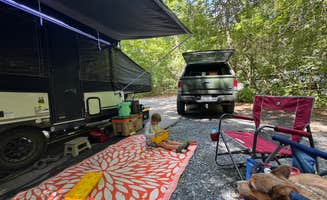
RV size restrictions: Smaller rigs work better at most primitive sites. "Not for bigger rigs. I've got a 13 foot pull behind. Backed in mostly but a few could be pulled in and out," Michael W. explains about Deep Water Trail Camp.
Electric hook-up locations: Several campgrounds offer partial services. "No hook-ups, so BYOS (bring your own solar). Water spigots are scattered throughout the campground," Shari G. advises about facilities at Badin Lake.
Road condition alerts: Access roads to some sites pose challenges for larger vehicles. "Road posted 25 mph but recommend 10 mph. Was also narrow in spots. Very bumpy. Last 1/2 mile don't go. Steep rocky Muddy," cautions Michael W. from his experience with a small trailer.











 Traveler


