Sykesville offers convenient access to several dog-friendly campgrounds within a 30-mile radius. Located at approximately 525 feet above sea level, the area features rolling hills with moderate terrain and deciduous forests that provide ample shade during summer months. The camping season typically runs April through October, with several year-round options maintaining accessibility through winter months despite occasional snowfall.
What to do
Hiking with dogs: The Little Bennett Campground provides extensive trail networks accessible directly from campsites. "There is a very nice network of trails, most if not all were leashed dog friendly," notes Ray & Terri F., who appreciated the variety of terrain suitable for pets of different abilities.
Water activities: At Codorus State Park Campground, the lake offers multiple dog-friendly recreation opportunities. "You can bring your own boat (gas allowed) or rent one from their marina," explains Catherine H., making this a perfect spot for dogs who enjoy water. The park prohibits swimming in the lake but provides alternative cooling options for pets during hot weather.
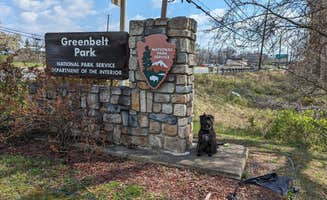
Urban exploration: For campers wanting to combine outdoor stays with city visits, Greenbelt Park Campground provides woodland camping with easy access to Washington D.C. "The other great thing about it that you can spend entire days at the always-free Smithsonian museums and still fall asleep in the woods," says one reviewer, though pets must remain at the campground during museum visits.
What campers like
Quiet wooded sites: Many campers appreciate the solitude at Patapsco Valley State Park-Hilton Area, where natural surroundings create a peaceful setting for dogs and owners. "There are a lot of easy, but beautiful hikes," mentions Sean M., who found the park particularly suitable for camping with children and pets.
Private tent camping: Tent campers with dogs consistently rate their experiences positively at Hollofield Area Campground. "If you're a tent camper and don't need electric, the sites on the outer loop were quite nice and private," reports Jen V., noting these more secluded sites often work better for dogs who may be reactive to other campers.
Year-round availability: Ramblin' Pines remains open throughout winter, providing camping options when most state parks close. "Open all year, clean," states Jeff B. in his review, making this an important consideration for dog owners who camp during off-peak seasons when temperatures are more comfortable for certain breeds.
What you should know
Size limitations: Several campgrounds have specific loop sections designated for larger RVs versus tent campers. At Cherry Hill Park, "Tight spots but very big and clean park," mentions Amy B., suggesting that dog owners reserve sites with adequate space for pet enclosures or tie-outs.
Limited hookups: Many state park campgrounds offer electric sites but no water or sewer connections at individual sites. As one camper at Hollofield noted, "There is only 20/30amp electricity and NO water or sewer—although there was a dump and a place to fill your water tank." Dog owners should plan to bring additional water containers for pet hydration.
Seasonal regulations: During summer, several campgrounds enforce additional pet restrictions due to heat. "During summer months, early morning or evening walks are recommended to avoid hot ground surfaces that can damage paw pads," with temperatures sometimes exceeding 90°F during peak hours between 11am-4pm.
Tips for camping with families
Nature programs: The Merry Meadows Recreation Farm offers family-friendly activities that accommodate pets. "We stayed here this past Easter and they had plenty of activities for kids and adults," reports Melissa E., highlighting the special events schedule that includes pet-friendly options.
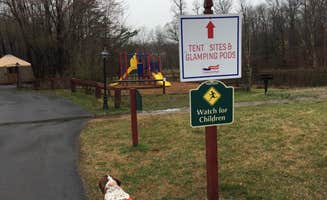
Playground proximity: When camping with both children and dogs, select sites near recreational areas. "The pool through RV sites are in the centerfield and kind of exposed to the elements but you are right across from the pool and right across from an amazing playground," notes Brian S., suggesting these locations provide convenient supervision of both children and pets.
Accessible trails: Choose campgrounds with beginner-friendly paths for young hikers and dogs. "The trail was well marked but there was some confusion at one point on where we were supposed to go," explains Anthony S. about Patapsco Valley, recommending trail maps or GPS apps when exploring with children and pets.
Tips from RVers
Site selection: RVers with dogs should prioritize end sites when possible. At Cherry Hill Park, "Look at the park map and try to get a site at the end of a row. The sites are pretty close together but on the ends at least you only have a neighbor on one side," advises Scott C., creating more space for pet containment.
Off-season advantages: Several dog-friendly campgrounds near Sykesville become significantly less crowded during weekdays. "Weekdays are pretty quiet in this campground," notes one Greenbelt Park reviewer, making it easier to manage reactive dogs who need more space from other campers.
Bridge clearance warnings: RVers traveling with pets should note specific height restrictions. When approaching Hollofield Area Campground, "APPROACH THIS PARK ONLY FROM THE WEST IF YOUR VEHICLE IS OVER 11 FEET HIGH. (There is a 11' bridge coming east bound into this park.)" warns Travyl Couple, preventing potentially stressful detours with pets on board.












 Guide
Guide


