Dispersed camping near Rocky Mountain National Park occurs primarily at elevations between 8,000 and 11,000 feet in Roosevelt and Arapaho National Forests. Access roads frequently close after significant precipitation, with snowpack lingering into June at higher elevations. Temperature swings of 30-40 degrees between day and night are common even during summer months, creating challenging camping conditions.
What to do
Creekside camping: Along Ski Road in Allenspark, numerous sites provide direct water access. "Lots of spots available. Just keep driving along Ski road and pick one that looks good. Lots of fire pits already built and most camp spots are along the creek," notes a camper at Allenspark Dispersed Camping.
Wildlife observation: Free camping areas surrounding the park support diverse animal populations. At Meadow Creek Reservoir, one visitor reported: "Saw moose almost everyday, a fox, ospreys and eagles everywhere feeding and trout." Another camper at Beaver Park Reservoir mentioned: "Lots of wildlife; squirrels, rabbits, and a moose that walked right by our campsite."
Photography opportunities: Early morning light provides optimal conditions for landscape photography. "Beautiful creek with several good sized RV spots. We have a 25 foot camper and feet nicely in. Road in was good as well (May 2025)," reports a visitor who found excellent vantage points at Beaver Park Reservoir.
What campers like
Distance from crowds: Many campers appreciate the remote feeling despite proximity to park entrances. At Hell Canyon Dispersed, one reviewer mentioned, "Quiet, secluded, and peaceful on a Monday afternoon in July! Great views watching the sunset over the Rocky's!" The location provides isolation despite being only 10 minutes from Estes Park.
Water features: Streams and reservoirs enhance camping experiences. "We found a nice spot with a fire ring overlooking the reservoir. It was a super windy night," shared one camper at Beaver Park Reservoir. Another noted: "I went down a good ways and found the perfect spot on a creek just below me down a hill. Very quiet And relaxing."
Natural soundscapes: Flowing water creates background noise that masks other sounds. At Allenspark Dispersed Camping, one visitor observed: "Creek is loud and drowns out noise." This natural white noise helps minimize disturbance from neighboring campsites, which can be particularly valuable during busy weekends.
What you should know
Road conditions vary seasonally: Many access roads deteriorate during wet periods. A visitor to Gordon Gulch Dispersed Area observed: "Road gets tougher the further back you go, but my low clearance vehicle made it by driving slow." Similarly, at Hell Canyon Dispersed, reviewers noted: "Road up is a bit rough but I saw many SUVs make it, the gate sign recommends 4x4."
Long-term occupation issues: Some areas experience extended stays despite 14-day limits. At Gordon Gulch Dispersed Area, a camper reported: "Overall a nice place to camp but as soon as you drive through you are met with run down sites filled with trash bags that look like people permanently live there." This situation varies seasonally and by location.
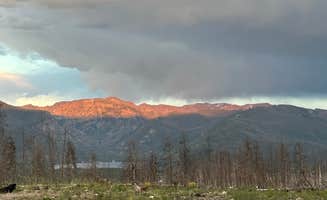
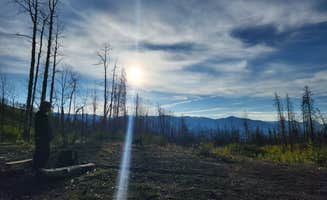
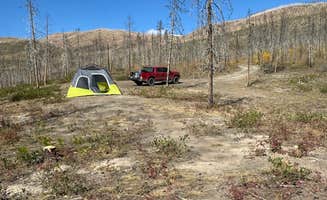
Limited shade in burn areas: Wildfire impacts remain visible in several camping areas. A visitor to Stillwater Pass noted: "The burn scar is not as bad as it used to be and things are growing back! We were surrounded by wildlife the whole time with no other busy city noises."
Insect populations: Bug activity intensifies during summer months. One camper at NFSR 120 Dispersed Site warned: "Mosquitos will carry you away so lots of bug spray." Another reported: "Mosquitoes are a little heavy so bring spray."
Tips for camping with families
Security considerations: Wildlife encounters require preparation. At Allenspark, one camper shared: "The second day staying there we ran into a bear and scared him off. Two hours later he came back and we scared him off again. He's afraid of humans but he did try to get into the car while we were sleeping."
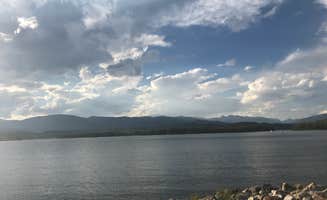
Water access spots: Sites with gradual water entry work better for children. At Meadow Creek Reservoir Fishing Site, one visitor noted: "Beautiful area to camp or spend the day kayaking, SUP, fishing, etc." These multi-use areas provide recreational opportunities without leaving camp.
Weather variability preparation: Rapid temperature changes affect comfort. A visitor to Meadow Creek Reservoir warned: "Due to the high altitude, the weather can be unexpected. We got snowed on in July!" Families should pack clothing for temperature swings exceeding 40 degrees within 24 hours.
Tips from RVers
Space considerations: Limited level sites affect larger vehicles. A visitor to Stillwater Pass Dispersed Campsite observed: "Not at all a beautiful area, only a few places to camp and it's a bumpy road and the access points are not good, none of the sites are level." This makes advance scouting essential for RVs over 25 feet.
Turning radius limitations: Many forest roads lack adequate turnarounds. "The road was a little rough for a pop up camper. More for tents," noted a camper at Hell Canyon Dispersed. The narrow roads often prevent larger rigs from navigating beyond the first few sites at most dispersed areas.
Spot selection timing: Weekends fill rapidly, particularly during summer. At Stillwater Pass, a camper advised: "Spots do fill up, like other reviews best to get a spot early." Arriving midweek significantly improves options for RVers needing specific site characteristics.















 Scout
Scout


