Six Rivers National Forest campsites span diverse elevations from 3,600 to 7,000 feet, creating distinctive microclimates throughout the area. The forest contains over 1,500 miles of rivers and streams, making water access a key feature for many camping locations. Cell service varies dramatically between campsites, with coverage being especially poor in the deeper valleys and canyons.
What to do
Trail exploration from camp: Lacks Creek BLM offers direct access to hiking trails right from your site. "The whole BLM management area is well developed and has signs to guide you," notes Derrick H., who adds that many sites feature picnic tables and fire rings.
Swimming holes nearby: During summer months, the Trinity River provides cooling relief. "There is a swimming hole at Big Rock River Access just 1.4 miles down the hill. Beautiful river," reports Jules S. who stayed at Boise Creek Campground.
Wildlife viewing opportunities: The region supports diverse animal populations that frequently visit campsites. At Elk Prairie Campground, one camper experienced "amazing weather. We saw so many animals: elk, a bear, scrub jays, chipmunks, tadpoles, rabbits, deer, etc."
What campers like
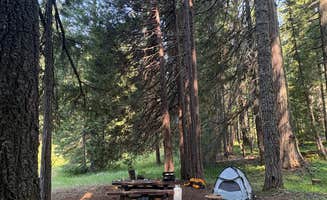
Secluded meadow settings: The natural openings in the forest provide unique camping experiences. Greg B. visited Groves Prairie Dispersed Camp and found it "well worth the effort to find. I've been 3 times and finally decided to add it to The Dyrt."
Creekside camping options: Many sites feature small waterways that enhance the camping experience. At East Fork Campground, Bryson B. notes the campground has "a creek running through it alongside the majority of the sites," where "at some points the creek gets deep enough to recline in."
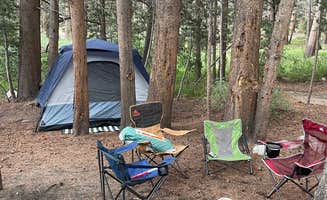
Privacy between sites: Despite some campgrounds having sites in proximity, vegetation often creates natural separation. Nina M. at Elk Prairie Campground explains, "the sites on that loop are set up in a way that everyone has a private tree cubby so it didn't feel like you were camping by a bunch of people."
What you should know
Road conditions require preparation: Many forest service roads present challenges even for passenger vehicles. Heading to Lacks Creek, Marasha L. found "chunks of the gravel road were under construction; some blind, narrow turns, but nothing too intense; and dips, washouts, and big exposed rocks, so drive with care."
Seasonal operations limit options: Most Six Rivers National Forest campsites follow typical mountain schedules. When Paul T. attempted to visit Burnt Ranch Campground in early June, he found the "gate is locked" since many sites remain closed until late spring.
Cell coverage varies significantly: Connectivity cannot be counted on throughout the forest. At East Fork Campground, Bryson B. reports that "the cell service gets patchy as this site is in somewhat of a cleft in the mountains," creating "a difficult time getting signal" deeper in the campground.
Tips for camping with families
Choose sites with shallow water features: Children can safely enjoy creek exploration at certain locations. East Fork Campground offers water that's "not fast or deep enough to be unsafe for anyone older than a toddler."
Consider noise levels for sleeping: Highway proximity affects some sites more than others. James C. at Boise Creek notes "the highway noise but it is not obnoxious," though others find it more disruptive.
Look for educational opportunities: Happy Camp Campground offers unique learning experiences according to George A., who found it "awesome and just beautiful and the town of willow creek it great too" when he "went to look for big foot just for food but great place to bring family."
Tips from RVers
Check site dimensions carefully: Even small trailers can face challenges at some campgrounds. Patrick M. notes that at Elk Prairie, "Even with a small (16') camper, we had to unhitch to fit" due to "tight turns and smallish sites."
Consider river access requirements: Some sites require walking or driving to reach water features. At Sugar Pine Camp & Cabin, proximity to water activities remains convenient without being directly on the water.
Watch for low clearance entrances: Some forest roads have overhanging vegetation that can damage taller vehicles. Jules S. attempted Lacks Creek with a travel trailer but "turned around before I even made it to the gravel road. Road is narrow and steep with low hanging trees."










 Guide
Guide


