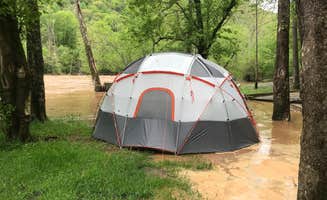
Camping spots near Jumping Branch, West Virginia provide access to the Bluestone River drainage system at elevations ranging from 1,400 to 2,800 feet. The area experiences relatively mild summers with average highs around 82°F in July and August. Many local campgrounds remain operational despite frequent early spring flooding, especially at river-adjacent sites where water levels can rise rapidly after rainfall.
What to do
Hiking trails at Little Beaver State Park: The park offers multiple trails directly accessible from campsites. "There are several nice walking trails and a lake but we didn't have time to check them out," notes one visitor to Little Beaver State Park Campground, while another mentions "Walking trails all over."
Boat access at Glade Creek: For water enthusiasts, the New River access points offer boat launching facilities. "This place has trails that are to die for. An old railroad runs by glade creek and it is incredible," reports a camper at Glade Creek Campground, which sits at the confluence of Glade Creek and the New River.
Rock climbing near Stone Cliff: The area attracts climbers from across the Eastern US. A visitor to Stone Cliff Campground shares, "There are so many things to come for and so many things to stay for! I've come here to climb and ended up fishing. I've come to fish and ended up hiking and climbing."
Water recreation at Pipestem: The resort offers multiple water-based activities throughout the summer. A visitor notes they "enjoyed many of the parks amenities including horseback ride on the trails, the giant inflatables at the lake, the nature center & hiking."
What campers like
River views from secluded sites: Campers appreciate waterfront locations with privacy. "We were in site 1 which was the furthest away from the bath house, but it was on the water and was the most secluded," reports a visitor to Meador Campground, highlighting the value of lakefront sites.
Budget-friendly options: Free camping sites provide excellent value. One Army Camp visitor shares, "It's hard to beat a free campsite right on the river," while another notes "You can't beat an established campground (picnic tables, fire pits, bathrooms) in a national park that's also free!"
Proximity to multiple outdoor activities: Several campgrounds offer diverse recreation opportunities within walking distance. A visitor to Pipestem mentions "We love this campground. Quiet, well spaced, nice roads for biking. We enjoyed lots of the amenities, including the horseback riding, nature center and giant water inflatables."
Clean facilities at Camp Creek: Multiple reviews praise the well-maintained bathrooms. "Showers were the best of any campground I've seen- water gets as hot as you'd like, with great water pressure and plenty of hooks and towel racks," reports a visitor to Mash Fork Campground.
What you should know
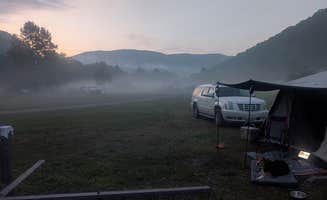
Flooding risk at riverside sites: Spring and early summer can bring high water. At Grandview Sandbar Campground, a camper warns, "This was a peaceful, nice area but when there is a lot of rain there is definitely the chance it'll flood."
Limited connectivity: Cell service varies dramatically across the region. One visitor to Army Camp notes "No AT&T service so I only stayed two nights (gotta work during the week!)," while another at Glade Creek reports "Had AT&T cell signal down by the river but no Sprint Signal."
Water supply challenges: Many sites lack potable water sources. A visitor to Army Camp emphasizes "No drinking water, so plan to be ready to be off grid," while a Glade Creek camper noted "No sources of freshwater available @ the campground. The nearest convenient store is some miles away."
Noise considerations: Train tracks run near several campgrounds. A Stone Cliff visitor mentions "Trains would go by every few hours, it didn't bother us much but it could be annoying to some people," while another at Grandview Sandbar notes "Ear plugs only did so much for me, as I am a tent camper with an inflatable sleeping mat."
Tips for camping with families
Playground access: Several campgrounds offer dedicated play areas. At Pipestem Resort State Park, a visitor notes they "enjoyed many of the park's amenities including a horseback ride on the trails, the giant inflatables at the lake, the nature center & hiking."
Biking opportunities: Paved campground roads provide safe cycling spaces. "Kids loved biking around campground, very safe," reports a Pipestem visitor, while a Meador camper noted "All the roads are paved making it easy for the little ones to ride bikes."
Wildlife viewing options: Animal sightings enhance family experiences. At Old Mill Campground, a visitor shared "The lake. Big and beautiful. Great time on the water!" while a Meador camper noted "There were also TONS of deer all around (just hanging out eating vegetation) during our short one night stay."
Multi-activity options: Several locations offer diverse recreation. A camper at Pipestem mentions, "They have ziplining, axe throwing, disc shooting and archery, play grounds and splash water park."
Tips from RVers
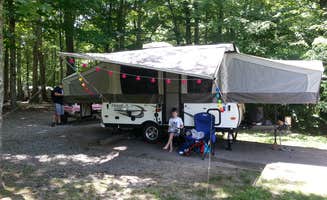
Site leveling challenges: Many campgrounds require effort to level larger rigs. At Little Beaver, a camper with a 23-foot travel trailer noted, "Many sites looked like it may take some work to get level. We were in site 20 with a 23 ft TT and got level fairly easily but a longer rig may have difficulty in that site."
Access road considerations: Some campgrounds have challenging approach roads. One Army Camp visitor explains, "It's a one lane road to get to the campground and can get tight when other vehicles pass, but we got down there with our F250 truck and camper."
Hookup locations: Utility connections aren't always ideally positioned. At Pipestem, a camper noted "Electrical hook up was on the opposite side of where they should be and in the middle of the small area."
Size restrictions: Not all campgrounds accommodate larger RVs. A visitor to Mash Fork mentioned their campground "has a mix of 30-amp, 30-amp with water, 50-amp with water and electric, and FHU sites" with "a generous camper pad length."













 Scout
Scout


