Dispersed camping near Aurora, West Virginia offers primitive sites throughout the Monongahela National Forest. The region sits at elevations between 2,500-3,000 feet, contributing to cooler temperatures year-round. Snow can remain on forest roads until mid-April, with summer daytime temperatures typically ranging from 65-80°F and nights often dropping into the 50s even during July and August.
What to do
Mountain biking on nearby trails: Bear Heaven Campground serves as an excellent base camp for mountain biking enthusiasts. As camper Adam W. notes, "The area has several great hiking and mountains biking trails. Just a few miles up the mountain you can go to Bickles Knob firetower and get one of the best views in the state."
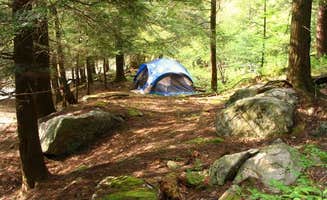
Boulder exploration: The unique rock formations near Bear Heaven Campground provide natural climbing and exploration opportunities. "Right beside the camp ground is a really cool area to explore unique boulders and rock structures. You can either walk through or climb these boulders," shares Adam W.
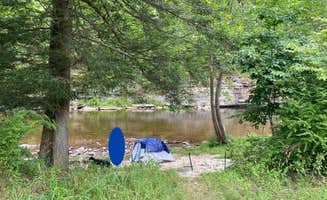
Canoeing and fishing: The lake at Camp Ara provides water recreation options close to Aurora. One visitor mentioned, "Beautiful lake for canoeing and fishing and the hiking and mountain bike trails are amazing! Cant wait to go back!"
Waterfall viewing: Several falls are accessible from camping areas. Kaitlin B. from Camp Ara recommends, "We were pointed in the direction of the gorgeous Valley Falls which is only a few miles from camp."
What campers like
Spacious, private sites: Many tent camping areas near Aurora provide good separation between campsites. At Rhododendron Camping Area, camper Sienna L. appreciates that "the sites are spacious" and the campground remains "quiet."
Stream and water sounds: The rushing water creates natural white noise at many campsites. At Big Run State Park Campground, Katie H. shares, "The best spots are in the woods adjacent to the stream. You can set up your camp chair and enjoy the creek sounds."
Wildlife viewing: The remote setting provides opportunities to observe native species. At Lost Land Run, camper Natasha S. advises visitors to "Keep an eye out for lots of the more dangerous varieties of wildlife native to the area big cats, snakes galore, bear, coyotes etc but beautiful views if you're ready for an adventure."
Clean facilities: Despite primitive conditions, many campgrounds maintain basic amenities well. At Rhododendron Camping Area, Sienna L. notes, "The facilities are always clean- no shower available. The campground is in walking distance to the overlook and most of the trails."
What you should know
Off-grid experience: Many locations completely disconnect campers from technology. As Natasha S. describes Lost Land Run: "Due to location in-between the tall mountains there is absolutely No CELLPHONE SRRVICE past the first couple campsites and only very spotty at those campsites as well."
Variable bathroom availability: Facilities range from none to basic vault toilets. Nathan S. mentions about Big Run State Park: "Pit toilets were pretty clean... Water and dump station is 10 minutes up the road at New Germany State Park."
Weather preparation essential: Temperature changes can be dramatic. For tent camping near Aurora, plan for cooler nights year-round and potentially wet conditions in spring and fall.
Local knowledge benefits: Connecting with campground hosts can enhance your experience. At Barnum Whitewater Area, Ashley A. shares her connection: "Husbands dad was one of the union workers who helped build Jennings and my dad built multiple tourist attractions around it."
Tips for camping with families
Choose established sites with amenities: For families, consider campgrounds with more facilities. Andy C. recommends Big Run State Park: "Used lot 73 for a 26ft hybrid camper. Fit perfectly! It was flat, large, clean and right by the creek. The kids loved playing in the water."
Consider cabin options: When tent camping with children, cabins provide weather protection. At Abrams Creek Campground and Retreat Center, Kevin C. reports, "Tented a cabin for two nights to hide from bad weather. Cabin had electric service, a microwave, electric heater, refrigerator and lights."
Pack extra bug spray: Mosquitos can be problematic at water-adjacent sites. Aakansha J. notes about Big Run State Park: "it was great after sleeping in the car for a few nights. There was a lot of space between each site and it was very peaceful, but the mosquitos sucked."
Morning activities: Early risers benefit from special experiences. Emily M. suggests at Rhododendron Camping Area: "Wake up early and watch the sunrise at the overlook I'm telling ya!"
Tips from RVers
Access limitations: Most dispersed areas have tight access roads unsuitable for large rigs. Frank G. explains about Barnum Whitewater Area: "Barnum has multiple ways for you to enjoy your stay. Primitive campsites are $10 a night. Small cabins are $35 a night, with larger cabins going at $56 a night."
Site selection for medium rigs: Smaller RVs and campers can access select areas with preparation. At Possum Tail Farm Camp, Ashley F. notes you can "Camp in the heart of this farm close to a pond," making it more accessible than forest roads.
Alternative parking strategies: Some campers leave larger rigs at designated areas and tent camp at primitive sites to experience the more remote locations.













 Legend


