George Washington & Jefferson National Forests dispersed camping areas range in elevation from 1,000 to 4,000 feet across Virginia's Appalachian highlands. Most free camping areas sit along creek beds or in higher mountain clearings with temperatures typically 5-10°F cooler than surrounding valleys. Winter accessibility becomes limited after November due to unpaved roads that receive no maintenance during snow events.
What to do
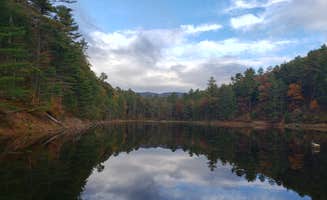
Fishing opportunities: Braley Pond offers seasonal trout fishing with stocked waters that attract anglers throughout spring and summer. As one visitor noted, "The pond is stocked with trout in season, check DGIF site for dates" and "the pond has a great little trail you can walk around and at night the stars are gorgeous."
Mountain biking: Dispersed camping at Mower Basin connects to numerous maintained singletrack trails. A camper explained, "It has a small network of single track trails for anyone with a bike... The trails were well maintained and offered a wonderful variety of wooded and open space riding."
Star gazing: The higher elevation sites provide exceptional night sky viewing with minimal light pollution. At George Washington National Forest off 812, campers report excellent conditions for astronomy. One visitor stated, "Nice and peaceful. First time camping there and had a nice time. Nice trails."
Creek exploration: Many sites feature small waterways ideal for wading during warmer months. One camper at Braley Pond shared, "Though you can't swim in the lake, we did wade the stream, which was cold and clear and beautiful."
What campers like
Solitude: The remote nature of these sites means true isolation is possible, especially on weekdays. A visitor to Flagpole Knob reported, "If you really wanna be alone this is the spot. Camped up there with just my dog and I doubt there was a single person for miles around."
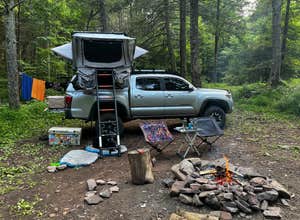
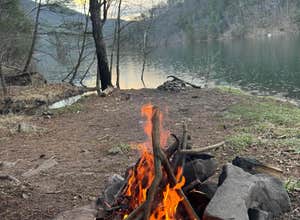
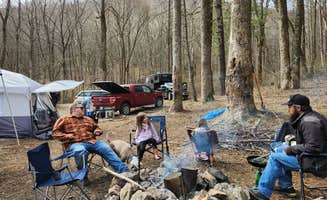
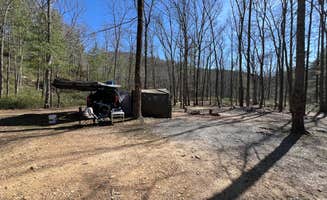
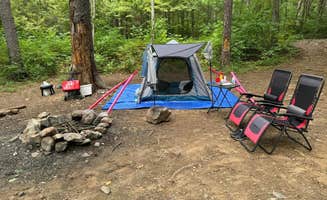
Established fire rings: Most dispersed sites include stone fire rings constructed by previous campers. At Dispersed Camping Site off FR 812, campers find "a giant fire circle in the middle and enough room to fit about 10 vehicles/groups if people don't mind being next to each other."
Wildlife viewing: The forests support diverse animal populations including deer and smaller mammals. A Flagpole Knob camper warned, "Also there is raccoons. Tie up your trash and keep your shoes in your tent or vehicle. A few people lost shoes overnight while we were there."
Water proximity: Sites near creeks provide both practical benefits and ambient sounds. A camper at George Washington National Forest off 812 appreciated that "6-8 different sites, all are beautiful and most are right next to the creek. There was a fire ring and man made stone oven at the site we chose."
What you should know
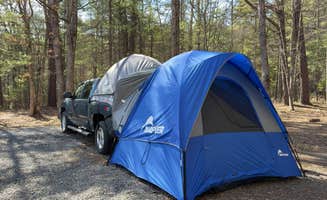
Vehicle requirements: Many sites demand high-clearance vehicles with all-wheel or four-wheel drive capability. A visitor to Switzer Lake Dispersed Camping advised, "The road is a mix of gravel but also dirt so it can become muddy during rain. If you follow the road, there is a river crossing that will take you to additional camp spots."
Weather contingencies: The higher elevation sites experience rapid weather changes with limited shelter options. At Flagpole Knob, one camper recommended, "If you know it's going to be windy don't camp at the peak. There's plenty of camp spots close by with some cover from trees."
No facilities: Most sites lack any developed amenities including water sources. A Braley Pond visitor stated, "This a US Forest Service site. Campsite is primitive: no facilities aside from vault toilets. Bring water treatment system."
Arrival timing: First-come, first-served sites fill quickly on weekends, particularly those with easy access. A camper at Dispersed Camping Site off FR 812 advised, "It is all first come first service, so if you want those bigger group sites, come early."
Tips for camping with families
Accessible options: Poor Farm Dispersed Recreation Area offers relatively level sites suitable for families with younger children. A visitor described it as "Great camp site!! I pulled in while passing through the area, it was a short ride off the highway and the road in was nice. Quiet spot with a nice grassy level area."
Animal awareness: Teach children proper food storage techniques as bears are present throughout the forest. A visitor to Switzer Lake noted, "There are bears here, so lock up your food in the car. We have encountered a bear at or around the campsite 3 times."
Location tracking: Download offline maps before arrival since cell service is nonexistent at most sites. One visitor to Poor Farm shared, "No signal, so make sure you have a map or know which way you came."
Educational opportunities: Spy Rock provides geology lessons with its distinctive rock formations. A camper explained, "It is a great hike with a small rock scramble at the top for an extra bit of fun. Not only that, but the top has almost 360 degree views of the Shenandoah Valley."
Tips from RVers
Size limitations: Only smaller RVs and trailers can navigate the forest roads to most sites. A camper at Mower Basin noted they "strolled up the mountain in our 39ft skoolie" but most sites accommodate smaller rigs better.
Leveling challenges: Many sites require significant leveling blocks due to uneven terrain. A reviewer at Braley Pond Campground noted the area has "Sort of defined sites. Sort of flat."
Access reconnaissance: Scout access roads before attempting to bring in any RV or trailer. One Mower Basin visitor advised, "Just have to push through some steep gravel roads but we did it in truck and trailer."
Group size considerations: Some sites accommodate larger rigs with multiple vehicles. A camper at Dispersed Camping Site off FR 812 described "enough room to fit about 10 vehicles/groups if people don't mind being next to each other."













 Guide
Guide


