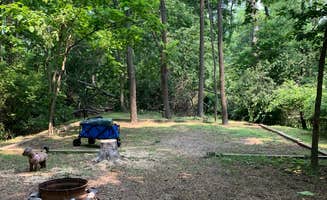
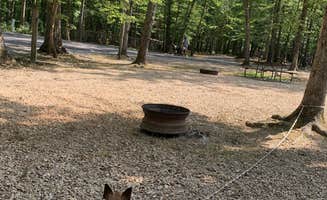
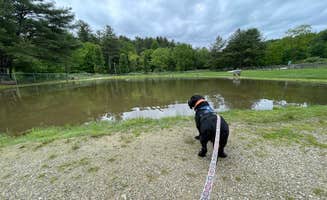
Braley Pond Dispersed Camping is located in the George Washington National Forest, offering primitive camping options at 1,800 feet elevation. The camping area sits along a small creek that flows from nearby Braley Pond, creating a cooler microclimate than surrounding areas during summer months. Winter temperatures typically drop below freezing at night, requiring proper cold-weather gear for off-season visits.
What to do
Hiking through mountain terrain: The area surrounding Braley Pond Dispersed Camping & Day Use Area connects to several trails including paths around the pond and through the George Washington National Forest. "The pond has a great little trail you can walk around and at night the stars are gorgeous," notes camper Cara P. Some trails are muddy even in cold weather, so "wear applicable footwear" advises Austin K.
Fishing for stocked trout: The pond is regularly stocked with trout during fishing season, making it a draw for anglers. "The pond is stocked with trout in season, check DGIF site for dates," suggests Paul P. For the most current information on stocking schedules, check the Virginia Department of Wildlife Resources website before your trip.
Night sky observation: With minimal light pollution, the area offers excellent stargazing opportunities. One camper mentioned, "The stars were amazing!" while another noted that "at night the stars are gorgeous." The clearest skies typically occur during winter months when humidity is lower.
What campers like
Privacy and seclusion: Despite being a free camping area, Braley Pond rarely feels crowded, even during peak seasons. "This place makes it seem as if youre alone," writes Jonny D. Another camper noted, "I was the only one here on a Saturday night. Very quiet and it was great to have the place to myself."
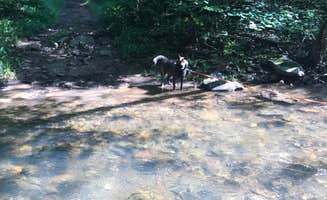
Stream-side camping: Campsites positioned along the creek offer natural cooling and ambient sound. "Next to a creek, so good sounds and cool environment," shares Evan P. The stream creates a peaceful backdrop for camping and provides a cooling effect during warmer months.
Primitive experience: The undeveloped nature appeals to those seeking a more authentic outdoor experience. One reviewer called it "perfect for a more primitive camping experience than a lot of modern campgrounds provided." The area maintains a natural feeling without developed facilities or infrastructure beyond basic needs.
What you should know
No cell coverage: There is no cellular service at the campgrounds, confirmed by multiple visitors. "There is no cell signal here (at least with Verizon as of 3/2020)," reports Dave P. Plan accordingly by researching veterinary services and bringing essential supplies if camping with pets.
Water management concerns: The camping area's low elevation can lead to flooding issues after heavy rainfall. "This area is fairly low, and the road and sites can easily be soaked, if not underwater after really heavy rains," warns a camper. Check weather forecasts before traveling, especially during spring or after storm systems.
Pack in/pack out responsibilities: There are no trash services, so campers must take all waste with them. "We picked up and threw away the people's old trash btw. Leave it better than you found it and this awesome site will continue to be fantastic," advises Evan P. Bring extra bags for trash collection, including pet waste.
Tips for camping with families
Family-friendly sites: Sherando Lake Campground offers structured camping with amenities suitable for families with children. "Such a family-friendly campground," notes one reviewer. Sites in Loop A are well-situated near bathrooms, with A-13 being particularly popular for families.
Kid-friendly water features: Several campgrounds in the area have lakes and swimming areas appropriate for children. "The kids enjoyed playing on the playground, skipping rocks, and fishing as well," mentions Katie M. about Sherando Lake. Water activities provide cooling recreation during summer months.
Educational opportunities: The camping areas offer opportunities for nature education and exploration. "I brought my boys out to camp this past weekend, and this place was perfect for our first dispersed campsite experience," shares Amy S. about Braley Pond. Look for ranger-led programs during summer months at established campgrounds.
Safety considerations: When camping with children, be aware of terrain and wildlife. "Each site has its own food locker which is really important because bears actually frequent the area," warns Lisa M. about Sherando Lake. Always store food properly and teach children about wildlife safety.
Tips from RVers
Hook-up configurations: At Devils Backbone Camp, RV sites have an unusual arrangement. "If you were on an odd number site, you either had to hope you had the length on your water and power lines to run to the opposite side of your rig or you had to pull into the site the opposite way," explains one camper. Bring extension cords and hoses if staying at campgrounds with unique hookup placements.
Access limitations: Some dog friendly campgrounds near Augusta Springs have restrictions on RV size or access. "Access was easy. The campground was busy and everything was clean and neat. The sites were a little tight," notes Ralph P. about Walnut Hills. Research campground roads and site dimensions before booking if traveling with larger rigs.
Proximity to attractions: RV campers appreciate campgrounds with easy access to breweries, trails and other attractions. "You are a quick walk to the brewery and café, where you can grab breakfast, lunch or dinner," mentions Erika S. about Devils Backbone Camp. Walnut Hills Campground & RV Park offers "Located within minutes of I81. We stopped for 2 nights to see the Shenandoah National Park on our way to NC," shares Mimi B.












 Scout
Scout


