


Braelyn V. Scout
Scout
ScoutCrow's Nest Campground
Entire Trip
We brought the kids and they found plenty to do. Between the pool, river and recreation area, they were pretty much entertained the entire trip.
201 campgrounds · Check availability for any dates.
Camping opportunities around West Windsor, Vermont range from state parks to private campgrounds throughout the Green Mountains. Mount Ascutney State Park Campground provides tent and RV sites with trail access to the 3,200-foot summit, while Quechee State Park Campground offers cabins and glamping options along with traditional camping. Several campgrounds in the area feature water access, including Wilgus State Park which sits along the Connecticut River. The region includes both developed facilities with amenities and more rustic options within a short drive of West Windsor.
State park campgrounds in the area typically operate from mid-May through mid-October, with most closing around Columbus Day weekend. Road access varies significantly with some sites requiring navigation of unpaved roads. "Unfortunately, we stayed here on a pretty rainy weekend in June, but I have nothing but good things to say about our visit," noted one camper about their experience at a nearby pond. Many Vermont state parks require reservations, which become available 11 months in advance and fill quickly for summer weekends and fall foliage season. Cell service can be spotty throughout the region, particularly at campgrounds set in valleys or surrounded by mountains. Winter camping is limited, with most facilities closed during colder months.
Waterfront camping receives consistently high ratings from visitors to the region, with several campgrounds offering access to rivers, ponds, and lakes. One reviewer highlighted that "the campground is really small and super quiet. Restrooms are clean. There is a short hiking trail, which is just okay - no views or anything." Mount Ascutney State Park is noted for its lean-to sites with mountain views, while Coolidge State Park gets praise for spectacular fall foliage viewing. Campers report enjoying the proximity to outdoor recreation including mountain biking trails, hiking, and paddling opportunities on the Connecticut River. The Vermont State Parks in the area generally maintain clean facilities and offer varying levels of privacy between sites, with lean-tos being particularly popular for protection from the elements in this sometimes rainy region.
"The Quechee Gorge, best accessed from the back of the lawn behind the bathhouse, is the deepest in Vermont.. which is kind of like saying the best bagel or most populous city in Vermont."
"Got there close to the time the rangers left for the night, Nick was really kind to make sure I got situated before he left."
from $38 / night
Check Availability"The state park had everything we were looking for: close proximity to mountain bike trails, beautiful hiking trails, available leantos, and less than two hours from our home."
"Vermont parks are just some the most lush you’ve ever seen."
"Wilgus State Park is the first Vermont state park to open each spring, well before Memorial Day each year."
"Wilgus state park has amazing campsites, very friendly staff, and great access to the Connecticut River. This campground was beautiful and very quiet even though it was full."
from $20 - $30 / night
Check Availability"This place gets my vote for best campground in Vermont. Especially true if you're lucky enough to get one of the few sites on the outside of A loop that has a Lean-to with a view."
"Coolidge is off the beaten path but well worth the wander! There are no water sites, it’s on the side of a heavily wooded mountain with a few sites having amazing views!"
"Easy to drive into the campground and into the site. We had no issues at all. Hosts were very friendly and helpful. Campground was very clean and well manicured."
"Nice rustic ,small all amenities park.Great place to explore Vermont ,hundreds of things to do and see in the area. Really like this park."
"While staying here I could enjoy some fishing, taking the dog for a nice walk, enjoy the evening with a nice fire, camp side, and go swimming on those hot summer days."
"Decent bathroom situation--I've seen better and I've seen worse in Vermont."
"The park is amazingly clean, well run, located just of RT 4 and very near to Killington, Vermont. It has multiple lean-to sites which are in wooded areas."
"While searching online we learned that Vermont state parks do not have hook ups. We are a family of five with a pop up pull behind and the Glamping lifestyle is a little bit easier on us these days ."
"There are a few trails around the campground and it is close to Mt Ascutney which if you are feeling a bit lazy there is an auto rd that goes about 3/4 of the way up. 3 mi."
from $26 - $36 / night
Check Availability"This is a great campground set in a thick pine forest near a large pond. They have a lagoon for swimming and a children's playground. Hiking trails nearby. Canoes for rent."
"They have scheduled events that occur including family and adult only fire truck rides around the campground."
from $50 - $132 / night
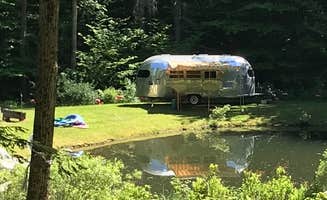
Check Availability"We were mostly looking for somewhere to disconnect for a couple of days, cook outside, fish a little, and enjoy being away from home. Crow’s Nest was a great fit for that."
"Getting our RV situated was easy and we had everything we needed for a comfortable stay."
from $32 - $115 / night
Check Availability









 Scout
ScoutWe brought the kids and they found plenty to do. Between the pool, river and recreation area, they were pretty much entertained the entire trip.
ScoutWe rented a cabin and honestly it was perfect for what we needed. Spent the days exploring around Lake Sunapee and came back here to relax at night.

 Guide
GuideNice campground near Killington, VT. Water and dump station. Not for big rigs we have a 21 ft TT. Things were tight but doable. One of the few Vermont state campgrounds that is still open. Most close from second Monday in October until Memorial Day.
ScoutFirst time camping in this area and we really liked it. The pool kept the kids busy and we spent the evenings around the fire.
ScoutThe Sugar River was our favorite part. We spent a good amount of time down by the water and the kids loved cooling off there.

 Traveler
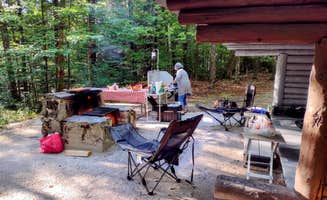
Lots of beautiful spots to pick from but be careful some are a bit muddy. We brought our school bus down the dirt road just fine and backed right in. They also have fireplaces which was nice!
 Legend
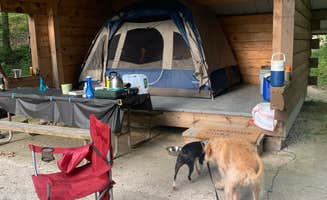
This is a quiet campground in a quiet part of the state. The terrain is mountainous, and all of the sites are private. There are two loops, one for tents/RVs and one for lean-tos. We stayed in the Willow lean-to, and while our site didn't have a view, it was one of the most private sites we've stayed in and just a short walk to the bathhouse.
The campground was created by the CCC in the 1930s, and from what I've heard, it hasn't changed much since that time. While we were here, we visited the Calvin Coolidge State Historic Site (very cool), Long Trail Brewing, and the town of Woodstock. Great trip!
GuideSimply said, if you like a well maintained place with a swim beach, floating dock, grass galore, space to stretch out, and more, this is the place. It’s beautiful. As a bonus, it’s cost effective over other RV parks. If you want free, nope. If you want wild open spaces, nope. You a great lush big clean park that feels like your Owen estate, then come check this place out. We will be back.
 Guide
GuideFree dispersed camping site in the Green Mountain National Forest, off a dirt road. The site curves around past the driveway so you can tuck up into the trees to be more private. The upper part there has a circular open area, surrounded by thin trees. There’s a fire ring set up midway on the site. It felt more isolated than other sites I’ve stayed at and there were quite a few animal sounds in the woods, including large animal bones left past the treeline. They seem to be left behind from people (based off of how the bones were cut). Dispersed camping so don’t expect facilities of any sort. Decent site and pretty large compared to some of the other spots. Heard Barred Owls in the distance which was awesome. Uploaded a video of the site at night and pics of the area on a map that my friend was able to pull up.
Camping near West Windsor, Vermont typically ranges from 800 to 3,000 feet in elevation, with temperatures often 5-10 degrees cooler than surrounding valley areas. The region's campgrounds sit within the Connecticut River Valley watershed, where summer evenings frequently dip into the 50s even when daytime temperatures reach the 80s. Most campgrounds in this area maintain a tree canopy that provides natural shade but can limit solar panel effectiveness for RVers.
Hiking from camp to summit: Mount Ascutney State Park Campground offers direct access to several hiking trails. "The staff were wonderful, the sites are pristine and picturesque, the faculties are decorated with wildflowers," reports one camper at Gifford Woods State Park Campground, which sits on the Appalachian Trail. Most trails in the region range from 2-4 miles one-way with 1,000-2,000 feet of elevation gain.
Paddling the Connecticut River: Launch sites are available within several campgrounds. "Wilgus state park has amazing campsites, very friendly staff, and great access to the Connecticut River. This campground was beautiful and very quiet even though it was full," notes a visitor at Wilgus State Park Campground. Many campers bring their own watercraft, but rentals are also available for $25-45 per day at some locations.
History exploration: The Coolidge Homestead is located near several campgrounds. "Take advantage of the historical site nearby (President Calvin Coolidge's homestead) and long trail brewing," advises a visitor to Coolidge State Park. The homestead tour costs $10 per adult and takes approximately 45 minutes to complete.
Lean-to shelters: Multiple campgrounds feature lean-tos as alternatives to tent sites. "We loved this campground especially my site! I stayed at the Basswood lean to site. Private and well kept sites, clean bathrooms, friendly service, gorgeous Mountain View, gave me the real feel of camping outdoors," shared a visitor at Coolidge State Park Campground. Lean-to sites typically cost $5-10 more than standard tent sites but provide better protection during Vermont's frequent summer rain showers.
River access for cooling off: Several campgrounds feature river access points. "The best part about camping here is getting out on the water. You can rent kayaks and canoes, and the river moves slowly enough to paddle up stream," explains a camper describing Wilgus State Park. Most water access points are gentle slopes rather than developed beaches.
Mountain bike trail networks: On-site and nearby trails accommodate riders of various skill levels. "The state park maintains its own mountain biking trail loop, which accessible directly from the campground. It is a 3 mile beginner friendly loop, with some nice rollers and moderate terrain," notes a visitor to Mount Ascutney State Park Campground. Trails typically dry quickly after rain due to the region's rocky, well-draining soil.
Seasonal limitations: Most campgrounds operate on a limited schedule. "The campground couldn't have been more than a third full, but I bet it would still be quiet if it were more populated," notes a camper who visited Gifford Woods State Park in late season. Most sites begin closing after Indigenous Peoples' Day weekend regardless of weather conditions.
Highway noise at some locations: Road noise can be noticeable at certain campgrounds. "Like many of the other reviews, I cannot give this a 5 star rating solely for the fact of road noise. We were in site 27 and it was a beautiful site but the road noise from interstate 91 was extremely loud," cautions a visitor at Mount Ascutney State Park. The most remote sites are typically booked 6-9 months in advance.
Bear precautions required: Active bear populations necessitate proper food storage. "We were advised that there was an active bear in the campground, but we took the advice of Sean the park ranger," mentions a camper at Coolidge State Park. Rangers at most parks provide food storage containers upon request at no additional cost.
Swimming options: Natural swimming areas offer alternatives to pools. "This is a great campground set in a thick pine forest near a large pond. They have a lagoon for swimming and a children's playground," reports a visitor to Crown Point Camping Area. Most swimming areas lack lifeguards; designated swimming hours typically run from 10am-7pm.
Ranger programs: Educational activities occur regularly at many parks. "Rangers also run fun programs for children- my children churned butter and made popcorn over the campfire one night, and made tie dyed T-shirts the next (for no fee)," shares a camper at Quechee State Park Campground. Programs typically run Wednesday through Sunday during peak summer months.
Playground accessibility: Several campgrounds offer play structures. "They have a playground with a large tent for parents to sit under with picnic tables. Overall it is a fantastic place to stay," notes a visitor to Crown Point Camping Area. Most playgrounds are centrally located near bathroom facilities rather than at individual sites.
Limited hookup availability: Full service sites are scarce in the region. "The sites are large. If you stay in the back it's quieter. The bathroom is very clean. They offer showers that cost you a few quarters. There are no hookups but they do have a dump station if you are in a RV," explains a camper at Quechee State Park Campground. Dump stations at state parks typically operate from 8am-8pm.
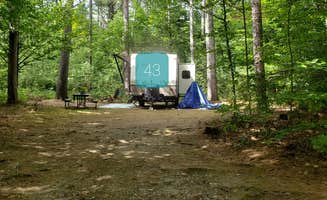
Site leveling challenges: Many campgrounds feature uneven terrain. "The pull through site is not level and is barely long enough to fit my 43' rig (with my motorcycle lift)," warns an RVer who stayed at Caton Place Campground. Bringing extra leveling blocks is recommended as many sites have slopes of 3-5 degrees.
Generator restrictions: Most state parks prohibit generator use. "No Electric or hookups. They also sell ice and firewood at the check in station," notes a camper at Quechee State Park. Private campgrounds typically allow generator operation between 8am-8pm only.
Frequently Asked Questions
What camping is available near West Windsor, VT?
According to TheDyrt.com, West Windsor, VT offers a wide range of camping options, with 201 campgrounds and RV parks near West Windsor, VT and 31 free dispersed camping spots.
Which is the most popular campground near West Windsor, VT?
According to TheDyrt.com, the most popular campground near West Windsor, VT is Quechee State Park Campground with a 4.6-star rating from 24 reviews.
Where can I find free dispersed camping near West Windsor, VT?
According to TheDyrt.com, there are 31 free dispersed camping spots near West Windsor, VT.
What parks are near West Windsor, VT?
According to TheDyrt.com, there are 14 parks near West Windsor, VT that allow camping, notably North Hartland Lake and Union Village Dam.
Keep Exploring