Green Mountain National Forest spans over 400,000 acres across central and southern Vermont, with elevations ranging from 600 to 4,000 feet. The forest contains more than 500 miles of hiking trails including sections of both the Appalachian and Long trails. Camping in this region offers diverse terrain with hundreds of dispersed sites available year-round, though access varies dramatically with seasonal conditions.
What to do
Hiking to viewpoints: From Moosalamoo Campground, take the trail to Silver Lake, which is "accessible only by foot, down a .6 mile trail from the parking area." According to Nancy M., there are "lots of great hiking accessible from the campground, or within a short drive." The area offers numerous day hikes with mountain views.
Swimming in forest lakes: Branbury State Park Campground provides access to Lake Dunmore with "a wonderful beach with a swimming area and boat launch. Large trees provide shade on a grassy lawn, and grills are available," reports Lisa S. The park offers kayak, canoe, and paddleboard rentals for water recreation.
Mountain biking: The region has extensive trail networks suited for various skill levels. One reviewer noted that Moosalamoo "has awesome bike trails with smooth trail beds and nice rolling bumps." Lauren S. mentioned seeing "several trailheads on your way up to the campground" that connect to many trails throughout the forest.
Fishing in forest streams: The forest contains numerous fishing spots across small streams and ponds. At Half Moon Pond State Park Campground, campers can fish directly from waterfront sites. Rebecca D. notes, "We fished and kayaked right from our site," making it convenient for anglers without traveling to separate locations.
What campers like
Privacy between sites: Coolidge State Park Campground receives praise for site separation. "There was plenty of room between sites. The roads going in and leaving were well maintained," writes William P. The park's layout on a hillside creates natural divisions between camping areas.
Access to the Appalachian Trail: Proximity to major trails ranks high among camper preferences. Kyle R. notes that Gifford Woods "lies directly on the Appalachian trail, so for a shorter or less-intensive hike, walk about 2.5 miles to the Deer Leap Overlook for some incredible views of the mountain ranges nearby."
Clean facilities: Campers consistently mention facility maintenance as important. At Moosalamoo Campground, Dana M. found that "pit toilets were very clean" despite being primitive facilities. Another camper noted the campground had "surprisingly clean vault toilets" that exceeded expectations for a rustic forest setting.
Waterfront camping options: Direct water access from campsites receives frequent mentions. Cynthia K. appreciated that at Half Moon Pond "we had a waterfront site so we could launch our kayaks right from our site," allowing convenient water recreation without transportation requirements.
What you should know
Road conditions vary significantly: Access to more remote sites often requires appropriate vehicles. For Michigan Brook Road camping, Maggie F. warns, "Beware that in Spring the road gets muddy and quite rutted, I would not recommend driving down there with a car that is low to the ground."
Bear safety measures required: Several campgrounds report bear activity. Kara D. noted at Chittenden Brook Campground, "Didn't see any bear, but take bear food precautions regardless." Lisa S. confirmed that "there are bears in the area, so be aware and store all food properly" when camping near Branbury State Park.
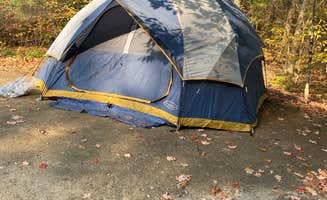
Limited amenities at dispersed sites: Free camping areas lack facilities. TRUCKER C. describes Michigan Brook as "very back woods camping" with just three primitive sites. For Michigan Road, Lauren S. points out that "bear storage lockers" are available at some sites, but advises bringing your own food protection.
Seasonal operation for established campgrounds: Most developed sites operate on limited schedules. Moosalamoo Campground runs from "Memorial Day to Columbus" according to its seasonal information, while Chittenden Brook closes for similar dates, making advance planning essential for peak season visits.
Tips for camping with families
Look for parks with playground areas: Silver Lake Campground offers facilities beyond just camping. Shawn B. notes, "When the kids get tired from swimming they're a nice beach area and playground." Branbury State Park also features "a large playground" and "volleyball and horseshoe pits," according to J L.
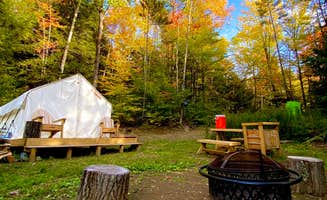
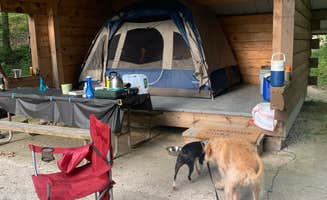
Consider lean-tos for easier setup: Several parks offer lean-to structures that simplify camping with children. Jonathan L. recommends Coolidge State Park, saying "I highly recommend the lean-to's" which provide shelter without full tent setup. Katy Z. confirms Half Moon Pond's lean-to sites are "nice private" options.
Choose campgrounds with nature programs: Educational opportunities enhance family camping. Shawn B. mentions that Silver Lake offers "nature tours on the lake led by the state park faculty," providing learning experiences for children while camping.
Pack carefully for walk-in sites: Some of the most family-friendly locations require short hikes. Kyle B. advises for Silver Lake: "Pack in pack out campground so only pack what you truly need for camping the comforts are more work than they're worth."
Tips from RVers
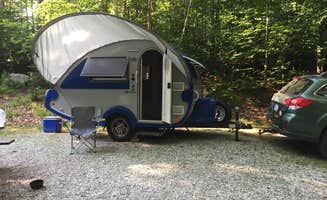
Size restrictions limit RV options: Many forest campgrounds cannot accommodate large vehicles. James K. notes Chittenden Brook "would be tough for any but the tiniest RV." This limitation applies to many of the smaller campgrounds in the national forest.
Consider private campgrounds for hookups: Lake Bomoseen KOA offers more RV amenities than forest service sites. Scott A. confirms the KOA has "most of the sites are wooded and nice," though warns about "road noise" at some locations.
Prepare for limited connectivity: Cell service is virtually nonexistent at most forest locations. Jason A. reports at Lake Bomoseen KOA: "Cell service is very limited. Very remote... the WIFI didn't even work at the office."
Book ahead for pull-through sites: RVers recommend securing the limited suitable spots early. Scott A. recounts, "Somehow we managed to get the one pull through spot that was at the end and harder to get in," suggesting advance planning is essential for RV camping in this region.












 Legend


