Umpqua National Forest camping experiences vary dramatically with elevation changes between 2,000 and 6,000 feet throughout the forest. Temperatures can drop significantly at night even during summer months, with nighttime temperatures at Diamond Lake reaching the mid-30s even in July. Forest roads leading to remote campgrounds often require travel on unpaved surfaces that narrow to single lanes in some sections, particularly approaching Lake in the Woods.
What to do
Waterfall hiking trails: Several campgrounds provide direct access to waterfall trails. From Clearwater Falls Campground, the falls are just a 3-minute walk. "Beautiful waterfall and cold clear river running through old growth evergreen forest. Easy access off of highway 138 east," notes a camper, while another mentions that "there are a couple of nice footbridges over the river below the falls to get to both sides."
Hot springs access: The Umpqua Hot Springs Trailhead provides day-use access to natural soaking pools. While officially designated as day-use only, it serves as a popular destination for campers staying at nearby campgrounds. A visitor reports, "This is a day use only area, but there are quite a lot of long term 'campers' in the area who live in the woods nearby and use the hotspring as their bathing facilities. Expect plenty of nudity."
Fishing opportunities: Diamond Lake is known for its fishing. The lake is easily accessible from campgrounds and provides multiple access points for anglers. According to a camper, "Huge campsite but it doesn't feel that way when you are at your site. The sites by the lake appeared to be much larger than the ones further up the hill."
What campers like
Riverside camping spots: Many visitors appreciate the riverside sites at Boulder Flat Campground. A camper notes, "All sites by river. Small but spacious. Deep forest feel. Minimal highway noise." Another mentions that it's "an excellent spot for white water rafting enthusiasts" and "almost all of the sites back to the river, which is super unique and cool."
Well-maintained shower facilities: Some campgrounds in the forest provide shower facilities that receive positive reviews. At Broken Arrow Campground, a visitor writes, "The showers are amazing!!!! Please donate a couple bucks to help keep them amazing," while another mentions, "Great location, short walk to Diamond Lake. This campground is huge! Well maintained restrooms with flushing toilets."
Host hospitality: Campground hosts enhance the experience at some locations. At Umpqua's Last Resort, visitors repeatedly mention the staff: "The owners are super friendly, that's a first. They made this place into a very characteristic one. Super clean and comfortable!" Another adds, "Hosts are super nice and friendly. The whole setting is really well maintained with nice landscaping."
What you should know
Mosquito preparation: Multiple campgrounds report significant mosquito presence, particularly near water. At Broken Arrow Campground, a camper warns, "Beware of the mosquitos as at one point my wife counted 22 mosquitos on my back!" Another notes, "The only bad thing about this whole area is the mosquitos that are everywhere at dusk and dawn. Bring repellent."
Temperature fluctuations: Despite warm days, nights can be surprisingly cold. "We stayed in Broken arrow with our Scouts in July of 2021 and found it surprisingly cool at night for it being July. Temps dropped in the low 30's both nights," reports one visitor. Another camper at Diamond Lake warns, "It's also much colder than you think it'll be. We went the first week in July, and temperatures probably got down to the mid-30s. Bring a blanket!"
Limited cell coverage: Connectivity is minimal throughout most of the forest. A visitor at Mazama Village Campground notes, "In 2015, cell reception was spotty." At Umpqua's Last Resort, a camper mentions, "Wi-Fi is available for $2.99 per 24-hour period per device but it was flaky at best."
Tips for camping with families
Swimming spots: Many campgrounds offer swimming access. At Horseshoe Bend, one visitor shares, "We had an amazing time at this campground! The real highlight was the beach right at the campground... crystal-clear water, soft sand, and plenty of activities to keep us entertained."
Wildlife viewing: Forest campgrounds provide opportunities to observe wildlife. At Mazama Village, a camper notes, "The wildlife is so cool. Great spot for birdwatching! Be wary of bears though. Each site provides a bear box to help ward them off." Another camper at Broken Arrow mentions, "Chipmunks everywhere :)"
Campsite selection strategy: For families needing larger sites, timing matters. At Diamond Lake, a visitor advises, "The sites by the lake appeared to be much larger than the ones further up the hill. Thankfully we had two sites because on the map, it looked like both sites had a pull through area for cars, but the first one had 'parking' which was just an enlarged shoulder."
Tips from RVers
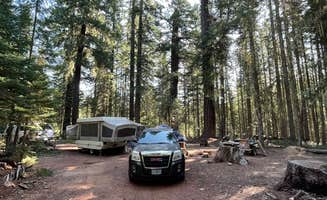
Size limitations: Many forest campgrounds have restrictions on RV length. At Lake in the Woods, access requires "travel 18 miles on gravel one lane roads." At Clearwater Falls, a reviewer notes the campground has "five total sites here, smallish, too small for big rigs or anything over 20 ft except one site suitable for up to 30 ft."
Hookup availability: Utility connections vary widely between campgrounds. At Umpqua's Last Resort, they offer "petite RV sites (RVs up to 20' with FHU 20-30 amp- 3), deluxe RV sites (RVs up to 29' with FHU 30-50 amp- 5), Super RV sites (RVs up to 60' with FHU 50 amp- 7)."
Road conditions: Forest roads can present challenges for larger vehicles. At Clearwater Falls Campground, a visitor warns about "limited turn around area for larger RVs." Another camper notes that getting to Lake in the Woods requires driving on "18 miles on gravel one lane roads."





 Guide
Guide


