Cabin accommodations near Umpqua National Forest range from 2,000 to 5,800 feet elevation, with distinct seasonal conditions affecting access and amenities. Winter snow typically closes many forest roads from November through April, while summer temperatures can reach the mid-80s. Moisture levels vary significantly between the western slopes receiving 100+ inches of precipitation annually and the drier eastern portions averaging 30 inches.
What to do
Disc golf at Whistlers Bend: The course at Whistlers Bend County Park is rated second in the nation according to campers. "Sprawling and varied disc golf course with some spectacular long shots, and tight trees," notes Brant T., who also mentions the park offers "waterfront sites on the renown North Umpqua river" for fishing and swimming.
Waterfall tours near cabins: Cabin guests at Umpqua's Last Resort can book guided waterfall tours for $75 per person with 24-hour advance notice. "Although some waterfalls were closed due to the fires in Oregon...there are over 25 waterfalls with Toketee being my favorite," shares Sergio T., who found the area offered "too much to do and is why I will be back."
Paddleboarding on forest lakes: Lakefront cabins provide direct water access. "It was amazing to step out of my flip flops and onto my paddleboard on my own private beach and paddle in the early mornings and at dusk," writes Stephanie V. about her experience at KOA Lemolo Lake. Timpanogas Lake is another option with campers noting it's "great for paddle boarding and fishing."
What campers like
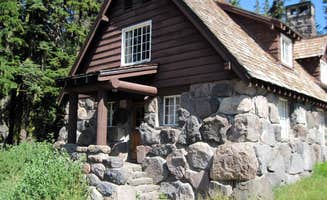
Secluded forest locations: Cabin guests appreciate remote settings away from crowds. A visitor to Musick Guard Station cabin explains, "Nestled in the remote Umpqua National Forest, this historic site offers a fascinating glimpse into Oregon's mining past. Built in 1934 by the Civilian Conservation Corps, the guard station and its outbuildings stand as a testament to early fire protection efforts."
Proximity to Crater Lake: Many cabin locations serve as convenient base camps. Guests at Diamond Lake RV Park appreciate being "40 minutes from Crater Lake rim" according to Mike E., who described it as a "large park in the woods" with "full service" accommodations. Tyler S. similarly noted his Diamond Lake stay was "very nice and quiet! Easy to find and very nice staff" while visiting Crater Lake National Park.
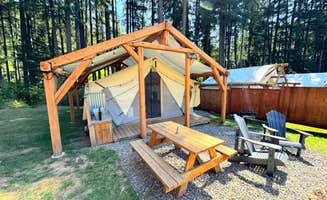
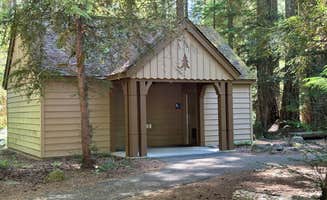
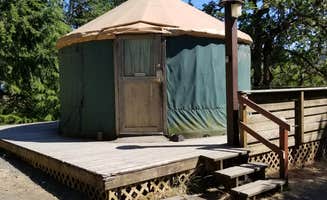
Clean facilities with modern touches: Visitors consistently mention facility quality. "The owners are super friendly... They made this place into a very characteristic one. Super clean and comfortable!" writes Hilde H. about Umpqua's Last Resort. Another visitor mentioned, "We loved the Glamping tents, new and beautifully appointed, the facilities were well kept and sparkling clean. The bathrooms were clean and newly updated."
What you should know
Mosquito presence varies by season: Insect pressure is highest from late spring through mid-summer. "The only complaint I have is there's a lot of mosquitoes. So just remember your bug spray and long clothes!" advises Macy G. about her Diamond Lake cabin stay. At Timpanogas Lake Campground, Colby K. confirms "the mosquitoes are still awful but are worth the views and paddle boarding opportunity."
Limited services and provisions: Most cabin areas have minimal services. "When they say you're 'away from it all', that means stock up on supplies BEFORE you get to your campsite," warns Cynthia K. about KOA Lemolo Lake. The closest grocery stores to most cabins can be 60+ miles away, though some locations have small camp stores with limited supplies.
Cell coverage inconsistencies: Connectivity varies dramatically between locations. Mike E. notes "no cellphone reception and no internet access possible" at Diamond Lake RV Park, while at KOA Lemolo Lake, Stephanie V. reports "AT&T had full bars." At Musick Guard Station, visitors must plan for complete disconnection as there is "no electricity or running water" according to Eric M.
Tips for camping with families
Playground access: Several cabin locations include dedicated children's areas. Whistlers Bend County Park features a "play structure for the little ones" according to Brant T., who notes it's a "great place to just get outdoors, without being too far from stores and humanity." The park's 147 acres provides ample space for children to explore.
River safety considerations: Monitor children closely near the Umpqua River. "The river water current is strong," warns Max M. about Farewell Bend Campground, though he notes many enjoy "sleeping with this continuous noise." The campground provides "private access to the river" with some cabin sites directly overlooking the water.
Wildlife education opportunities: Forest cabins offer wildlife viewing possibilities. While staying at Mazama Village Campground, Bri C. found "the wildlife is so cool. Great spot for birdwatching!" She adds, "Be wary of bears though. Each site provides a bear box to help ward them off. We ended up car camping just to be safe."
Tips from RVers
Campsite grading issues: Not all RV sites with cabins are perfectly level. At Diamond Lake RV Park, one camper reported their "RV site was so poorly graded that achieving a level setup proved impossible, even with extensive adjustment." This contrasts with Umpqua's Last Resort where Lee D. found "a deluxe RV site that had a level gravel camper pad."
Hook-up availability: Full hookup options vary between cabin locations. KOA Lemolo Lake provides "sites with hookups," and as Cynthia K. notes: "We were in a deluxe RV site that had a level gravel camper pad, electric hookup, fire ring, and picnic table. Unlike most RV parks, there was a decent amount of foliage between most sites to provide a measure of privacy."
Winter RV accommodations: Most cabin and RV facilities close seasonally. Justin's winter experience at Farewell Bend highlights limitations: "Paying for essentially a parking spot. Current bush was on but little else. They also close the main dump site. So you can't get water and you can't dump."







 Guide
Guide


