Dispersed camping opportunities surround Bonne Terre, Missouri at elevations ranging from 500 to 1,772 feet within the rolling hills of the Ozarks. The region averages 44 inches of rainfall annually with summer temperatures typically reaching 89°F and winter lows near 22°F. Primitive campsites often feature rocky terrain requiring careful tent placement, with most backcountry sites located near small waterways.
What to do
Hike to Missouri's highest point: Access the peak at Taum Sauk Mountain State Park Campground via a relatively short trail. "Hike the tallest mountain in MO, not a long hike. Endless green rolling vistas! Also had deer at our tent," reports Lynn G. The trail options include "either a short loop or a loooong out and back along the famous Ozark Trail."
Photograph waterfalls after rainfall: Mina Sauk Falls offers photographic opportunities within hiking distance of several campgrounds. According to Amanda C., "We did the hike to the highest point in Missouri and then to a small waterfall. We were racing the sunset so we didn't get to spend as much time as we would have liked." Clayton R. confirms: "Camped for a couple days during fall. The scenery was gorgeous!"
Explore backcountry waterways: Many primitive sites offer direct access to clear, cold streams. At Courtois Creek Dispersed, Pat F. notes the area is "Very scenic and beautiful right on the river." Another camper found that "The water is amazing. Great for fly fishing and cast fishing."
What campers like
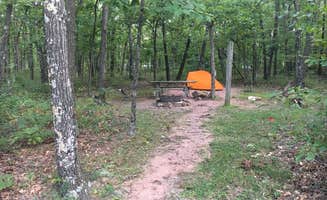
Secluded tent platforms: Many campsites feature designated tent areas built to minimize ground impact. "The sites are all walk in but it's a short walk from your car to the site. Very rocky ground so be careful where you put your tent," advises Amanda C. Scott M. adds, "Where we camped, the ground was covered in moss. That made for very soft sleeping, except for the few large rocks spread over the area."
Natural separation between sites: Most campgrounds maintain adequate space between sites. At Brazil Creek, one camper found "Primitive horse sites in your own little haven in the woods." They add that while there are no facilities, it's "a small price to pay for the privacy and quiet this campground offers."
Educational trail displays: Several parks include interpretive information along hiking routes. Lynn G. appreciated the "Educational displays" along trails that pass "through all kinds of forests, waterways and waterfalls." The variety of forest environments creates diverse camping experiences even within the same recreation area.
What you should know
Navigation challenges: Many primitive sites can be difficult to locate without proper preparation. Staci R. warns about Brazil Creek: "No cell signal, and as the other reviewer has said, have your map to get there, because it's easy if you do. Your phone will not get you there." Another camper echoes this: "make sure you look at a map before going there as there is absolutely no reception."
Water availability varies seasonally: Water sources may be turned off during colder months. "The water was turned off at the time of year we were there," notes one camper, while another advises: "We didn't see where the water was but it was supposed to be off for the season anyway so we were prepared." Bring adequate supplies or water filtration equipment.
Road conditions to dispersed sites: Access roads to remote camping areas often require appropriate vehicles. One camper at Courtois Creek reports: "I drive a Toyota Highlander and I did the road with no problem. It is not an ATV trail! There was 1 big puddle and 1 sharp rocky turn that I just went slow through. No problem. Probably couldn't do it towing a camper though."
Tips for camping with families
Wildlife viewing opportunities: Children often enjoy spotting local wildlife near camp. "We were the only people in the campground that night, which was a little freaky, but also very peaceful," reports Mara F. Lynn G. mentions that they "had deer at our tent," providing exciting nature encounters for younger campers.
Group-friendly sites available: Some areas can accommodate larger family groups. Scott M. found at Taum Sauk Mountain State Park Campground that "We had room for two portable canopies and about 35 cub scouts and family members." Such spaces work well for family reunions or organized youth activities.
Short hiking options for children: Several trails offer abbreviated routes suitable for young hikers. Erica P. notes, "Taum Sauk Mountain - Missouri's highest point trail is not a long hike, just a little under 2 miles and rated moderate." She also suggests, "Be sure to wear good hiking shoes!" and recommends downloading trail apps for assistance.
Tips from RVers
Limited RV-friendly options: Most sites near Bonne Terre cater to tent camping with few RV accommodations. At Klondike Park, Shawn M. cautions that "Campsites are walk in, but a short walk. Some are more private and shaded than others." The park has "a seasonal bathhouse, which is clean and well kept, but serves all 43 campsites with its 3 stalls and 2 showers per gender."
Seasonal facility closures: RVers should verify which amenities will be available during their visit. Archie S. shares: "Not having water available except at the camp host, and no open restrooms and showers until after April 1, regardless of when the last freeze is was inconvenient for a spring break trip."
Narrow forest roads: Forest routes may present challenges for larger vehicles. In primitive areas, campers warn that "The road to get there isn't a road so much as a ATV trail," though experiences vary as another notes, "It is not an ATV trail! There was 1 big puddle and 1 sharp rocky turn that I just went slow through."






 Guide
Guide


