Superior National Forest camping areas span over 3 million acres across northeastern Minnesota, with elevation ranging from 600 to 2,300 feet. Most tent campsites sit within pine forests near lakes where summer temperatures average 70-80°F during the day and drop to 50-60°F at night. The forest's tent camping options extend beyond the permit-required BWCA to include free and less regulated dispersed sites that don't require reservations.
What to do
Hiking around lakes: The 2.5-mile trail circling Eighteen Rustic Lake Campground provides a well-maintained path through the forest with lake views. A camper noted, "Lake is clear and looks like very good fishing. Does not have a boat launch...Has a nice 2 1/2 mile hike around the lake."
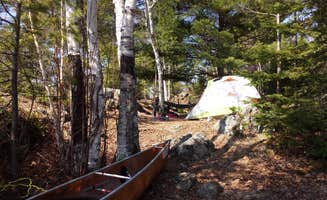
Paddling to island sites: Island campsites offer enhanced privacy and security for families with small children. At BWCA Lake Three, one camper reported, "We liked it so much we stayed there for 3 nights. It had a nice sandy area in the water near the campsite access for swimming and the access to the site was really nice."
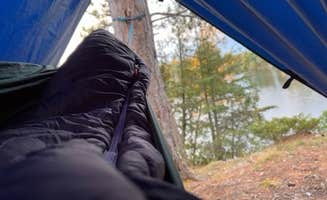
Blueberry picking: July visitors to BWCA Entry Point 6 can gather wild blueberries while setting up camp. "Plenty of hammock trees and wild blueberries everywhere in July!" reports one camper who visited the Slim Lake area.
What campers like
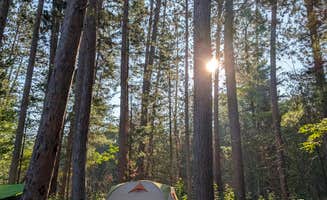
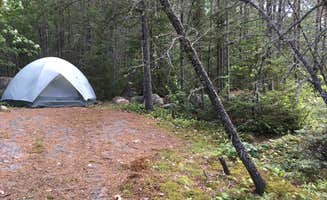
Pine-covered tent pads: Many campers appreciate the natural cushioning on tent pads throughout Superior National Forest. At Slim Lake, a camper described, "Great flat tent pads!! Under pines, more than enough room for a 6 person, 4 person and a 2 person with room for a few more small tents. Very flat pads (most of them) and all are on pine needles. Soft!"
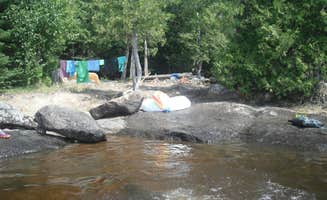
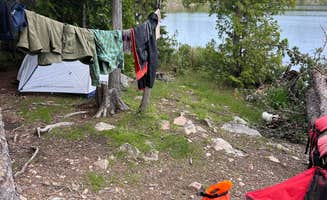
Lakefront fishing spots: Rock outcroppings near water create natural fishing platforms at several sites. A visitor to BWCA Camp 1 described, "It's truly one of the nicest on this lake...this has a great view, a little cliff for fishing (I use the word 'cliff' loosely) and a great tent pad."
Private sites: Many tent campers value the seclusion found at backcountry locations. A visitor to Nels Lake Backcountry Campsites shared, "We stayed at the hike-in site, it is very large and private and secluded, with nice lake access for swimming, paddling, and fishing."
What you should know
Toilet facilities vary: Latrine maintenance and locations differ widely between sites. At BWCA Lake One, a camper observed, "The trail to the toilet was very buggy, very rugged and overgrown and the toilet needed to be emptied or moved (it was really full)." At Slim Lake, "Toilet is up in the woods - normal pit style toilet with no walls, but hidden from camp by trees in the summer."
Permit requirements: The BWCA requires permits year-round, with quota limits from May through September. Outside the BWCA, rules differ. For Nels Lake, "You can't reserve these sites, but you also don't need a BWCA permit nor is there a fee like there is at the official National Forest campgrounds."
Road conditions: Access roads to remote sites can become challenging after rain. At Eighteen Rustic Lake Campground, a camper warned, "Road coming to the campground can be rough in places, but doable with passenger car."
Tips for camping with families
Choose island sites: Islands provide natural boundaries for children to explore safely. One camper at BWCA Lake Three shared: "We love the island sites. The kids can run around (and so can the dogs) and no one can really get lost."
Pack extra bug protection: Mosquitoes can be intense, especially on trails to facilities. One camper at BWCA Lake One noted their site "was a little buggier than the last campsite," while another at Eighteen Lake simply stated, "Mosquitos were bad run back to the twin cities!"
Consider entry difficulty: Some sites require minimal portaging, making them better for families. At Triangle Lake Campsite, a visitor described it as "About an hour paddle to get there, and includes a portage...A great secluded site for a somewhat easy quick getaway."
Tips for RVers
Limited RV options: Most backcountry sites in Superior National Forest don't accommodate RVs. For RV camping, consider established campgrounds like Canoe Country Campground and Cabins near Ely, which offers electric hookups, showers, and water.
Small trailers only: At Eighteen Rustic Lake Campground, a visitor observed the "Campground is suitable for truck campers and smaller," indicating tent camping remains the primary accommodation type throughout most of Superior National Forest.
Seasonal considerations: Most RV-friendly campgrounds operate seasonally. Canoe Country Campground operates from "May 15 to Oct 1," requiring advance planning for shoulder season visits.











 Guide
Guide


