



Leona A. Scout
Scout
ScoutCottonwood Campground — Boyd Lake State Park
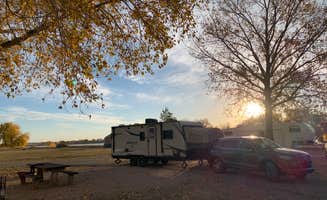
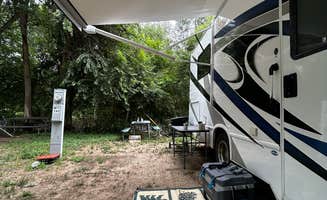
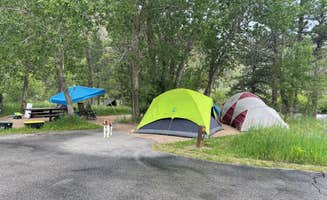
Nice, level spots. Great mountain and lake views. Great views of all your neighbors. 😉
265 campgrounds · Check availability for any dates.
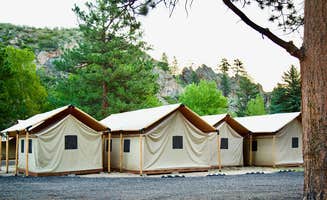
The region surrounding Laporte, Colorado features a mix of developed campgrounds and dispersed camping areas scattered throughout national forest land and near reservoirs. Established sites like Fort Collins Lakeside KOA offer full-service camping with amenities including electric hookups, showers, and sewer connections, while primitive camping is available in the nearby Roosevelt National Forest. Horsetooth Reservoir provides multiple camping areas with water access, including South Bay and Inlet Bay campgrounds that accommodate tents, RVs, and even cabins in some locations. The proximity to Rocky Mountain National Park adds additional options within a reasonable drive.
Road conditions and accessibility vary significantly across camping areas near Laporte, with many dispersed sites requiring high-clearance vehicles. Most established campgrounds remain open year-round, though facilities may be limited during winter months. Summer brings warm days and cool nights, while afternoon thunderstorms are common in July and August. Reservations are essential for developed campgrounds, particularly during peak season from May through September, while dispersed camping follows different regulations based on land management agency. Cell service is generally reliable near established campgrounds but becomes spotty in more remote forest locations. A review noted that "You simply cannot find more scenic and free camping in Colorado. I would highly recommended camping anywhere in State Forest State Park!"
Waterfront camping ranks consistently high among visitor reviews, with Horsetooth Reservoir sites attracting particular praise. One camper described South Bay Campground as having "the best view! We have camped in Colorado for over 15 years. By far the campsites with the best views!" Wildlife viewing opportunities abound throughout the region, with moose sightings common in higher elevations. Campers frequently mention the contrast between developed sites with amenities and the more rugged, primitive options in the surrounding forest. The mixed-use campgrounds near water features tend to fill quickest, especially those offering both tent and RV sites. Several campgrounds in the area feature picnic tables, fire rings, and vault toilets, while more remote dispersed sites operate on a pack-in, pack-out basis with minimal infrastructure.
"It’s not your run of the mill KOA by a highway. The lake is beautiful with a walking path all of the way around and paddle boats. The pool is nice. The miniature golf is pretty with mature trees."
"Lake, boats, water cannon boats, fishing, bikes, peewee golf, jumping thing. Walking path around lake."
"All sites have great access and close to the ponds. Variety of fish in the ponds. They allow ice fishing as long as the ice is safe."
"We enjoy Boyd Lake because it’s so easy to bike to town. A major northern Colorado bike path system goes through the park."
from $36 - $41 / night
Check Availability"There is a hairpin switchback to get into the lower loop and the website states that it is not accessible to trailers longer than 20 feet."
"Fees: $23.00 standard single $7.00 for 3rd vehicle Reservations: 877-444-6777 or recreation.gov
Out of season: FCFS
Firewood for sale by camp host located at Upper Ansel Watrous Campground."
from $20 / night
Check Availability"We have camped in Colorado for over 15 years. By far the campsites with the best views! And you can rent cabins too. Just love this place. Lake gets busy In the summer."
"The sites are picked up but not manicured by any means and there is road noise due to the proximity of the roads around the region."
from $25 - $45 / night
Check Availability"Sites are fairly close together strung out along the lake edge. In September, lake level is purposefully lowered about 20 feet from summer levels."
"This spot was well maintained, had just enough shade, incredibly close to hiking trails, close to the water, and walking distance to the camp store, and also close to a vault toilet."
from $25 / night
Check Availability"Campground is situated along the Big Thompson River. Big cottonwood trees. Easy accessibility for big rigs. Some items … water valves leak in lakes around entire park and many are leaking."
"Right next to the river. Close to some easy MTB trails. Would definitely stay here again."
"There are many places for multiple groups to be near each other, and reservations usually fill up."
"They have done a lot of work on the sites and surroundings. Family oriented and nice playground for them to play on."
from $41 - $185 / night
Check Availability"Took the kids camping in Colorado for the first time and we had a blast. It rained on us a lot but it didn't stop us. Took a great hike up deer mountain....stunning views. Can't wait to go back."
"Very enjoyable spot, close access to trails and entrance and exit of the park."
from $30 - $60 / night
Check Availability"Beautifully placed right at the curve of the Poudre, there is a short walking trail next to it,a perfect hammock place in a shallow runoff, a spot to tether tubes or paddleboards in an eddy, a picnic table"
"The drive into the Poudre Canyon is a beautiful one. We camped Thursday to Sunday. Spots are scarce and were full by Friday mid day. Some sights have shade, some do not."
from $25 - $50 / night
Check Availability"We needed a stop on the way out of Colorado and grabbed a quick night here in a tent site. Water was off for weather but stoves made much needed coffee in the cold."
"This is a KOA journey, meaning it’s great for a stopover, and it is located next to a horse farm. If you are used to smelling farm life, then the smell won’t be a problem."
from $20 / night
Check Availability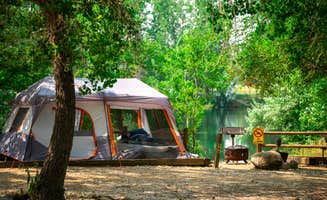






 Scout
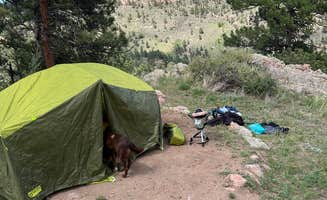
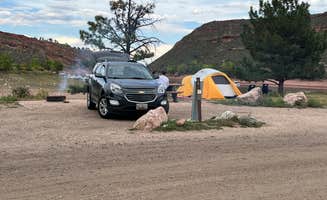
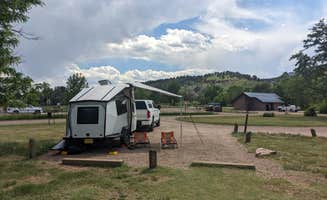
ScoutNice, level spots. Great mountain and lake views. Great views of all your neighbors. 😉

 Guide
GuideThe campground itself is great! The sites can be pretty hit or miss. Some are very exposed and crowded up with other sites; some are set back in the trees and lovely! If you have strong preferences, be careful when picking your site.

 Traveler
From a Sprinters point of view.
Sites are $45.00 a day plus parking
Sites were sloped, we took the flattest one we could find and it took 6” to block our van level.
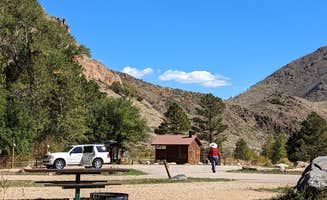
Pit toilets were very clean.
Sites had trees and boulders, spaced roughly 50’ apart, but there visible traffic on the main road below.
It was a nice campground but we liked the Bobcat Campground a couple miles farther up the road.
See separate review.
TravelerWe took our Sprinter for its maiden voyage, this camp ground was beautiful, private and secluded.
Camping was $45.00 a day plus a parking fee.
Paid at the entry point to an extremely friendly attendant. Reservations can be made on line ahead of time and highly recommended in peak season, especially on weekends.
Site were 50’ to 100’ apart.
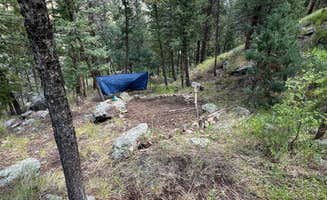
Sites were wooded and tucked into granite boulders.
In the 24 hours we were there we saw one car and two people walking their dogs.
Sites were pretty level, each with fire pits and picnic tables.
The pit toilets were very clean and with in 100’ of most sites.
Road in had signs stating you had to be in four wheel drive to avoid damaging the roads but they were very well graded.
 Guide
GuideClean facility quietly located in a metro area.
GuideQuiet campground with great views. No full hook ups, but water is available and the scenery and hiking trails are awesome.
GuideHorrible demonic should have been homeless The owners are the most greedy disrespectful sheep in wolf's people, smiles with, dont walk away they will stab you. Within the time I was there, we had a stalker( mar- may), a theif, a overdosed body( mar 7), a trailer firer( aug), health department investigation( aug) A drug raid( july) it all public information, police blotter? The owners were never around nor asked questions or concerns.( 11-2 mon, we'd, fri if lucky). Probably building there mansion in Longmont or in Missouri probably running there tax free business... The showers and bathrooms along with around the park. there great. Even if we have spending 1$ per min. They do have an amazing maintenance manager who is worth more then, cause he know and dose EVERYTHING. He been with them for years. The rest of the park not so grat, NOTHINGbut dirt road, pot hole ends up very muddy. Most tenant start off nice, but once ginger and Amanda get there venom into them turn in to snakes. I
GuideI was pulling a camper and couldn't make it to the higher up spots. the spots near the entrance are littered with gross trash. I cleaned my area but there's too much . Hiking around has beautiful views.
GuideTakes you to a private road. After walking around probably someone parking towards the back pinned the location Follow the coordinates on the other Gordon Gulch and its easy to find
The camping areas surrounding Laporte, Colorado range in elevation from 5,000 to 8,000 feet, creating diverse habitats and camping experiences across different seasons. Located where the Great Plains meet the Rocky Mountains, this transition zone creates unique microclimates with temperature variations of up to 20°F between morning and evening. Many riverside campgrounds experience limited cell service even though they're within 30 minutes of Fort Collins.
Hiking up mountains: Mt. McConnel Trail starts directly from Mountain Park campground and offers panoramic views of the Poudre Canyon. "We loved going in the winter and enjoying the sounds of the river lack of cell service for a weekend. Lots of hiking, mountain biking and rafting opportunities nearby," notes one camper.
River fishing: Multiple Poudre Canyon campgrounds provide immediate river access for trout fishing. At Ansel Watrous Campground, "Caught trout 20 yards from my tent from the Cache La Poudre," reports a happy angler. The best fishing spots are typically in deeper pools near rock formations.
Paddleboarding and kayaking: Horsetooth Reservoir permits non-motorized watercraft with designated launch areas. "The lake was great for paddle boarding, canoeing, and kayaking," reports a visitor to South Bay Campground. Water temperatures range from 55°F in spring to 70°F in late summer.
Winter camping: Several campgrounds remain open year-round with reduced services. A winter visitor to Dutch George noted, "We loved going in the winter and enjoying the sounds of the river lack of cell service for a weekend." Winter campers should prepare for nighttime temperatures that can drop below 20°F even when daytime temps are comfortable.
River sounds: The rushing Poudre River provides natural white noise at riverside sites. At Dutch George Campground, "We had a great spot right on the river with some shade. Restroom facilities were well maintained and clean... a large rock in the middle of the river creates a gentle pool/gulley right in front of this spot."
Lakeside camping: South Bay Campground offers direct lake access. "We had a great spot right on the water and our kids were able to play in the water right from the campsite," shares a visitor. The lake sites can be 5-10 degrees cooler than inland sites during summer heat.
Clean facilities: Multiple campgrounds maintain exceptionally clean bathrooms. At Mountain Park, a camper noted, "The restrooms were in all seriousness the cleanest vault restrooms I have ever seen as they were cleaned multiple times each day." Pay showers typically cost $2 for an 8-minute shower.
Stargazing: The Poudre Canyon's limited light pollution creates excellent stargazing conditions. "The sky was filled with stars after sunset," observed a camper at Dutch George Flats. The best star viewing typically occurs between 10pm-2am during summer months.
Reservation system: Many area campgrounds now use reservation-only systems. At Boyd Lake State Park, a visitor explained: "January of 2019 the park, like many in the state moved to a reservation only system... though they had open sites I could not reserve them without using the booking system."
Road noise: Highway proximity affects some campgrounds more than others. "Excessive road noise during the day, it did quiet down each night. If we stay here again we will stay nearer to the entrance or get a cabin," noted one South Bay Campground visitor. Sites further from roads typically cost $2-5 more per night.
Environmental conditions: Seasonal issues include low water levels in late summer. "The water level was very low. Though I was informed that they were higher than other lake properties, it seemed very low in comparison to other places I had visited in the region," reports a visitor to Boyd Lake. Water levels are typically highest in June after spring runoff.
Farm proximity: Some northern area campgrounds have agricultural neighbors. At Fort Collins North-Wellington KOA, "It's near a ranch, so there are some animal smells and quite a few flies. We also had a lot of earwig bugs at our site." These effects are most noticeable during hot summer days with east winds.
Playground access: Multiple campgrounds feature dedicated play areas. At Inlet Bay Campground, "I've been taking my high school Cross Country Team here for summer camp for the past 12 years. It's the most ideal spot for running, biking, swimming, hiking, and playing." The playground areas are typically open from sunrise to sunset.
Water play options: Safe swimming areas exist at select locations. "We had a great spot right on the water and our kids were able to play in the water right from the campsite," reports a family at South Bay Campground. Water temperatures are typically warmest in July and August.
Wildlife viewing opportunities: Early morning and dusk provide the best wildlife watching times. "Deer wanderer in and out of the campgrounds and were always on the road. Beware," cautions a visitor to Inlet Bay Campground. Campers should maintain at least 100 feet of distance from all wildlife.
Multi-activity sites: Some campgrounds offer diverse recreation options. "This campground was one of the most unique. When you wake up in the morning it sounds so peaceful from all the nature sounds," shares a camper at Inlet Bay, which offers fishing, hiking, and water activities all from one location.
Electric hookup availability: Electrical service varies widely between campgrounds. "Sites 1 to 32 are reservable and have electric. Sites 33 to 54 are 1st come, no hookups and some are right on the river," explains a visitor to Mountain Park campground. Most electrical sites provide 30-amp service with select locations offering 50-amp.
Water access points: Water sources aren't always at individual sites. "Electric hookups worked, but no water at the site, and 'public water' in the area was a broken water fountain. We filled up at the dump station," reports a South Bay Campground visitor. Potable water spigots are typically located within 200 feet of most sites.
Site leveling challenges: Prepare for uneven terrain at some campgrounds. "RV site not level at all. Picnic table covered in bird poop, tree branches hanging low our TT barely fit under them," warns a KOA Wellington visitor. Bringing leveling blocks is recommended as many sites have slopes of 2-4 inches.
Site selection strategy: Research specific site numbers before booking. "If you facing the water, its awesome. Residential area directly across the street kind of felt like you are on display," notes an Inlet Bay camper, highlighting the importance of site selection for privacy and views.
Frequently Asked Questions
What camping is available near Laporte, CO?
According to TheDyrt.com, Laporte, CO offers a wide range of camping options, with 265 campgrounds and RV parks near Laporte, CO and 84 free dispersed camping spots.
Which is the most popular campground near Laporte, CO?
According to TheDyrt.com, the most popular campground near Laporte, CO is Fort Collins Lakeside KOA Holiday with a 4.2-star rating from 26 reviews.
Where can I find free dispersed camping near Laporte, CO?
According to TheDyrt.com, there are 84 free dispersed camping spots near Laporte, CO.
What parks are near Laporte, CO?
According to TheDyrt.com, there are 7 parks near Laporte, CO that allow camping, notably Arapaho & Roosevelt National Forests Pawnee NG and Rocky Mountain National Park.
Keep Exploring