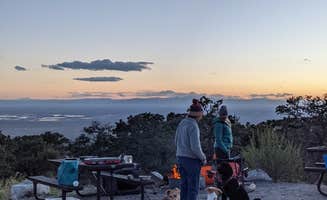
Dispersed camping opportunities surround Great Sand Dunes National Park and Preserve, offering more flexibility for pet owners than the national park's restricted areas. Most dispersed sites sit at elevations between 7,500-8,500 feet where temperatures can drop 30+ degrees after sunset, even during summer months. These free camping areas typically provide fire rings but no amenities, requiring visitors to pack in water and pack out trash.
What to do
Hike to Zapata Falls: 3 miles from campground entrance. The waterfall trail at Zapata Falls Campground provides a refreshing escape from summer heat. "The nearby hike to Zapata falls is worthwhile too, especially in winter for the giant ice sheets in the canyon," notes Marissa K., who visited during off-season.
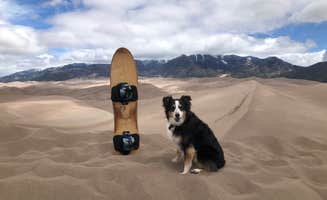
Sandboard the dunes: $20 rental fee outside park. Renting equipment before entering the park saves time and money. "I'd recommend renting a sand board before you enter the park (it was $20 at the oasis just before the park entrance) so you only have to wait in the line once," suggests Eileen C. from the campground review.
Wildlife viewing: Dawn/dusk best times. The campground areas provide excellent wildlife observation opportunities. "We heard coyotes howling close by, owls hooting, dust devils out in the valley, infinite stars," reports Irene L. who stayed near the park.
What campers like
Dark skies for stargazing: No light pollution. The remote location of Sacred White Shell Mountain dispersed camping area creates exceptional night sky viewing. "Dark skies there. You can see the Milky Way with the naked eye," writes one camper who spent over a week at the site.
Electric hookups at wildlife areas: No additional fee. State wildlife areas provide unexpected amenities. "The shelters and fire pits are nothing compared to the free electric hookup. Every person 16 and over must have an SWA pass," explains Patti T. about camping at Mosca Campground.
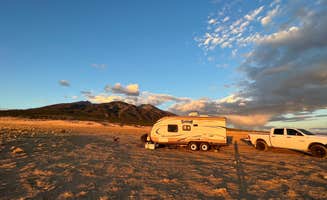
Mountain views from multiple angles: The dispersed camping areas provide panoramic vistas. "We ended up here by mistake, thinking we were at the Sacred White shell BLM. Glad we did though. Great views of The Twin Peaks and Blanca Peak," shares Greg M. who camped at a nearby BLM site.
What you should know
Access road conditions: High clearance recommended for most dispersed sites. Many free camping areas require careful driving. "The road to Zapata Falls is super rough but passenger cars shouldn't have any problem as long as you keep it slow," advises Gina J., who notes the trade-off between accessibility and solitude.
Wildlife interactions: Not just bears. Free-range livestock frequently visit campsites. "The biggest noise was the free-range cows in the morning making a raucous and using the RV as a back scratcher. They didn't visit every morning but were there several times bright and early," reports a camper at BLM Mt. Blanca Rd. Dispersed camping area.
Wind conditions: Can prevent campfires. Strong gusts affect the valley regularly. "We were unable to make a fire one of the nights which is ok. Good reason to go to Calvillo's in Alamosa (about 35 min away)," shares Teresa D., recommending alternate evening activities when conditions prevent fires.
Tips for camping with families
Hot springs access: Half-price with camping. Sand Dunes Recreation offers discounted pool entry for campers. "The hot springs consist of a large outdoor pool and a couple of smaller pools. It's $15 to soak or half price if you camp there," explains Andrew B., noting this family-friendly amenity.
Bug protection: Essential May-August. Mosquitoes can be relentless in certain areas. "July was mosquito madness. Honestly I am from the country and can deal with bugs, but being dived bombed by 30 mosquitos (not exaggerating) is intense. Be ready for battle," warns Sarah B. about summer camping.
Camp host assistance: Available at established sites. Helpful staff enhance the camping experience. "The camp host is super friendly and does a good job upkeeping the grounds," reports a visitor who appreciated the maintained facilities despite the rustic setting.
Tips from RVers
Hot water systems: Unique considerations. Some campgrounds have geothermal water sources. "If you have an RV and hook up to the water, it is fed from the hot springs so the water is always very warm. Didn't get to test out our hot water heater at this location!" shares Heidi S. at Rabbit Hole Ranch.
Site selection strategy: Look at photos first. Campsite layout can affect comfort. "Really look at the picture of your site before you book it. I brought a teardrop and it felt like I was kind of camping in the road (site 80). This site would have been great for either tent campers or someone with a very large RV," advises a camper who wished they'd researched more.
Check RV length restrictions: Some areas have sharp turns. Access roads determine which campsites work for larger rigs. "The first loops (A) we encountered was quite full, but the additional loops were almost entirely empty. Thankfully the pull-through parking spaces at each site made it super easy to park the 17.7-foot long campervan we were driving," writes a visitor who navigated carefully.











 Traveler


