Tent campsites near Lyle, Washington span from valley floors at 300 feet elevation to mountain sites above 3,000 feet in the Columbia River Gorge. The region experiences significant climate variation between riverside camps and higher-elevation forest settings, with summer temperature differences often exceeding 15°F. Most primitive camping spots in this area sit on basalt formations covered with thin soil layers, making tent stake placement challenging in certain locations.
What to do
Fish mountain lakes: Forlorn Lakes features multiple small alpine water bodies with fishing opportunities. "The fishing is excellent. Quiet campground. Easy access on forest road- some potholes," notes a camper at Forlorn Lakes. Another visitor mentioned, "For fishing, I recommend the upper (biggest) lake in the area."
Hike to waterfalls: Several campsites provide access to cascades within short walking distances. At Dog Creek Falls Camp, dispersed sites sit adjacent to the falls trail. The area connects to multiple waterfall hikes including Panther Creek Falls and Falls Creek Falls within a 12-mile radius.
Paddle on small lakes: Car-top boats work well on the numerous small lakes. A camper at Forlorn Lakes described their experience: "The smaller lake this site backs up to is great for swimming and kayak/paddle-boarding. Extremely quiet at night." Many of these lakes prohibit motorized watercraft, creating peaceful paddling environments.
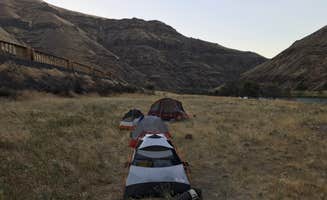
Mountain biking: The Deschutes River corridor offers extensive gravel road riding. According to one camper, "The biking was amazing and the camping was true freedom. Clear skies and twenty miles of golden wheat blowing in the wind. The entire dirt road hugged the winding river."
What campers like
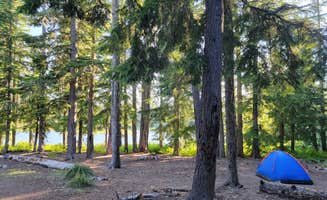
Private lake access: At Goose Lake Campground, campers appreciate the secluded water settings. "Beautiful forest with views overlooking the lake and far-off snowy mountain peaks. Really exceptional beauty here," wrote one visitor. Another noted, "The campground is on a hill (but all the camping spots are flat) so you get a great view of the lake from most campsites."
Wildlife sightings: The diverse ecosystems support abundant wildlife viewing opportunities. At Pebble Ford Campground, a camper mentioned, "Had some deer walk right through our camp spot while we sat by the fire." The river corridors and forest transitions create rich habitats for animals.
Uncrowded weekday camping: Many campsites remain available midweek even during peak season. As one Goose Lake visitor stated, "Quite campground midweek, there was only a handful of other campers spread out throughout the campground." Another camper at Rainy Lake reported finding three of four spots empty when arriving on a Saturday, noting "It's rare to find this kind of place on a Saturday in Mount Hood."
Temperature relief: Higher-elevation campsites provide escape from summer heat. At Rainy Lake Campground, a camper observed, "Visited in late June, and the weather was amazing, 15 degrees lower than in town."
What you should know
Road conditions vary significantly: Many forest access roads require careful driving. For Forlorn Lakes, a camper advised, "The road turns to gravel about 15 minutes before you reach the site and its pretty bumpy in some spots. Take it SLOWWW." Similar challenges exist throughout the region, with many sites requiring high-clearance vehicles.
Insect pressure: Mosquitoes become prevalent at certain elevations and seasons. A Rainy Lake camper warned, "The bugs and mosquitoes were overwhelming (even with deet)." At Goose Lake, another visitor suggested: "Highly recommend yellow jacket traps this late in summer. Aggressive is an understatement."
Fire restrictions: Regulations vary by location and season. In the Deschutes corridor, one visitor explained, "Very dry area covered in dry wheat and dry brush so most of the Spring/Summer/Fall campfires are not allowed." Always check current restrictions before planning campfires.
Limited facilities: Black Lake Campground represents typical amenities for primitive tent sites around Lyle. "There is no vehicle parking, but I could see bicycles and motorcycles having easy access to each campsite. A 4-wheeled vehicle will not fit in here. You'll need to park outside the campground and walk-in."
Tips for camping with families
Choose farm camping for kids: Carbon Farm Yard offers unique agricultural experiences. "The camping area is spacious and quiet. There is tons and tons of land to explore and lots of animals and wildlife to view. Lots of space for kids to run around and safely explore," reported one visitor.
Select campgrounds with swimming options: Several small lakes provide child-friendly water access. At Forlorn Lakes, a camper noted, "The smaller lake this site backs up to is great for swimming and kayak/paddle-boarding." Another mentioned that many lakes in the region are "pristine alpine lakes" less crowded than popular swimming areas.
Consider site layout and spacing: At Pebble Ford Campground, a visitor observed, "Each site is HUGE! Refreshing to see, and how cool to get here and take over all three with a party." Another camper described it as having "large sites, open vibrant area," making it suitable for families needing space.
Look for shorter hiking trails: Many camping areas connect to brief nature walks. A Goose Lake visitor mentioned, "The lake is lovely and small, great for a short walk." These accessible trails work well for younger children or families with varied hiking abilities.
Tips from RVers
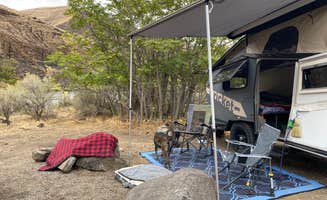
Choose lower-elevation sites for larger rigs: Leidl South Campground accommodates more substantial recreational vehicles. "Bigger than it looks at first. You can pretty much camp wherever you can drive to. Lots of spots right next to the river," reported one RV camper.
Limited hookup availability: Most camping near Lyle lacks services for RVs. Nearly all sites operate without electricity, water, or dump stations. Campers must arrive fully self-contained and prepared to dry camp.
Select established sites for larger vehicles: Forlorn Lakes demonstrates typical limitations, with one camper noting, "Trailer access limited to this area." Many forest roads become progressively narrower and rougher, restricting RV access to sites nearest main roads.












 Legend


