Glamping options near Belfair, Washington cluster along the Hood Canal shoreline where the water depth averages just 177 feet despite being a fjord. Summer temperatures typically range from 70-80°F during peak season, with cooler nights around 50°F. The region experiences approximately 51 inches of rainfall annually, concentrated between November and March.
What to do
Shellfish harvesting: Belfair State Park Campground offers direct access to productive shellfish beds. "Nestled among the trees, a great place to pitch a tent, dig clams and have a nice dinner," notes visitor Vince L. Shellfish licenses required, with best harvesting during minus tides.
Tide pool exploration: Tahuya River Campground provides good access to the eastern shoreline. "Nice campground it's pretty open but nice and quiet," writes Christopher B. Bring water shoes as the shoreline is primarily rocky rather than sandy.
Bird watching: When camping at the Hood Canal area, watch for seasonal migrations. "As the tide comes and goes, so does the water fowl. Nice campground, open sites, full hook ups," reports Kari R. about Belfair State Park. Morning hours typically offer best viewing conditions.
Hiking nearby trails: Olympic National Forest trails connect to several campgrounds. "Spacious secluded campsites along the gorgeous green glacial waters," reports Holly about Staircase Campground. Most trails are moderate difficulty with 500-1,000 feet of elevation gain.
What campers like
Beach access for swimming: The shallow waters warm quickly in summer. "We enjoyed being so close to the water for swimming and floating. It's also just a short drive into town to get supplies," writes Becky R. about her September stay at Belfair State Park.
Campsite privacy levels: Site selection matters significantly. At Dosewallips State Park Campground, "If you are looking for a more tame, less encroached camping experience, the loop that runs along the river is where you want to go," advises Michael B. River sites typically offer more separation than field sites.
Natural surroundings: The forest setting creates distinct environmental zones. "The tent loop is also quite nice and a bit more private but we have not stayed there," notes Doug about Belfair State Park. Sites typically include fire rings and picnic tables regardless of location.
Wildlife viewing opportunities: Multiple species frequent the camping areas. "Every night, my husband and I would walk to the wildlife viewing platform to see lots of birds, or walk down by the river and see lots of elk and bald eagles," shares Amy & Stu B. about Dosewallips State Park.
What you should know
Reservation timing: Secure sites early, especially for summer weekends. "The beach loop fills up quickly - get your reservations in as early as possible if you want to camp there," advises Scott S. about Belfair State Park Campground.
Site selection strategy: Research specific site numbers before booking. At Fay Bainbridge Park, "Campsite 10 looks to be the best as it has a little canopy tree and is in the corner without obstruction for a view of the Puget Sound," notes Brandon K. Many parks offer site photos online.
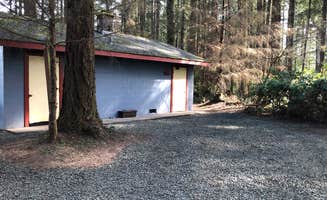
Facility variations: Bathroom and shower facilities differ between campgrounds. "Restrooms and Outhouses are numerous and dispersed throughout. Pay Showers ($.50 token) are in central Restrooms. Only 1 shower per Restroom," explains James and Susan K. about Dosewallips State Park.
Weather considerations: Prepare for rain even during summer months. "It did rain one of the mornings and ended up with a puddle under our text but it was the last day so no loss," shares Becky R. about Belfair State Park. Elevated tent pads help with drainage issues.
Tips for camping with families
Playground facilities: Some parks offer specialized play areas. At Fay Bainbridge Park, visitors note "Amazing kids area pirate ship. Great beach walk and good camp sites," according to Tanya B. The playground equipment is suitable for children ages 3-12.
Water safety: The Hood Canal shoreline offers family-friendly swimming areas. "The beach was great, water is rather warm for in the sound, it's also pretty shallow which is great for the kids to play in," shares Leah H. about Dash Point State Park Campground. Water temperature averages 55-65°F during summer.
Activity planning: Many parks offer educational opportunities. "Hiking trails and river access are accessible through the campground and Day Use area," reports James and Susan K. about Dosewallips State Park. Most trails near campgrounds range from 0.5-3 miles in length.
Campsite selection for families: Choose sites based on proximity to facilities. "The Rv spaces are close together but each site has water and electric. The downside is there is no sewage dumping site at the park. However there are public bathroom available," notes ML D. about Fay Bainbridge Park.
Tips from RVers
Hookup availability: Electric and water connections vary by park. At Mike's Beach Resort, "There are several RV hookup site all with fire pits. There aren't flushing toilets, just an it house," notes Rich M. Most sites offer 30-amp service rather than 50-amp.
Site dimensions: Some parks accommodate larger rigs better than others. "Small sites with little privacy but very well kept for a heavily used park. That is the waterfront loop," explains Doug about Belfair State Park. Length limitations typically range from 25-40 feet depending on the campground.
Dump station access: Plan ahead for sanitation needs. "No sewer at our site, but we did have electrical and water. Dump station close by worked great on exit," shares Lauren M. about Dosewallips State Park. Most parks charge $5-10 for dump station use for non-campers.
Parking considerations: Some sites offer limited space for additional vehicles. "Parking was wide enough to fit my RV and my son's big Panel Truck," notes Travis P. about Saltwater State Park, though they paid an extra $10 fee for the additional vehicle.














 Legend


