Pisgah National Forest spans over 500,000 acres across western North Carolina, with elevations ranging from 2,000 to 6,000 feet creating diverse microclimates for campers. The forest contains some of the oldest mountains in the world, with tent camping opportunities available in valleys, ridgelines, and alongside numerous waterways. Temperature drops of 20-30 degrees can occur between day and night even in summer months at higher elevations.
What to do
Mountain biking trails: The forest offers technical single-track routes for experienced riders. Paradise Ridge Permaculture provides convenient access to nearby trails. A camper noted, "We're only 20-ish minutes from Asheville" making it easy to reach popular riding areas.
Waterfall hikes: Several accessible waterfalls dot the region. At Celtic Camp, visitors can reach falls with minimal hiking. "This place was amazing! We went at a time they were not even charging campers to stay," shared one visitor who enjoyed hiking after each day's work in the area.
Fishing: Trout fishing is popular in forest streams. "The fishing there is absolutely beautiful and the trout are pretty plentiful up there," notes a camper about the forest's waterways. Most streams require a North Carolina fishing license, available online or at local outfitters.
What campers like
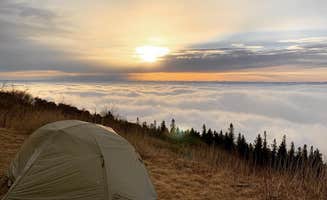
Natural springs: Some tent campsites near Pisgah National Forest feature fresh water sources. At Maple Camp Bald, "0.4 miles from the bald is a nice water source," mentions one visitor. Springs provide drinking water when properly filtered.
Secluded options: Many sites offer privacy from neighboring campers. "The campsites are so spread out that the only noises you'll hear are the numerous creeks that flow off the mountain or a car driving up or down the gravel road," reports one forest camper who appreciated the quiet setting.
Loop trail access: Several camping areas connect to trail networks. A visitor to Black Bear Campground mentioned, "There are trails in and around the campground," allowing campers to explore without driving elsewhere.
What you should know
Bear activity: Black bears inhabit the forest year-round. "Please please please pick up after yourselves!!! No trash left behind!!!" urges one camper who found trash with animal blood, indicating wildlife had been injured by improperly disposed waste.
Weather preparation: Mountain weather changes rapidly. At one tent site, a camper reported, "My mistake was not paying attention to where the runoff was. This morning I had a small stream running through my camp." Always check terrain before setting up.
Water access: Many primitive sites lack piped water. At Bear Creek Mountain Campground, campers "find your own spot in the mountain" but need to pack in water supplies or have filtration systems for nearby sources.
Tips for camping with families
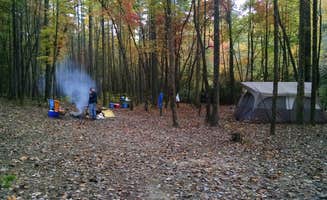
Group camping options: Sites specifically designed for multiple families exist in the forest. "This is perfect for someone new to camping as the utilities are very clean and you don't feel extremely isolated," mentions a camper at Black Bear Campground.
Animal encounters: Some campgrounds offer animal interactions. Sage Nesbitt Farm provides tent camping on a working family farm, giving children opportunities to learn about agriculture and animals in a camping setting.
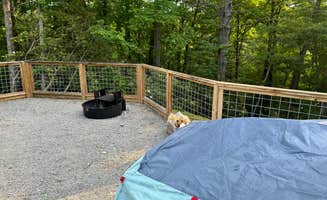
Fire safety: Teaching proper fire management is important. "The fire pits are more of just a cooking option as they are small and open on both ends," notes a camper at Catawba River, highlighting the need for extra care with campfires in some locations.
Tips from RVers
Walk-in tent alternatives: Several tent camping areas near Pisgah National Forest offer options for those without RVs. At Catawba River, "you can park and walk-in to your campsite. The sites were all so unique and cozy in a little circle path that takes you down by the water."
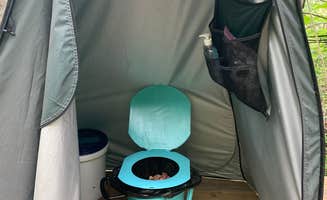
Limited facilities: Most primitive tent sites lack RV hookups. One camper described a tent site as having "no running water but I do provide drinking water, no electricity but just enough solar lights to help you get around in the dark."
Terrain challenges: Many tent-only areas have rough access roads. "Just the drive up the mountain is enough to take your breath away," comments a camper about the forest roads, indicating careful navigation is required for vehicles.











 Traveler


