The Wendell Depot area sits at the transition between Massachusetts's Berkshire foothills and Connecticut River Valley, with elevations ranging from 500-1100 feet throughout the region's state parks and forests. Summer temperatures typically range from 65-85°F, with higher humidity near water bodies. Nighttime temperatures can drop into the 50s even during summer months, requiring campers to pack layers regardless of season.
What to do
Kayaking on Tully Lake: Bring your own craft or rent from the campground to explore the many islands and coves. "We rented kayaks right at the campground for a paddle around Tully Lake. Great trip! We will be returning," shares Megan G. from Tully Lake Recreation Area.
Tubing on Ashuelot River: The river provides a gentle current perfect for relaxing tube rides. "We took a lazy tube ride from one side of the campground to the other. It has been quite dry in the area, so they are experiencing a drought. However, a little rain in the week got the river moving a bit," notes a reviewer at Ashuelot River Campground.
Summit Mount Monadnock: For more challenging terrain, this peak offers extensive views across multiple states. "The White Dot Trail starts off flat, but that's very short-lived. The trail begins to climb steeply pretty early on. The second half of the trail is very steep with lots of rock scrambles," explains a hiker who stayed at Gilson Pond Campground.
Mushroom hunting: The forested areas around Fort Dummer State Park provide excellent mushroom foraging opportunities in late summer and early fall. "Plenty of woodlands to explore! 🍄🍄🍄," notes one camper who visited in September.
What campers like
Car-free camping experiences: Without vehicles at campsites, the atmosphere changes dramatically. "Sites are car-free which was great for peace of mind as our toddler roamed around. It also made for a super quiet stay," writes a family at Tully Lake Recreation Area.
Waterfront access for paddling: Direct water access ranks high on camper priorities. "We've been coming here for 3 years and we always have a blast. It is so convenient to camp right on the lake. We can drop our paddle boards in any time and explore the lake," shares Juliet P. about Lake Dennison Recreation Area.
Clean facilities despite rustic settings: Many campgrounds maintain high standards despite remote locations. "The bathrooms are immaculate. The showers take coins but the facilities are some of the best I've seen while camping on State Park grounds," reports a visitor to Gilson Pond.
Wildlife viewing opportunities: Early mornings and evenings provide excellent wildlife spotting. "We hiked the 4-mile loop around Tully Lake. We saw beavers along water-adjacent trails and various bird species including hawks and herons," notes a camper.
What you should know
Cell service limitations: Coverage is spotty throughout the region. "There is zero cell service (there is an operational pay phone at the showers) which is fine... but wished we knew ahead of time," reports Tim S. about Erving State Forest.
Non-resident fee differentials: Non-Massachusetts residents pay significantly higher camping fees. "Fees in 2020 are only $17 for MA residents, but $55 for out-of-staters," warns a camper about Erving State Forest's pricing structure.
Coin-operated showers: Most state campgrounds require quarters for hot showers. "The showers take coins and the facilities are some of the best I've seen while camping on State Park grounds," explains a visitor to Gilson Pond.
Limited site availability during peak weekends: Popular weekends book months in advance. "This campground has two sides. The side we stayed on didn't have a dishwashing station. The nearest one was over a mile away in the other half of the campground making it very inconvenient," notes Nicole P. about planning limitations.
Tips for camping with families
Choose north side sites at Lake Dennison: The quieter section offers better family camping. "The sites on the North side are spacious & quiet. The other side of the campground (east) has a lot of noise pollution from the nearby road which is used by logging trucks," advises Bonnie B. from Lake Dennison Recreation Area.
Book site #4 at Erving State Forest: This specific site offers exceptional privacy. "We stayed at site 4 and we think that it was one of the best sites in the campground. We didn't have neighbors on either side of us. We only had neighbors across from us," recommends Rachael K.
Consider Otter River for balanced amenities: The campground offers family-friendly facilities without being overly developed. "I loved this little campground, it was relaxing, beautiful, and had enough to keep us busy!" shares Matt R. about Otter River State Forest.
Reserve waterfront sites early: Sites with direct water access book quickest. "There are only 27 sites, but in 2020 many of the ones served by composting toilets are closed. You need reservations in advance," advises a camper at Erving State Forest.
Tips from RVers
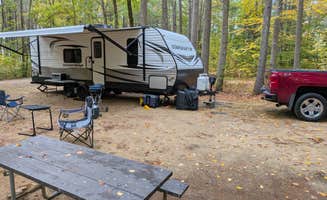
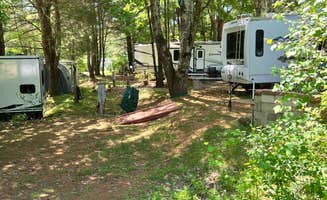
Ashuelot River Campground accommodates larger rigs: The campground has suitable sites for big RVs. "We were in site 59, a pull-through with water and 30/50 amp service. The site was level and easy to get into and park. We were in a fully wooded area on the left side of the campground," explains Rae-Ann W. from Ashuelot River Campground.
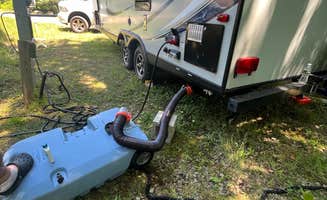
Limited RV options at state parks: Most state campgrounds have few RV-suitable sites. "Only 7 sites are suitable for a trailer/RV, 4 of them with electric hookups (add $10 to the site rate), but none with water," advises a camper about Monadnock State Park.
Site 33 at Otter River works for RVs: This specific site offers needed space and access. "Site 33 is large and level, suitable for an RV, but Group B site is right behind it, which may or may not be an issue," notes Jean C. about Otter River State Forest.
Download maps before arrival: GPS and cell service frequently cuts out. "Download your maps for offline use! Cell connection was horrible heading up here," warns a camper about navigation challenges in the region.












 Guide
Guide


