Camping spots near Chatsworth, Georgia offer diverse terrain from 700 to 4,000 feet elevation, creating unique microclimates throughout the region. The Cohutta Wilderness surrounding the area contains some of Georgia's most remote camping opportunities, with late summer temperatures often 10-15 degrees cooler at higher elevations than in nearby towns. This mountainous area receives approximately 60 inches of rainfall annually, creating numerous streams and waterfalls for campers to enjoy.
What to do
Fishing opportunities: Lake Conasauga provides excellent bass fishing in a serene environment. The lake is "full of bass and brim and is perfect for kayak fishing," according to one camper. Another visitor mentions that despite the remote location requiring "over an hour down a gravel road," the fishing makes it worthwhile.
Waterfall exploration: Several trails lead to impressive cascades throughout the region. At Ball Field Dispersed Camping Area, you can "hike up to the top of nearby Bald Mountain and then hike down to the Conasauga River" where multiple waterfalls await. One reviewer notes the Emery Creek Trail at the back of the camping area provides access to additional falls.
Swimming in natural pools: Many campgrounds offer creek or lake access for cooling off. Hickey Gap features what locals call "a water hole swimming area down the creek a half mile hike," though water levels vary seasonally. At Woodring Campground, sites are positioned where "you can take a trail down to Carters lake" with areas that are "rocky with no beach but fun for older kids to swim."
What campers like
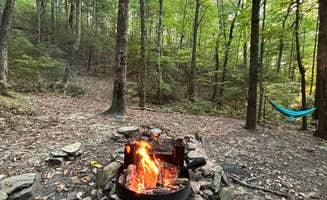
Primitive camping with privacy: Hickory Gap provides secluded sites with basic amenities. One visitor described it as "an awesome little dispersed campground alongside a beautiful stream and extremely secluded!" Another camper mentioned it has "private campsites" that are "very close to Mill creek which is a stocked trout stream."
Lake views: Many campers prefer sites with water visibility. At Doll Mountain Campground, one reviewer highlighted that "space 45 was awesome if you are tent camping. Electric, water, space, privacy, path down to water, and great views of the water!" Another visitor praised the "great views overlooking lake" with "level site, full hookups."
Stargazing: Low light pollution creates excellent night sky viewing conditions. Ball Field Dispersed Camping Area is praised for being "remote, little light pollution, and deep in the mountains." A reviewer suggested: "Go here on a new moon night in the summer and you're sure to have a great night of uninterrupted beauty!"
What you should know
Road conditions: Many campgrounds require driving on unpaved mountain roads. Lake Conasauga requires "patience and a while to get here" as the "rough gravel forest service roads are best traveled by a higher clearance vehicle." Another camper noted, "the road up there is all rock/dirt with a several hundred foot drop-off on the right side and no guardrail."
Bear activity: Wildlife encounters are common in this region. At Fort Mountain State Park Campground, visitors are warned about bears "upon arrival" with one camper noting, "We had bear visitors, something they'll warn you about upon arrival. The bears just added to the appeal of this place though." Proper food storage is essential at all area campgrounds.
Limited cell service: Connectivity varies significantly by location. Ball Field notes "the cell connection is intermittent and usually only one bar (or no cell)." Hickey Gap has "no cell service or security so make sure you're making safe decisions."
Tips for camping with families
Look for campgrounds with swimming areas: Several sites offer kid-friendly water access. At Woodring Campground, families appreciate that "there is a swim beach" and "the lake is clear and scenery is awesome." One reviewer mentioned: "We enjoyed the campground with the lake/beach area for the kids to swim. Very relaxing and the sites had some room to run around."
Consider ease of access when choosing sites: Some areas require hiking to reach. At Fort Mountain State Park, platform sites require planning as "the distance to the platforms is definitely further than 100 yards, the trail is full of large roots and rocks, and it is a steep incline to haul your gear" which can be challenging with children.
Pack for variable temperatures: Weather can change quickly in mountain environments. Even in summer months, nights can be cool at higher elevations. One visitor to Lake Conasauga reported camping there in various seasons, noting temperature differences of "often in the 30s at night but nice in daytime" even during warmer months.
Tips from RVers
Check site dimensions before booking: Space and access vary significantly. At 411 River Rest Campground, RVers note that "sites are big and spread out OK" with "several full hook up, pull through, river front" options. A visitor mentioned "the sites are very level and we didn't have to level the axles at all."
Plan for limited hookups at remote sites: Many campgrounds have partial or no services. While most established campgrounds offer water and electric, not all have sewer connections. Doll Mountain has "water, electric, space, privacy" at select sites, but sewer hookups aren't universal throughout the campground.
Consider altitude challenges: Higher elevation campgrounds present unique situations. RVers should be aware that mountain roads can be steep with tight turns. One camper at Doll Mountain noted that "no campsites directly on the lake, it is a mountain so it's steep terrain" which affects how RVs can access water features.













 Guide
Guide


