












 Legend
North Pines Campground — Yosemite National Park
Ranger Review: Wenzel Grand Basin 10 tent at North Pines
North Pines is one of three campgrounds on the floor of Yosemite Valley. Across the Merced River from the other two campgrounds and adjacent to the horse stables, it is relatively isolated with no major roads running by it. Nevertheless, it is well connected to the rest of the valley amenities, with a quick walk to the bus station, a longer walk (1 mi) to the visitor center via the Valley Loop Trail, or a drive (if you don't mind braving traffic and searching for parking spaces).
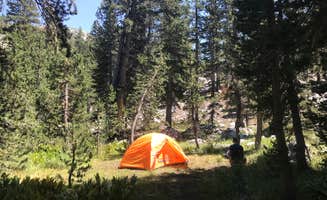
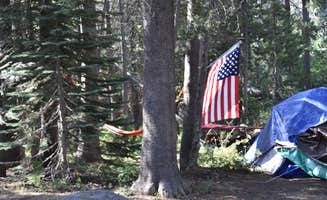
The sites are not well defined. You have a place to park and besides that, it is a little of a free-for-all with the adjacent sites as to where you set up your gear. Despite that, we had plenty of room to set up our large 10 person tent, without feeling crowded or that we were overspilling our space. We were there the last weekend it was open (Oct 26/27) and all sites were booked. There are no hook-ups, and the comfort stations only have toliets and sinks (no showers), a fresh water faucet, and a disposal "toliet" for dish water. All dishes must be washed at camp. The facilities were fairly clean, though the disposal toilet often backed up. Being late October, I was expecting very cold conditions. But the weather was great! 70s during the day and 40s at night. Clear skies. Absolutely beautiful.
Our site was located right next to the comfort station, and in hindsight I wish we had found a place a little farther away. But besides the proximity, our site was nice with a fire pit and picnic table. Quiet hours are from 1000-0600, and we had to remind our neighbor campers who came back drunk at midnight to shut it, but that seems to be more the normal than abnormal these days. There were mostly tents in the campground, with a few small RVs and trailers. Generators are allowed during limited hours, but the noise wasn't overwhelming, since they were few and far between.
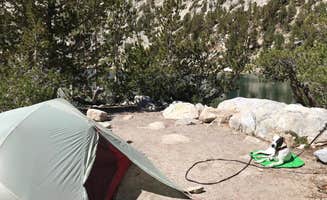
As a Ranger for The Dyrt, I get products to test from time to time. This weekend I got to test the Wenzel Great Basin 10 tent (https://wenzelco.com/great-basin-10/). Overall, my impression of this tent is that it is a solid and reliable tent. Yes, it has a few design items that could be improved for ease of use, but overall it served us well and I look forward to using it again. The tent is a domed center-opening design, with two side "rooms" that can be separated by zipped curtains, making three interior spaces total. My husband and I filled up on room with two large cots facing length wise (we had them oriented along center line and still had enough room to move along the sides). The other side has more than ample room for my daughter's small cot, which ran the width of the tent along the side window. Very comfortable for three people.
Yes, this is a huge tent. Can it be set up by one person? Probably, if that person is patient and tenacious. Two people work much better. A few design items we found annoying were the pole connections, which would frequently catch on the tent pole sleeves and center strap. Also, the zipper flap on the tent's door would frequently get caught in the zipper, making it almost a necessity to use two hands to open and close the tent. Besides these two small inconveniences, the tent worked great. The rain fly fits snug against the tent roof. The construction felt sturdy and we liked the design of the three interior rooms.
Overall, we had a fun two nights in Yosemite. We might make a tradition out of going for the closing weekend each year.


