Sierra National Forest dispersed camping offers primitive sites on public lands without developed facilities. Free dispersed camping is permitted along many forest service roads between 4,000-7,000 feet elevation, providing alternatives when national park campgrounds fill up. Most areas restrict stays to 14 consecutive days within a 30-day period, with maximum stays of 28 days per year in any single location.
What to Do
Snowplay activities: During winter months, Goat Meadow provides accessible dispersed camping with seasonal recreation opportunities. As camper Alexander notes, "When I was there recently, some of the 'campsites' had 0-3" [of snow], whereas other spots were about 6-8". Consequently, there were about 6-8 cars/vans that ended up camping in the parking lot of the snowplay area... around 7am, the place filled up with people sledding."
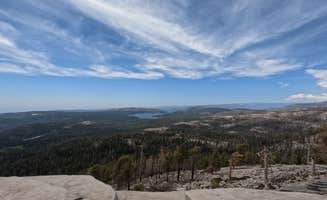
Fire tower visits: Exploring lookout points offers panoramic views of the Sierra landscape. "The coolest thing was the fire tower called Delilah lookout. Highly recommend!" shares Ray about his stay at Sequoia Forest Hunting Area, where he unloaded his dual sport motorcycle for trail exploration.
Chicago Stump hike: This historic remnant from the 1893 World's Fair sits near several dispersed sites. "Very close to the Chicago stump! Lots of wood laying around also," reports Mario about his stay at Cherry Gap OHV Staging Area. Another camper mentions it's "a quick walk to the Chicago Stump which is a must see."
What Campers Like
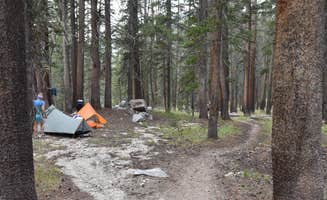
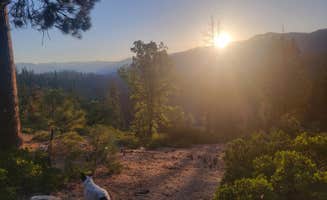
Privacy and seclusion: Many dispersed areas provide quiet camping away from crowds. At Sequoia Forest Hunting Area - FS 13597, camper Renee notes, "While the road to get up there is a bit nerve wracking (hoping no one comes around those corners the other direction!) It's worth taking it slow and steady. We were the only ones there and enjoyed a very peaceful night bathed in moonlight."
Proximity to national parks: Free sites near park boundaries save on camping fees. "Great spot near Yosemite south entrance. Very quite and private," shares Clément about Goat Meadow. Another camper adds it's "about 1 hour from the valley visitor center."
Established fire rings: Many sites feature existing fire pits for safe campfires when allowed. "Beautiful views, quiet, peaceful & there are some fire rings already built," notes Olivia about her Cherry Gap experience, though campers should always check current fire restrictions before planning to have a campfire.
What You Should Know
Road conditions vary widely: Some forest roads require high clearance vehicles while others accommodate standard cars. "Took a right off the main road (Rd 180) where you see signs for the Chicago stump. Took the road a little bit further than the pinpoint where there was a split and took a left... I'm driving a 170 wheelbase extended Sprinter and had a little difficulty to get in," explains Frank about navigating to Cherry Gap.
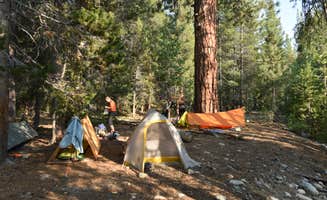
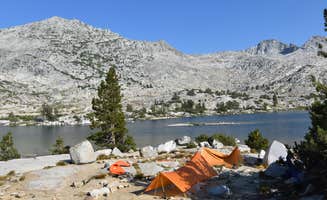
Seasonal access considerations: Winter and spring conditions can limit accessibility to higher elevation sites. One camper at JO Pass advises, "If you are looking for a challenging hike, beautiful views, and complete seclusion...this is it. The landscape is rocky so you will need to be careful when setting up your tents and also be aware of any fire dangers or restrictions."
Cell service limitations: Coverage varies dramatically across the forest. "We had 2 bars of Verizon and intermittent T-Mobile signal," reports a camper at Road to Armenian Camp. Others note having good service at Goat Meadow: "Had great cell service through Verizon."
Tips for Camping with Families
Choose accessible spots: Some dispersed areas offer easier access for families with young children. "Plenty of space for all vehicle sizes. Roads are very accessible. Nice and wooded," mentions Ty about Goat Meadow, making it suitable for family camping.
Prepare for wildlife encounters: Wild animals frequent many dispersed sites. "Coyotes and bears are active in the area—coyotes raided a bag I had hanging from a tree and stole my food!" warns Alexander about Bald Mountain Lookout, emphasizing the importance of proper food storage.
Plan for bathroom situations: No developed facilities means families need strategies for bathroom needs. Steph describes one backcountry site: "Their is little privacy so a steep ascent up the hill on the other side of the trail is where you'll need to take care of 'personal Matters' there's a bit of a trail that'll take you up there if you can find it."
Tips from RVers
Measure clearance requirements: Forest roads often have low-hanging branches or narrow passages. "If you enter from the Tamarack trail head and go down Rock Creek Rd its easy to get to the overlook tower. If you enter from the Dinkey Creek entrance get ready for some good offroad ohv trail action. I was able to get my 13ft offroad camper up there but it was a struggle," cautions a camper at Bald Mountain Lookout.
Know your turning radius: Tight corners on forest roads can challenge larger rigs. One camper at Road to Armenian Camp notes, "Curvy, narrow road. No great pull outs for larger vehicles," while another reports, "The road was a little windy getting up here, but it was completely paved and we were able to get up here without any problem in our 11,000 pound class B plus Winnebago."
Plan for dump station access: With no hookups at dispersed sites, RVers need waste management options. "The nearest dump station is at Sequoia RV Park in Dunlap, you just drop $20 in their box and use any available site they have," advises a helpful camper about options near Road to Armenian Camp.














 Legend


