

P
Pete V. Guide
Guide
GuideKaibab National Forest
Kaibab National Forest road 305
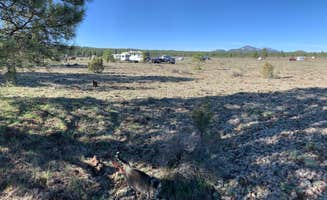
Disperse boondock camping in Kaibab National Forest near Grand Canyon National Park
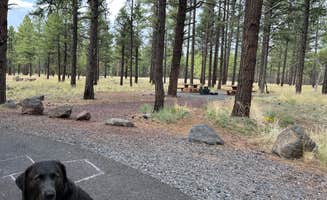
Kaibab Lake Campground permits pets throughout its established sites while enforcing standard leash requirements for visitor safety. Located in Williams, Arizona, this campground operates seasonally from May through September and accommodates both tent and RV campers. The campground provides essential amenities including drinking water, toilets, trash disposal, and picnic tables, though lacks electric hookups or showers. For those seeking dispersed camping options, Garland Prairie Road and Forest Service Road 328 dispersed camping areas also welcome pets in a more primitive setting with free camping and minimal amenities. These primitive sites require campers to pack out all waste and provide no drinking water, toilets, or electrical connections.
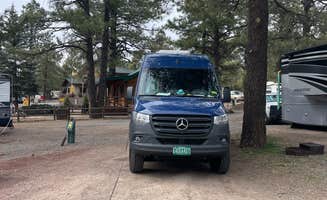
Dog-friendly campgrounds near Grand Canyon South Rim offer several pet-friendly alternatives with varying amenities. Grand Canyon-Williams KOA and Williams-Circle Pines KOA provide more developed facilities including cabins that accept pets, along with full hookups for RVs and modern restroom facilities. Raptor Ranch RV Park & Campground, located about 30 minutes from the Grand Canyon entrance, offers a convenient location for South Rim exploration with pets. The campground provides clean bathrooms and pet-friendly tent sites starting at $19 per night. Most pet-friendly campgrounds in this region implement standard policies requiring leashes no longer than six feet, proper waste disposal, and restrictions against leaving pets unattended at campsites. Wildlife encounters remain a significant consideration when camping with pets in this region.
"Showers and bathrooms were clean and the cabins were pet friendly."
"when we booked this we assumed the campground was actually close to the Grand Canyon since it’s in the name but when we got there we realized our mistake. the campground was busy but clean. very few showers"
"Plenty of room to spread out, different scenery depending on where you park & how far in you drive."
"It’s the perfect location to hop on the Grand Canyon Railway if you’d like to ride the train from Williams to the Grand Canyon(then have 3 hours there to explore)."
"Nice park, plenty of amenities, dog park, pull thru sites..close but not unbearable...plenty of room for tip outs..Close to Williams, hour drive to Grand canyon NP."
"I only stayed one night but could have made an entire vacation in this one location. Close to Winslow and the Grand Canyon, beautiful park setting, excellent park store, and the staff were wonderful."
$25 - $75 / night
"Right by the roadside but en route to Grand Canyon, staff are super helpful and emailed bathroom code quickly despite my late arrival."
"Sites are pretty close together, and you don’t have much distance between you and the main highway. They do have a propane fill up which is very handy."
"There is no dog park but there is a walk around path. There are a lot of weeds around the perimeter"
"Downtown Williams is within walking distance and has lots of restaurants, shops and bars. We also walked over to the Grand Canyon Brewery for beers and pizza one evening."
$32 - $225 / night
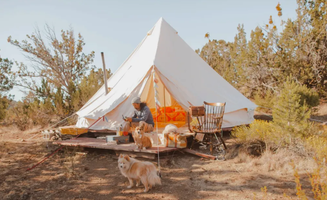
"We camped in the Kaibab National Forest in Williams, AZ for my friend's birthday and it was absolutely amazing! So peaceful and relaxing! I will definetly go again!"
"The Kaibab National Forest is a beautiful area; roads leading all directions, not all of them connect. We were pretty excited to camp under the stars. The skies here are BIG!"
$6 - $50 / night
"But honestly the camping is nearby to all the action, pets allowed, fun for kids, plenty of room to run free, lots of shade and tables."
"The site was fairly close to a restroom and there was some noise from the air dryers and the door opening and closing throughout the night."
$30 - $300 / night
"Dogtown lake, named for the prairie dogs who inhibit the area, is a great little spot tucked away in the forest not far from Williams, AZ on Route 66."
"We came in late on a Saturday evening and had to settle for a roadside spot with no shade."
"I've found that any exits on I-40 in Arizona that have a no truck symbol are dispersed camping sites. I'm on Welsh rd exit 151. Really a nice spot."
"North side of I-40 at the Welch Rd exit. It's a large flat area with a number of established camp sites. Although it's close to the interstate, it's relatively quiet."
$26 / night
"Primitive camping in beautiful, cool Arizona forest. Most campsites offer a lot of privacy. Dirt roads are a bit rough, so SLOW is an important word!"
"Had to walk around to avoid bee entering mouth while eating. And putting away washed dishes was a challenge to keep none from entering storage bag. Otherwise the ospreys were awesome."









 Guide
GuideDisperse boondock camping in Kaibab National Forest near Grand Canyon National Park

 Scout
ScoutWe camped in the Kaibab National Forest in Williams, AZ for my friend's birthday and it was absolutely amazing! So peaceful and relaxing! I will definetly go again!
 Guide
GuideThis site was just inside the Kaibab National Forest. Beautiful trees, nice dark sky with a million stars and a stones throw to the south rim. Would highly recommend.
 Guide
GuideThis is a historic dam site (1898 and 1911) that actually contains two separate dams. Accessible through north Welch Rd campground via Forest Service Rd 6E. This site is managed by kaibab National Forest and there are a few camping sites available.
 Guide
GuideFR688
Tusayan, AZ
35.9252565, -112.1247050
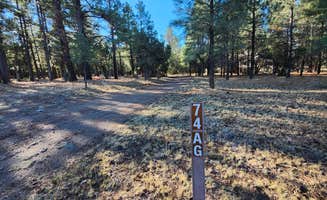
Ponderosa Pines in Kaibab National Forest.
Saw at least a dozen bigger rigs with better backing skills than us tucked away from the road.
Lovely to see trees after 2 months of desert. Had cows fairly close, deer in the distance. Lots of birds.
Verizon 1-2 bars, ATT showed 1 bar but was unusable. This was fairly close to the entrance with no booster.
Grounds reasonably clean, I've seen worse. 2 grocery bags over 14 days of broken glass, nails, plastic, used foil, beer caps, shell casings etc on my walks.
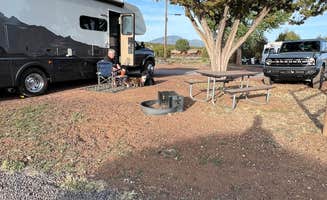
Several spots have nice firepits.
There is some road noise, but not bad.
Close to GCNP & free. If you have a pass, use the left lane for quicker entry.
Restaurants & groceries in the area are at tourist prices, bring what you need or be prepared for sticker shock.
Propane is available at the RV park just past the general store.
We refilled water jugs inside the park at their Spring Water stations each time we went. Laundry at Mather Campground.
Definitely do Desert View Drive while in the area. Gorgeous views & able to get away from the masses at Grand Canyon Village.
Would stay again if in the area.
If coming in late for longer than 1-2nts. Take the 1st spot you can fit into & scout out the next morning. Lots of car/van campers were just here for the night, and there are many easy spaces tucked back from the road that are hard to see from the road when towing. We parked just off the road near the entrance and grabbed a great spot 48hrs later when some neighbors left.
GuideThe Kaibab National Forest is a beautiful area; roads leading all directions, not all of them connect. We were pretty excited to camp under the stars. The skies here are BIG! So quiet, and peaceful. We were thrilled to find a camp spot in a small meadow with a pond that the wildlife used for water.
Some roads were rough, needing a four wheel drive; just our style; some are more than an hour from pavement,; again, exactly our style. It was fun to look, and then look again for just the right spot. This area is just north of the North Rim of the Grand Canyon, so be sure to check that out. There is a lot to see here. If you are looking to camp on National Park property, get there early and make a reservation. We opted for primitive camping and were thrilled with it.
 Guide
GuideOn our way around the west from Louisiana our first major stop was the Grand Canyon. After a long day of driving and exploring we needed a spot to set up for the evening. I came across this spot on here and it did not disappoint.
This spot was just off of our route out of the park. Off 64/desert view dr. Turn onto coconino rim road / fire rd 310 and go down the dirt road until you cross over the cattle guard. We found a lovely spot right by the Kaibab national forest sign.
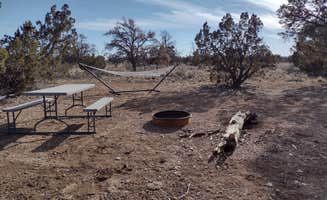
The spots are not clearly marked but one had a picnic table. Some had fire rings, although there was a burn ban due to the Dragon Bravo Fire at the north rim.
We set up and had a very peaceful sleep. It got a lot cooler in the evening into morning. The morning was slow, which never happens. We sat around listening to nature come alive for the day while we made breakfast and charged our battery packs.
All in all, highly recommend this spot. My Honda odyssey did great getting back there. There are no facilities and no hook ups.
ScoutIts good to be amongst the trees! Its a well kept park with amenities such as a private trail head leading out into national forest, a dog park, and a seasonal laundry mat.
Just a short drive away from dining and shopping!
Make this your hub when exploring Northern Arizona!
 Traveler
There is no dog park but there is a walk around path. There are a lot of weeds around the perimeter
Kaibab National Forest camping areas range in elevation from 5,500 to 7,000 feet, offering cooler summer temperatures compared to lower desert regions. During peak season from May through September, nighttime temperatures can drop to 40°F even when daytime highs reach 80°F. The forest's ponderosa pine ecosystem provides both shaded and open camping opportunities with wildlife viewing possibilities throughout the area.
Fish at Kaibab Lake: The 55-acre lake at Kaibab National Forest Kaibab Lake Campground provides excellent fishing opportunities. "The lake is stocked with trout throughout the summer," notes camper Melissa S., who visits frequently with her family. Bring your fishing license and tackle—the lake features a fishing dock and boat launch ramp.
Wildlife watching: Early mornings offer the best wildlife viewing opportunities throughout the forest. At Forest Service Road 328 Dispersed, one camper reported: "We had a huge bull elk with his cows walk right past our camp," making this area excellent for wildlife photographers. Morning and evening hours are prime time for deer, elk, and various bird species.
Visit Bedrock City: Located at Raptor Ranch, this unique attraction celebrates the Flintstones cartoon. "Kids loved it, great halfway point to the Grand Canyon to spend the day, bed rock city and raptor tour was great," reports Lorena V. The ranch also offers falcon demonstrations three times daily, providing educational opportunities about birds of prey.
Spacious, private sites: Many forest campgrounds offer significant separation between sites. At Dogtown Lake Campground, campers appreciate the generous spacing: "Site 31 was large enough for a family of 6 and 2 large tents," reports Penny A. The campground's layout helps preserve privacy despite being a popular destination.
Cooler temperatures: The higher elevation provides relief from summer heat. Campers at Garland Prairie Rd Dispersed Camping value the climate: "We've stayed here twice. Once in a tent and once in a cabin. They offer nicer cabins that's almost its own little house," notes Jordan H., who appreciates the cool evenings even in summer.
Pet-friendly environment: Most camping areas welcome pets with standard leash requirements. "The camper cabins were a warm and welcome abode after roughing it boondocking for a while. Showers and bathrooms were clean and the cabins were pet friendly," states David R. about pet friendly camping near Kaibab National Forest. Dogs should remain leashed throughout camping areas for wildlife and visitor safety.
Seasonal limitations: Most established campgrounds in the forest operate only from May through September. Outside these months, facilities may be closed or have limited services. "We camped there the second week of March during spring break. It was perfect! Cold at night but the facilities were very nice and accommodating," reports Thad M. about Mather Campground.
Fire restrictions: Fire bans frequently occur during dry periods. One camper at Williams-Circle Pines KOA noted, "Right now due to fire restrictions can only use propane for fires, bbq and ground." Always check current fire restrictions before your trip and bring alternative cooking methods like propane stoves.
Limited connectivity: Cell service varies throughout the forest. "Cell service is not good. You'll have to rely on their Wi-Fi," reports Andrew L. Most dispersed camping areas have minimal to no reception, while established campgrounds closer to Williams may have better connectivity.
Bring extra blankets: Temperature fluctuations require preparation. "If you go during the winter season be sure to bring warm clothes and warm blankets!" advises Jordan H. from Grand Canyon-Williams KOA. The cabins provide small heaters, but nights can be particularly cold even in late spring and early fall.
Kid-friendly activities: Look for campgrounds with amenities for children. "Lots to do for kids. Nice wooded sites. Rzr trails in the area and close to lots of fishing. Town of Williams is a tourist adventure and Bearzona is a Blast!!" recommends David G. Consider campgrounds with open spaces for play or proximity to attractions.
Water availability concerns: Many dispersed areas lack drinking water. "Water is in short supply so if at all possible bring your own. The campground will let you get water but only smaller amounts and it costs 10 cents a gallon," advises Diane H. Families should plan to bring adequate drinking water supplies, especially for dispersed camping.
Limited hookup options: Most forest service campgrounds have no hookups. "No hookups, just beautiful, cool Arizona forest," notes Lynn M. Plan for dry camping with appropriate battery capacity and water conservation strategies at forest service sites.
Leveling challenges: Some sites require significant leveling. One RVer at Williams-Circle Pines KOA reported: "Site #67 was so small I couldn't put my awning out. So unlevel that I ran out of leveling blocks trying to compensate." Request specific site information when making reservations or arrive early for first-come sites to find level options.
Railway noise considerations: In Williams, be aware of train activity. "The BNSF train goes through all night long without regard to schedule. I'm sure it affects the whole town, just be prepared for the horn blaring and train cars click-clacking by," reports Jason M. Light sleepers should consider campgrounds further from railway lines or bring earplugs.
Frequently Asked Questions
Which is the most popular dog-friendly campsite near Kaibab National Forest?
According to TheDyrt.com, the most popular dog-friendly campground near Kaibab National Forest is Grand Canyon-Williams KOA with a 4-star rating from 28 reviews.
What is the best site to find dog-friendly camping near Kaibab National Forest?
TheDyrt.com has all 169 dog-friendly camping locations near Kaibab National Forest, with real photos and reviews from campers.
Keep Exploring