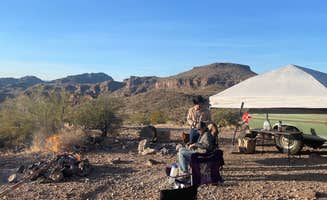
Dispersed camping areas near Chandler Heights, Arizona sit in the transition zone between the Sonoran Desert lowlands and the mountainous terrain of Tonto National Forest. At elevations ranging from 1,500 to 3,000 feet, campers experience temperature fluctuations of 30°F between day and night. Rustic camping in this region requires preparation for rugged roads and limited facilities, with most sites located on either BLM land or Arizona State Trust lands.
What to do
Trail exploration: Four-wheel drive recommended. The area around Bulldog Canyon Dispersed Camping offers multiple trail systems for off-road vehicles. "Easy to get a permit from the ranger station. Just email your name, address, phone number and driver's license number to sm.fs.mesa_ohs@usda.gov and you'll get your permit within 2 days for free," notes Whitney W. The more challenging trails require proper vehicles: "Better to have a 4 wheel drive with decent clearance for some of the trails."
Wildlife observation: Morning or evening optimal. Desert wildlife is most active during cooler hours. At Cottonwood Canyon Rd. Dispersed, campers commonly encounter cattle wandering through campsites. "Cows everywhere, wake up and have a good cup of coffee & conversation with a couple of bovine," says Steve T. Quail, coyotes, and various desert birds also frequent the area, particularly around dawn.
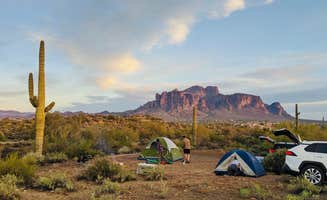
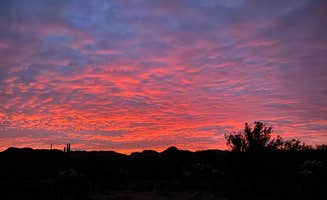
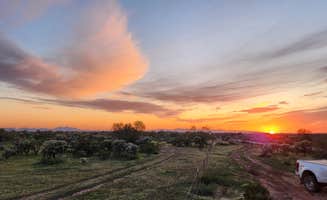
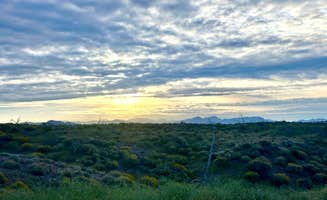
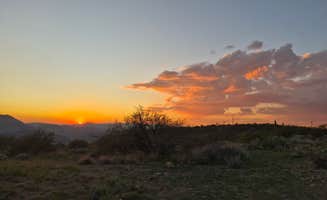
Photography: Desert blooms in spring. The cacti forest provides unique photography opportunities, especially during wildflower season from February through April. "If you want to see blooming cacti, this is the place. Unreal sunsets too," remarks Ethan B. about the desert landscape. Shooting toward the Superstition Mountains during sunrise or sunset captures the most dramatic light and colors.
What campers like
Desert isolation with city proximity: Locations like Hackamore Road Dispersed balance remoteness with convenience. "I love that it's not far out of town but an easy place to forget you live in town," says one camper about the area. Another notes, "Town is close, close enough you can hear it. Altogether it's a nice place to make camp for a bit."
Privacy between sites: Most dispersed camping areas offer good separation between campsites. "The cactuses and shrubs provided enough privacy between each site for it to feel like it was just us out there, and shielded us from the road as well," reports Suzie K. Many campers appreciate this natural screening that creates secluded camping spots despite weekend popularity.
Cell service for remote work: Unlike many wilderness camping locations, several sites near Chandler Heights maintain usable phone connections. "Site has 5bar Tmobile service. 5 miles from Walmart and just down road from Tonto national park," shares Jim A. about connectivity at the Dispersed Site Near Tonto National Forest. Multiple reviewers confirm reliable coverage with Verizon and AT&T at various locations.
What you should know
Permit requirements vary by land designation: Arizona State Trust Land requires annual permits ($20 per family) while some BLM areas are free. "You definitely are going to want to navigate the roads slowly if you go far back. The roads are uneven and washed out in some spots," advises Beth G. about Superstition Mountain AZ state trust dispersed camping areas.
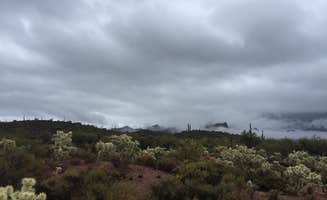
Road conditions deteriorate after rain: Many access roads become significantly more challenging following precipitation. "The road in is just terrible & it's very dirty (mostly on the main road) though, and people can be very noisy with their vehicles," reports Jordan S. Some campers have abandoned trips entirely due to impassable roads.
Camping restrictions near water sources: Regulations prohibit camping within proximity to livestock water sources. "They also made us move our camper because we were within a quarter mile of the cows' water source. We didn't see any water or cows at all but not a big deal, we just moved to a different spot," explains a camper at Gold Canyon Dispersed Site.
Tips for camping with families
Cactus hazards: Pack tweezers and closed shoes. The desert environment presents unique challenges for children. "My only advice here is that it's not fun for dogs. (And maybe not fun for kids either?) It's incredibly prickly everywhere," warns Rocco. "You'll want to avoid wearing sandals too. Tools were required. Pain, lots of pain. Seriously, NO SANDALS."
Noise levels vary by location and day: Weekends bring significantly more activity and noise, especially from off-road vehicles. "This place is most used by OHVs so it can get noisy on the weekends," notes Jose G. about camping conditions. Families seeking quiet should camp mid-week or at sites farther from main trails.
Limited shade availability: The desert offers minimal natural protection from sun. "This 'campground' is in the middle of cactus, dirt, and things that stab you," reports Krista Z. at Apache Trail North Camp. "Very exposed area so be ready for wind," adds Jarred T. about the landscape. Bringing portable shade structures is essential for family camping comfort.
Tips from RVers
High clearance vehicles required for most sites: Standard passenger cars can access limited areas. "I've seen all types of vehicles out there. Most camp spots aren't too deep in so it's easiest to access," notes one camper about accessibility. However, for better sites: "It was a fun dirt road. You might be able to get back there without 4x4 but certainly it is strongly recommended. Very rough road and about a 2 mile drive."
Leveling challenges common: Many camping spots feature uneven terrain that complicates RV setup. "There are ruts in the pull-offs. We were lucky that the spot we got into had minimal ruts, but towards both the end and front of our rig, they're pretty deep in some spots," explains one RVer about site conditions. Some campers report needing to level spots manually before setting up.
Limited turning radius at many sites: The combination of narrow roads and desert vegetation restricts maneuverability for larger rigs. "The spots, at least on this right side of the road, aren't very wide," notes Will at Cactus Forest Dispersed. RVers should scout potential camping locations before committing to avoid difficult extraction situations.











 Traveler


