Dispersed camping near Etlan, Virginia centers around the eastern slope of the Blue Ridge Mountains, with elevations ranging from 800 to 3,500 feet creating distinct ecological zones throughout the region. The area sits just east of Shenandoah National Park's central section, where the terrain transitions from the park's mountainous landscape to the gentler Piedmont region. Summer temperatures typically reach 85°F during day with overnight lows around 65°F, while fall brings cooler conditions with greater temperature fluctuations between day and night.
What to do
Hike to waterfalls: Several campgrounds offer access to waterfall trails within hiking distance. At Big Meadows Campground, "There are so many hiking trails and waterfalls nearby we love to camp in Big Meadows - and for the star watching at night," according to Rachel M. The campground serves as a starting point for hikes ranging from 1-5 miles to nearby falls.
Wildlife viewing: The region's biodiversity makes wildlife observation a popular activity. "We saw a barred owl, tons of awesome bugs (moths, beetles, etc), brook trout, a salamander, and some other wildlife," notes one visitor to the Shenandoah National Park Dispersed Sites. Early morning and dusk offer optimal viewing times, with meadow areas providing the best opportunity to see deer.
Star gazing: The higher elevation campgrounds provide excellent night sky viewing with limited light pollution. At Lewis Mountain Campground, "the fireflies are spectacular. At dusk, the ground shimmers, and then after they disperse, you will still see them flit by the tent throughout the night," writes Veronica S. Visitors should plan star viewing for moonless nights and bring red-filtered flashlights to preserve night vision.
What campers like
Privacy between sites: Many campers appreciate the layout at Lewis Mountain Campground where "the spots are secluded" and the campground "has a nice communal feel, doesn't get rowdy, has water and bathrooms, and isn't too crowded. The sites are adequate and spaced enough apart to not be sleeping on top of your neighbors," according to Leslie B. This smaller 31-site campground typically fills by early afternoon on weekends.
Access to Appalachian Trail: Multiple campgrounds connect directly to the AT, making them ideal for day hikes or multi-day backpacking. Mary S. notes that at Mathews Arm Campground, "You can hike to Overall Run Falls from a trail in the parking lot near the campground and turn this into a loop hike by returning a different way." The Overall Run trail connects to the AT within 2 miles of the campground entrance.
Primitive riverside camping: For those seeking a more rustic experience, the primitive sites at Andy Guest/Shenandoah River State Park offer direct river access. "The primitive spots are right next to the river. The spots are a short walk from the parking area and the campground provides wagons to transport your stuff. Great fishing and swimming right at your camping spot," reports Matt P. These sites require reservations and cost $15-25 per night.
What you should know
Bear activity: Black bears are active throughout the region, requiring proper food storage. "There are no bear boxes at this campground, but there are indeed bears, so keep all food in your car," warns Eric K. about Mathews Arm Campground. Most established campgrounds provide either bear boxes or require food storage in vehicles.
Limited cell service: Connectivity is minimal to non-existent in most camping areas. One camper at Watercress Inn at Landon Farm appreciated the "secluded" nature of their site, offering "a peaceful retreat from the hustle and bustle of everyday life." Visitors should download offline maps and campground information before arrival.
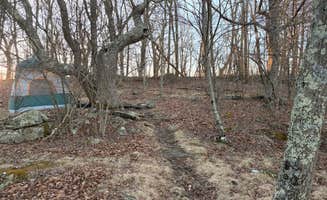
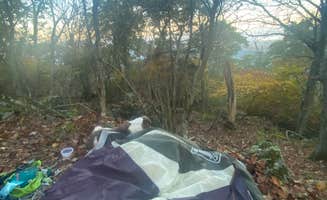
Weather variability: Mountain weather can change rapidly, especially at higher elevations. A backpacker at Shenandoah National Park Dispersed Sites reports, "During the 6 days we were in the backcountry, we experienced everything from warm summer-like weather to chilly winter winds, both day and night." Spring and fall campers should pack for temperature ranges from 30°F to 75°F in a single day.
Tips for camping with families
Jellystone Park activities: For families seeking structured activities, Yogi Bear's Jellystone Park offers organized programming. "This isn't my idea of camping, but I brought my 11 year old nephew. He was able to run around and make friends with his aunt always looking over his shoulder. He had lots of fun at pool, movie night, making s'mores, and jumping on bouncy mound," reports Anne K. Daily activities are included with camping fees.
Ranger programs: National Park campgrounds offer educational programs ideal for school-age children. Kim L. mentions that Big Meadows has a "Nice amphitheater with interesting ranger programs" and is "family oriented" with programs typically lasting 30-60 minutes in the evening hours.
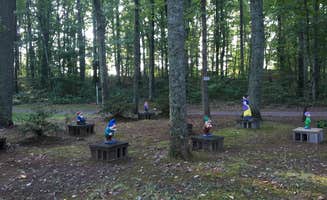
Farm animal experiences: Some private campgrounds incorporate farm elements that appeal to children. At Graves Mountain Farm Campground, visitors can explore "a duck pond, chicken coop, shallow brook, disable farm tractor, and some other stuff to play with/on/in across the street near the lodge." These activities provide entertainment options during non-hiking hours.
Tips from RVers
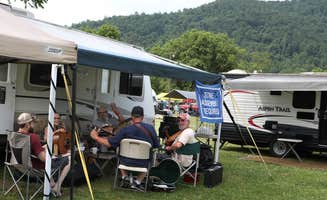
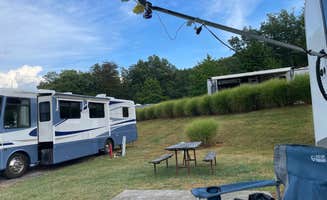
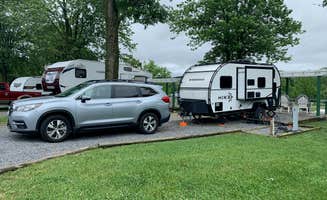
Site leveling challenges: Several campgrounds have terrain issues affecting RV setup. At Spacious Skies Shenandoah Views, one camper noted, "Our only real drawback was our site was not even close to level. It probably shouldn't have been available for a 40'+ RV." Bringing extra leveling blocks is recommended, especially for larger rigs.
Generator restrictions: Most campgrounds within Shenandoah National Park restrict or prohibit generator use. Mary S. notes that at Mathews Arm Campground, "No generators are allowed in parts of the A and B sections," which creates quieter camping zones but requires self-sufficient power solutions for RVers.
Mountain driving considerations: Accessing some campgrounds requires navigating steep mountain roads. One visitor to Spacious Skies Shenandoah Views cautioned, "The drive in requires about 25-miles through the roller coaster of steep grade(7+%) hills. There's no way around that, you're in the mountains. Just be aware and be prepared." RVs over 30 feet should check specific route recommendations before arrival.










 Scout
Scout


