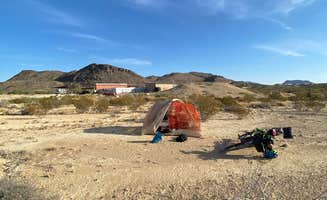
Primitive camping near Terlingua, Texas provides direct access to both Big Bend National Park and Big Bend Ranch State Park. The region sits in the Chihuahuan Desert at elevations between 2,200 and 3,500 feet, creating significant temperature variations throughout the day. Tent campers often find mild temperatures from late fall through early spring, while summer campers contend with daytime temperatures regularly exceeding 110°F.
What to do
Hiking Santa Elena Canyon: About 7 miles from Cottonwood Campground, this accessible trail provides views into one of Big Bend's most spectacular formations. "Only 7 miles to Santa Elena Canyon. This was perfect location for our day excursions, even over to the east end (Rio Grande Village area) of the national park was no problem," notes a camper at Roadrunner Travelers RV Park.
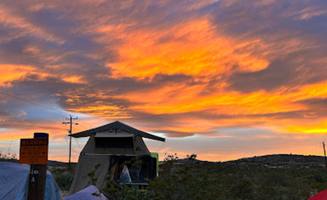
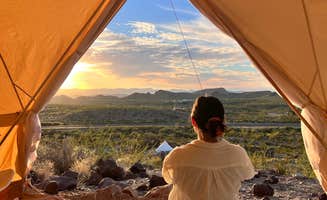
Photography at sunrise/sunset: The landscapes transform during golden hour, offering unique photo opportunities. "The sunsets were amazing here and we liked walking around the property to say hi to his dogs and horse," shares a visitor at Rancho Topanga. Many sites face west for optimal sunset viewing across desert terrain.
Fossil hunting: Several areas contain marine fossils from when the region was underwater millions of years ago. "There is a near my plato that you can climd, we found several shell fossils and cool rock on one of our excursions to the top," writes a camper staying at Rancho Topanga Campgrounds.
What campers like
Dark sky viewing: The lack of light pollution provides exceptional astronomical viewing conditions. "If going in March or April, go before the week like a Thursday, Friday even a Saturday. This would be a great place to come during a new moon to view the stars," explains a reviewer at Maverick Ranch RV Park.
Diverse shower facilities: Campgrounds offer varying levels of shower amenities, from solar-heated to resort-quality. "The bathhouse has hot showers, toilets, large sinks for washing dishes, and electrical outlets where you can charge your phone, etc," reports a camper at Rancho Topanga Campgrounds.
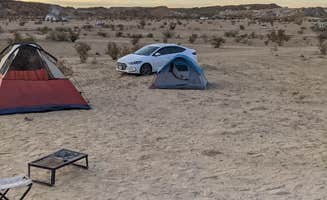
Wildlife encounters: Desert animals frequently visit campgrounds, especially at dawn and dusk. "We were woken up from the howling of coyotes every few hours. Some were walking around our tent," recounts a visitor at Coyote Crossing, a primitive camping area outside the national park.
What you should know
Limited water sources: Water conservation is critical when camping in this desert region. "Each site has potable water and a fire pit. The individual showers have hot water and the dishwashing stations at the bathhouse were something I wish more campgrounds had!" explains a reviewer at Rancho Topanga.
Peak season crowds: Fall through spring attracts the highest visitation. "We took one star off for its not really being a dark skies area. Yes, you see a lot of stars, but a brightly lit liquor store and other light pollution limits the star viewing," comments a camper at Roadrunner Travelers RV Park.
Seasonal planning: Visit patterns vary significantly by season. "All sites are by reservation only and fill up quickly," notes a camper at Chisos Basin Campground within Big Bend National Park. Most visitors arrive between October and April when temperatures remain moderate.
Tips for camping with families
Wind protection: Bring extra stakes and secure loose items before nightfall. "Expect strong winds during the night and scorching sun rays during the day," advises a camper at Rancho Topanga Campgrounds.
Temperature planning: Pack for significant day-to-night temperature swings. "It was chilly in the mornings and at night without the sun to warm you up—long pants and a light jacket were perfect. It warmed up to shorts and T-shirt/tank top weather in the afternoons with the sun," shares a Chisos Basin visitor.
Wildlife safety: Teach children proper food storage to prevent animal encounters. "If you leave food out you will be visited by skunks, javelinas, raccoons and bears," cautions a camper at Cottonwood Campground, emphasizing the importance of using provided bear boxes.
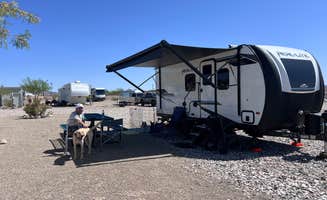
Tips from RVers
Road constraints: Large rigs face limitations on certain park roads. "The park service recommends that you not try to navigate the road to the campground with a travel trailer longer than 20 feet, but I didn't have any issues getting in and out with my 23.5 foot Oliver Travel Trailer," explains a visitor at Chisos Basin Campground.
Hookup availability: Full-service sites are concentrated in certain areas. "This park includes 12 large pull-through sites and 17 back-in sites with 50/30-amp, water and sewage," notes a visitor at BJs RV Park, which is located near the Terlingua ghost town.
Generator restrictions: Many campgrounds limit or prohibit generator use. "We can't run our quiet genny during the day to charge batteries and cook," mentions a Rancho Topanga camper, though they note "they let you charge up from the outlets in the bathhouse."













 Guide
Guide
