

D
David F. Scout
Scout
ScoutCrooked Oaks RV Park
Great resort for RV travelers. The staff was amazing, friendly, and helpful throughout our stay. We’ll definitely be back the next time we visit the Myrtle Beach area.
66 campgrounds · Check availability for any dates.
The Francis Marion National Forest offers several free primitive camping areas near Andrews, South Carolina, primarily consisting of dispersed sites without hookups or modern amenities. Guilliard Lake and Honey Hill Recreation Area provide basic camping options for tent and small RV campers approximately 20 miles from Andrews. The area also includes developed campgrounds like Hidden Marina & Campground along the Sampit River and Mr. Levy's Riceland Farm on the Black River. While most primitive sites lack electricity, water, or sewer connections, several established campgrounds in neighboring communities offer full hookups for RVs and cabin rentals, particularly near coastal areas like Myrtle Beach.
Road conditions pose significant challenges when accessing the more remote camping locations in this region. Forest service roads leading to Guilliard Lake feature large potholes and uneven surfaces that require careful navigation. Several campgrounds like Elmwood Recreation Area and Honey Hill provide vault toilets and drinking water access, though water quality varies seasonally. Most free dispersed sites operate on a first-come, first-served basis with no reservation system. One visitor described Guilliard Lake access as particularly difficult: "The dirt road in for several miles has VERY large potholes and you have to weave across the track to avoid them. Ok with car if very careful especially at night."
The camping experience in this coastal forest region varies significantly between developed and primitive sites. The Francis Marion National Forest campgrounds provide quiet settings under pine and oak trees, with campers frequently reporting wildlife sightings including birds, otters, and occasionally bald eagles. Honey Hill Recreation Area receives positive reviews for its spacious sites and natural setting, with one camper noting, "Nice large sites mostly shaded but I managed to find one that gets enough sun for my solar panels." Many sites feature concrete picnic tables and fire rings, though some primitive areas lack formal infrastructure. Cell reception varies throughout the region, with stronger signals at developed campgrounds. Campers seeking water recreation can access boat ramps at several locations, with fishing opportunities available on the Black and Sampit Rivers.
"One of the cleanest campgrounds I’ve been to in South Carolina. And only a short walk from the beach"
"Huntington Beach State Park South Carolina. Stayed a week. Great campground. Trails, easy access to the most amazing beach. The nicest washroom facilities and laundry."
"The downside, no seniors or military discount unless you are a South Carolina resident."
"We'd never been to South Carolina before and had no idea what to expect. We were thoroughly smitten with the coast and the city of Myrtle Beach, but we really loved camping in the state park."
"Not really what I would call a lake more like a large stream. Several sites back on to the stream but at a higher level. Cell signal with Verizon 2 bars seemed ok."
"Santee Coastal Reserve is a hidden gem near the South Carolina coast offering eight, first come, first served primitive campsites in the Santee Coastal Reserve Wildlife Management Area."
"Gorgeous trails within walking distance. Great opportunity to see wildlife. Lots of mosquitoes, but not miserably so. Short drive to the beach."
"Levy Riceland Farm is new to the Dyrt and they are ready for campers looking to relax on this peaceful farm, with fishing on the property and close proximity to Georgetown, South Carolina its a must see"
from $35 - $45 / night
Check Availability"This primitive camping facility is located between McClellanville and Honey Hill. A short camp loop swings through an upland pine/oak forest and encircles a fire lookout tower."
"Small amount of road noise from nearby road but not objectionable. Nice large sites mostly shaded but i managed to find one that gets enough sun fir my solar panels."
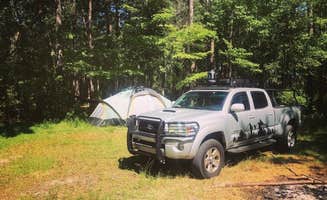
"When I saw the sun rise, I popped out of Hamlet (our adventure rig) to take a look around. Wow…this remote dispersed campground was AWESOME!"
"Playgrounds, summer concerts, dining etc is close by too. It buts up against Myrtle Beach Resort so our friends stayed there while we camped sometimes."
"We just finished our stay at Ocean Lakes Family Campground in Myrtle Beach, SC. We enjoyed it and will return."
"Really great place to stay if you want to fish around georgetown SC or just explore the history of georgetown. The camp host are wonderful helpful people."
from $45 - $99 / night
Check Availability"It is situated right next to the beach. There is an indoor pool and a big splash park on the grounds. There is a big shower house, laundry facility, and an arcade club house."
"It Is All About Close Proximity To The Beach Scale 1- bad, 5-Very good
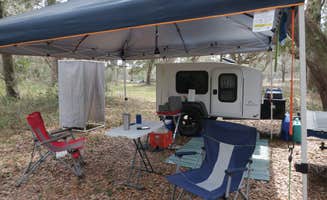
(71 yr olds in 17’ trailer with a desire for a campsite that has at least some visual privacy - after the trailer is in the spot"










 Scout
ScoutGreat resort for RV travelers. The staff was amazing, friendly, and helpful throughout our stay. We’ll definitely be back the next time we visit the Myrtle Beach area.
 Traveler
The sign at the dock says No Overnight Parking and No Camping
ScoutNo camping signs all over the place and the old sites are now fenced off

 Guide
GuideMost campers are here to go out shrimping. It’s a beautiful, small campground with level sites, some shade, electric and water hookups and tent sites right along the water. The bathroom could use an update but it was very clean and the shower was roomy and hot enough. A dump station is available. I understand the park will close after shrimp season (mid November..?) for updates. I lucked out on a first come, first serve site for the night. I’d definitely stay here again.

 Legend
You’ll find this hidden campground VERY far off the beaten trail (and trust me, this trail is as beaten up a road as you’ll find just about anywhere in South Carolina, so you'll want to drive down the lane here SLOW) on the easternmost side of Lake Marion off Ferguson Landing in southeastern part of the great Palmetto State. Given its direct access to Lake Marion, the place gets high marks for its location, but lower marks for overall upkeep and the basic downtrodden nature of the place. You’ll be impressed by the shallow water access and boat launch here, where you’ll have to maneuver around scores of submerged Cypress trees, which makes for quite the enchanting entry to Lake Marion, which if you weren’t aware, offers up 315 miles of shoreline, spans 110,000 square acres or 174 square miles and is the largest lake in South Carolina.
That said, IMHO Taylor’s Landing could use a serious bit of refurbishment and grooming, including the grounds themselves, which were quite overgrown when we stopped by. There is a general store of sorts on-site that sells sundries, ice and most camping needs as well as providing propane tanks for sale. Overall, this place is built more for the RV’ing crowd, although they do offer a few places for tent campers, but don’t offer much in terms of amenities. There was a communal dog area that was pretty worn down right near the area designated for tent camping, which given that most of the dog owners didn’t take their dogs for a walk, the smell emanating from this area was enough for us to decide not to camp here for the night. The entire CG is wide open without any benefit of shade or privacy between sites, although the perimeter has a nice treeline.
Insider’s tip? Here’s a few: (1) If you are a history buff, then you’ll be lured nearby to discover the Sunken Ghost Town of Ferguson, which was once a Congaree Indian Village, which we could access with our kayaks to explore; (2) There is a sandy beachhead that you’ll discover on one of the few trails you’ll come across here at Taylor’s Landing; (3) From an entertainment standpoint, this CG does offer up some interesting creative options during different times of the year – when we were there during the latter part of October, they offered up a ‘Trail of Terror’ for Halloween; (4) If you want to get your hike on, right nearby is Santee Cooper Nature Trail, which makes for some relative easy-to-modest hiking; (5) There’s nothing out in these parts, so if you want to grab a bite to eat, you’ll need to head back to Eutawville where there’s a few mom & pop joints like Tricia’s Café, Sweatman’s BBQ and Casters at Bells; (6) The fishing dock here is solid and offers great opportunity to reel in largemouth bass, catfish, striped bass, crappie and panfish like bluegill; and (7) The best asset here at Taylor's Landing is the fairly EZ to access boat launch that will have you in Lake Marion in no time flat, whether you have a motorized boat or a simple kayak or canoe.
Overall, Taylor's Landing could be a nice place, just in dire need of some upgrades and overall maintenance.
Happy Camping!
 Traveler
We were traveling with two large dogs and looking for a pet friendly site. This is a people friendly site so many game playing areas swimming pool and clean manicured lawns with a lake view on some sites.
GuideBeautiful site at boat ramp but singns everywhere no camping no overnight
ScoutSuper cheap hidden gem for tent campers in Myrtle beach area! The pool is amazing. Campground is huge, no neighbors but still friendly faces around. Staff is very helpful and welcome. Quick 5 minute walk to the beach. They also rent golf carts for getting around town!
 Scout
ScoutThis is a great location, tucked away beautiful serene views and pretty well maintained. Bath house is clean with clean showers. It seems like most of the occupants are long term and everyone including the staff is very friendly. The waters are great for boating, fishing, and swimming. Tons of beautiful birds in this area. The site i got does not have sewage hookup but they can come by and pump out your tanks upon request.
The Francis Marion National Forest provides multiple camping experiences near Andrews, ranging from primitive backcountry sites to established campgrounds with limited facilities. This coastal forest environment features sandy soil and pine-oak ecosystems with elevations rarely exceeding 50 feet above sea level. Summer temperatures regularly climb above 90°F with high humidity, while winter lows typically remain above freezing, allowing for year-round camping opportunities.
Wildlife viewing: Bird watchers can spot diverse species at Santee Coastal Reserve, where multiple trail systems intersect with wetland habitats. "Really lovely. Lots of great trails nearby (within walking distance). Great opportunity to see wildlife," notes camper Kristin S., who particularly enjoyed the bird watching opportunities.
Fishing opportunities: Access the Black River from Mr. Levy's Riceland Farm for bank fishing in relatively uncrowded waters. A visitor described it as "Truly stunning and my favorite place to be!" highlighting the direct riverbank access that makes this location popular with anglers seeking catfish and bass.
Historical exploration: Visit nearby Hampton Plantation and St. James-Santee Church, both within cycling distance of local campgrounds. At Elmwood Recreation Area, campers learn about Revolutionary War history from locals. One camper reported: "Old Vietnam vet named Jim stopped by to give us some sweet potatoes and fill us in on the local history. He said they mainly subsisted on the sweet potatoes grown here."
Natural setting: The quietness and natural surroundings at Honey Hill Recreation Area provide excellent stargazing opportunities away from light pollution. One camper appreciates the campground's wildlife: "It was nice hearing the bull frogs in the overnight as well as the owls. Ensure you have some type of insect repellent as the mosquito population is not lacking."
Spacious sites: Many primitive camping areas offer more room than developed campgrounds near the coast. A camper at Honey Hill Recreation Area notes, "Big gravel loop with about 10 sites under the pines. Water spigot didn't work but there were vault toilets. Big fire tower in the middle that is fenced off."
Low cost options: Several free camping areas exist throughout the forest with basic amenities. According to a camper at Santee Coastal Reserve: "Small and quiet public campground. Large spaces with fire ring and picnic tables in most. I noticed that others complained of mosquitoes but none that I saw in the middle of February."
Insect preparation: Mosquitoes and gnats can be extremely numerous, especially March through October. A Santee Coastal Reserve camper warns: "This is a quiet nice campground to get away from it all. If you love nature this is a wonderful place. BEWARE though, mosquitoes are in bazillions here and huge. Make sure you take your deterrent so they don't carry you off or take all your blood."
Water availability: Drinking water access varies significantly by location and season. Many campers recommend bringing your own supply. At Guilliard Lake, there is no potable water available at all, requiring complete self-sufficiency.
Cell connectivity: Signal strength varies considerably throughout the region. One camper at Guilliard Lake reported: "Cell signal with Verizon 2 bars seemed ok. Definitely make sure you have all you need before getting to the site, not a road you want to keep traveling down."
Beach alternatives: For families wanting coastal activities without beach crowds, try forest camping with day trips to the shore. A visitor to Ocean Lakes recommends: "We camped here as often as possible. Fills fast, so make reservations well in advance."
Wildlife education: Schedule visits to the Sewee Visitor and Environmental Education Center when camping with children to learn about local conservation efforts. Several campgrounds offer interpretive trails with information about coastal forest ecosystems.
Safety awareness: Keep food secured and children supervised due to wildlife presence. A camper at Huntington Beach State Park Campground observed: "Do not miss saying hi to the wildlife on your way in. The egrets, herons, and gators are a beautiful sight heading to the camp sites and beaches."
Access limitations: Large rigs should avoid Guilliard Lake entirely due to road conditions. One RVer warned: "This is not a campground for anyone with a large rig or RV. The dirt road in for several miles has VERY large potholes and you have to weave across the track to avoid them."
Solar considerations: For boondockers relying on solar, choose sites with adequate sun exposure. A Honey Hill camper noted: "Nice large sites mostly shaded but I managed to find one that gets enough sun for my solar panels."
Supply planning: Limited shopping options exist near primitive sites. RVers recommend stocking up in Georgetown or larger towns before arrival, as the nearest full grocery store may be 20+ miles away from forest campsites.
Frequently Asked Questions
What camping is available near Andrews, SC?
According to TheDyrt.com, Andrews, SC offers a wide range of camping options, with 66 campgrounds and RV parks near Andrews, SC and 5 free dispersed camping spots.
Which is the most popular campground near Andrews, SC?
According to TheDyrt.com, the most popular campground near Andrews, SC is Huntington Beach State Park Campground with a 4.7-star rating from 76 reviews.
Where can I find free dispersed camping near Andrews, SC?
According to TheDyrt.com, there are 5 free dispersed camping spots near Andrews, SC.
Keep Exploring