


Irene C. Guide
Guide
GuideWaterwheel RV Park & Campground
Outstanding !
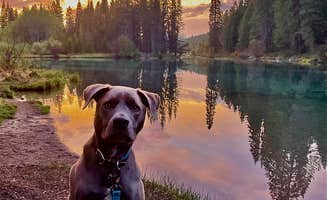
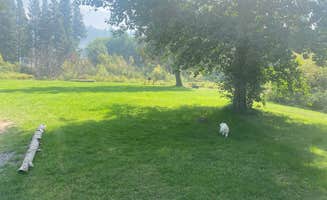
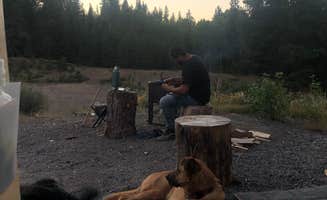
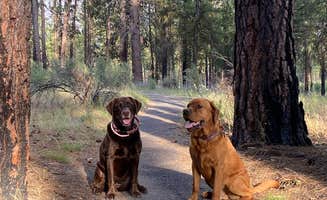
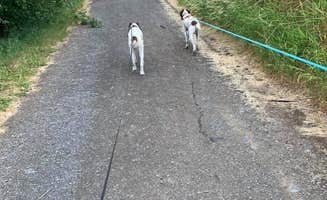
5 stars in every category. The host/owners are very nice and accommodating, place is clean, showers are very nice, awesome no leash dog park area, firewood, everything you need.
121 campgrounds · Check availability for any dates.
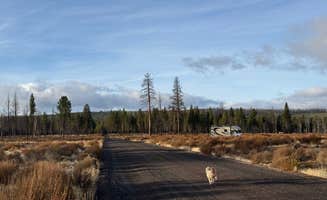
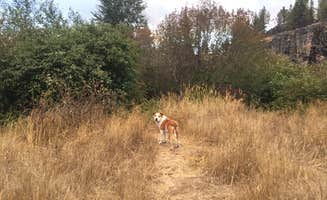
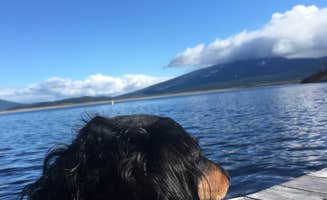
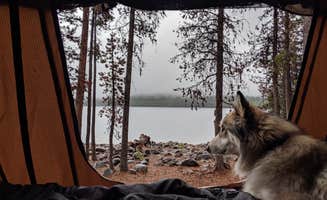
Jackson F. Kimball State Recreation Site accommodates pets at its primitive campground situated along crystal-clear natural springs and the Wood River headwaters. Campers find 12 sites among tall pines, each equipped with picnic tables and fire rings, where dogs can join their owners throughout the grounds. Crater Lake Resort also welcomes pets, offering tent sites, RV spots, cabins, yurts, and glamping options. Both campgrounds maintain pet-friendly policies requiring owners to keep dogs leashed and clean up after them. Forest Road 3237 provides free dispersed camping with pets in Fremont-Winema National Forest, offering a more primitive experience without designated facilities. The abundant wildlife at these campgrounds means owners should maintain control of pets at all times to prevent unwanted encounters with local bears, which have been reported particularly at Jackson Kimball.
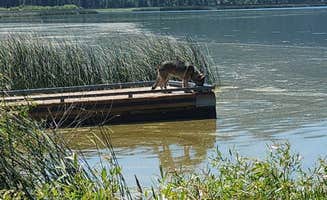
The pristine water at Jackson F. Kimball creates excellent opportunities for dogs to cool off during summer months, though campers note the water remains freezing cold even in August. Several hiking trails near these pet-friendly campgrounds accommodate dogs on leash, with paths winding through pine forests and along riverbanks. Mosquitos can be extremely abundant during summer months, making protective measures necessary for both humans and pets. Campers should bring all necessary pet supplies as the nearest pet stores are in Klamath Falls, approximately 30 miles away. The proximity to Crater Lake National Park (about 30 minutes drive) provides additional recreation options, though pet owners should note that dogs are restricted to developed areas and must remain on leash within the national park. Visiting during shoulder seasons like late September reduces both crowds and mosquito populations while maintaining comfortable temperatures for pets.
"The campground at the park was full but the ranger gave us a listing of nearby places including Sno-Parks. Camping is free at Sno-Parks in Oregon. There are 3 nearby Crater Lake."
"Oregon sno parks come in so handy! Convenient, easy to access, large flat lot, FREE, and they're usually in a beautiful setting."
"The camp grounds are small and you are very close to your fellow campers HOWEVER if you head out of the park after a day of playing and taking in the sights there are forest roads all over!"
"Twelve sites (three pull into spots and 9 where you park seperate and then walk around a fence to the tent site). 2 semi clean vault toilets, nothing to write home about but also fairly clean by comparison"
from $11 - $14 / night
Check Availability"Very nice uncrowded site with access to the more famous Collier State park nearby via hike or drive. Super cheap National Forest service land ($10 per night). Pit toilets, fire pits, picnic tables."
"Campground is in a quiet forest setting although a little highway noise can be heard from a distance. Still a little snow on the ground in early April."
from $10 / night
Check Availability"Nice classic Oregon state park with all the requisite facilities of electric hook-ups, RV dump station, ranger programs. Amphitheater and showers."
"Great rivers close by, nice hiking trails. Restrooms open and clean. Quiet during weekdays."
from $22 - $34 / night
Check Availability"The host/owners are very nice and accommodating, place is clean, showers are very nice, awesome no leash dog park area, firewood, everything you need."
"Aside from the size of the small site, the only downer for us is there weren't a lot of places to walk our dog without driving somewhere and no enclosed dog area. Otherwise, the park is dog-friendly."
from $45 / night
Check Availability"Beautiful slow moving river right behind our camp site. Took the dogs for a walk and took in great views of tall pines, trout in the river and very well maintained grounds."
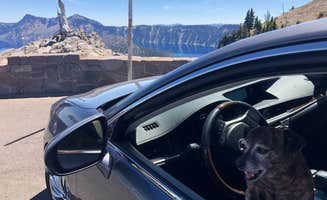
"At Crater Lake taking the rim road it leads you the highest point in the park. This road is 7,860’ above sea level and the highest point around the rim drive."
"It was a secluded and perfect spot not far from Crater Lake North Entrance. I gave 4 stars because there were so many black flies and big ants everywhere."
"Easy access off highway. Road is gravel but very new and flat. Cell service is great. The Forrest here burned recently so it isnt as pretty as it once was."
"Whether you come by yourself, spouse, pet or kids, this place has it all! Basketball area, exercise, ping pong, canoe, pontoon, trampoline and more!"
"Great lakeside camping experience. Even though we arrived late (around 10 PM), the staff still took care of us."
"The campsites are next to a creek. It almost too good to be true. The road was great!"
"Its secluded but pretty close to HWY 97, which is nice! There was a vault toilet there, but no other facilities so make sure to bring enough water, wipes, the whole 9 yards!"
"From coordinates given, drive a little further and you see 2 maybe 3 spots available. Mostly flat surrounded by trees and literally no traffic."
"Entrance across from Annie Creek Sno Park. Stay left at first fork. Potential for 2 spots, left spot had some ground bees."






 Guide
Guide5 stars in every category. The host/owners are very nice and accommodating, place is clean, showers are very nice, awesome no leash dog park area, firewood, everything you need.
 Guide
GuideSpent last 10 days at JSSP. This is one of my most favorite campsites. Theirs boating, swimming, hiking, biking, dog park, several updated kids large outdoor play grounds. So many trails and adventures to be had. I’ve spent 10 days here and this isn’t my first go and I’m still discovering things. JSSP is clean clean clean and Huge with like 151 spaces to accommodate everything lol I love it here. Just beautiful and peaceful and calm. Nice get away from life. Thank you JSSP hosts/rangers. I’ll be back.


 Legend
This is a large, sprawling, very peaceful and green Jackson County campground with several loops.
Loop D is no hookups (though each site has a non-threaded water spigot). Each site also has a grill, a picnic table, and a firepit. It’s so quiet and empty and peaceful during the week, and then practically fills up on the weekends. ATT had good service but the Verizon phone was roaming/ extended network. Still usable but slow and could not use the hotspot.
This campground has one of our favorite dog parks. It’s nicely mowed, thick grass, beautiful surroundings, and huge. You can also rent a boat or kayak and spend the day on the lake- so fun!
Sites without hookups are $28, and electric/water sites are $33. There is a dump station at the entrance, free for use by campers only.
LegendThis large campground is off highway 62 at Lost Creek Lake. There are water and electric hook ups and non hook up sites available.
$25/dry
$30/water and electric
We stayed here twice, once in a non-hookup site and we used a hook up site during a heatwave so we could have a/c. Nicely paved loops and sites with mix of sun and shade and grass and dirt. There is also paved trails for hiking and biking all over the area. From the campground the access to the lake is small trek on one of the paved trails which was a nice bike ride. Near the day use is also a store and deli and signs for various water craft rentals. The camp sites all have water (even in dry camping area though spigots were not threaded), picnic tables, BBQs and fire pits. There are amazing free hot showers and bathrooms in each of the loops. Rangers make frequent rounds. It can be quite crowded here on weekends and though sites aren’t very private they are spaced a decent amount.
There is a trash compactor near the RV dump. No recycling other than a "Kids Can" program which I believe only accepts aluminum cans? There was no sign to let you know.
You can either make a reservation in advance or show up and see if there are any free sites for the night.
There were also multiple playgrounds and a large gorgeous dog park. We would stay here again. Good ATT service, TMobile had bars but service was inconsistent and Verizon had 3-4 bars of LTE roaming.
GuideDiamond Lake was originally supposed to be a pet of Crater Lake NP and I can see why. The Broken arrow campground is huge! It was very empty when I camped there but even in normal times, the sites at the beginning of loop J are nice, have open land on one side and is right next to a short path to the lake!
 Traveler
We didn’t spend the night, only stopped for a few hours to make dinner and stretch out legs. They have designated pet relief areas, lots of signs that say “no pets” on all other areas of grass. Super clean, lots of space, you have road noise but that’s a given.
 Guide
GuidePaved campsites, pet friendly, creek, trails, handicap accessible, RV, tent, camphost stays here, shaded.
 Guide
GuideI mean I guess if you are the power boating type this is your jam too, lots of people in the lake and marina - I found the lake to be dirty (but felt good as it was 106 degrees that day) and the swimming area just a tiny span of gravelly rocks and mud. 🤷🏼♀️ The campground itself is pretty poorly run, nobody checked me in or made sure I had a hang tag and had paid (I did not, so I could have been anybody, I didn’t preregister my vehicle) every staff member had a sour look on their face, did not seem to be enjoying the job and not one of them was wearing a mask. The bathrooms were disgusting, I’ve had cleaner experiences at dispersed campsites, a toilet was plugged literally the entire time I was there (3nights) and waste was filled to the brim. The lawn sprinklers were going all night and one kept hitting my tent and startling me. I would not stay here again. Pluses : for families, I bet this is a fun place. Huge dog park area, badminton set, playground. Sites are huge, people had half a dozen tents in one site. Nice shady spots easily found. (I was in D) showers go forever without having to push a button and have great pressure. And....the miles of biking and hiking trails are great! I walked halfway around the lake and it really was so beautiful and peaceful. Not a great home base for a solo wilderness adventure, but again, families with powerboats seemed to be having a good time.
 Scout
ScoutThis is a typical koa. I don’t usually camp at them as everyone is so close. They do allow pets but there are lots of signs at office and bathrooms about no dogs allowed and you are on camera warning. So that felt unfriendly. However since I’d never been there and it was 80+ degrees I did take her in the office rather than leaving her in my car. They didn’t say anything. But she is my service dog which I would have told them. I could have taken her into the bathroom but if she wasn’t a service dog I never would have left her even on leash at my campsite. For me that part was an ick. I travel alone as many do so no one to keep an eye on your dog and I don’t leave her in my tiny trailer either. Anyway it was ok other than that.
The Fort Klamath region sits at approximately 4,200 feet elevation in the shadow of Crater Lake National Park, where dense pine forests meet open meadows across the eastern slopes of the Cascade Range. Summer temperatures typically range between 45-85°F, while winter brings heavy snowfall that can limit access to many camping areas from November through April. Dispersed camping options throughout Fremont-Winema National Forest provide alternatives to established campgrounds for those seeking more solitude.
Lake activities at Rocky Point Resort: The campground provides direct lake access with multiple water recreation options. "The tent sites are right by the lake and are so so pretty. The hosts are super friendly and the store has everything you need," notes a camper from Rocky Point Resort. Fishing opportunities abound, with one visitor reporting, "I rented a boat and caught a 6 lb trout, fishing where the owner said was a likely spot."
Forest hiking near Crater Lake: Several trails wind through the surrounding national forest land, connecting campgrounds to natural features. "There is a nice trail on the site that brings you to the state park (1.3 miles)," mentions a visitor from Williamson River Campground. The proximity to Crater Lake National Park allows for day trips to more extensive trail systems.
Historical logging exhibits: The Collier Logging Museum offers unique educational opportunities about the region's timber history. "Down the easy 1mi. trail along the spring creek, they have a super cool old pioneer village and lumber museum. It's full of olde tyme cabins and era timber industry tools and equipment," explains a visitor from Collier Memorial State Park.
Privacy at Scott Creek: The remote nature of some campgrounds provides a more secluded experience. "Very nice, quiet, clean, and simple campground. Plenty of available spots I've been out here twice and still haven't seen another camper," reports one visitor from Scott Creek. Access requires travel on unpaved roads, which naturally limits visitation.
Clear spring water views: The natural springs create unique water features throughout the region. "You can take kayaks and it was a nice calm gorgeous spot. Perfect spot for a campground," shares a camper from Jackson F. Kimball State Recreation Site. The clear water creates excellent visibility for observing aquatic life.
Proximity to Crater Lake: Many campers appreciate the relatively short drives to Crater Lake National Park. "Great free spot literally less than a mile outside crater lake national park. Fire pits, toilets, big parking lot that easily would accommodate large rigs," notes a visitor from Annie Creek Sno-Park. This proximity allows for multiple day trips into the national park while maintaining a basecamp.
Summer mosquito populations: Nearly every campground in the region reports significant mosquito activity during summer months. "One thing… TONS of mosquitoes. Absolutely swarmed. Bring bug spray like crazy. Otherwise it was a perfect place to stay," warns a camper from Collier Memorial State Park Campground.
Limited cellular connectivity: Cell service varies significantly between campgrounds. "Note we had zero cell service on both Verizon and AT&T," reports a visitor at Jackson F. Kimball. However, some locations offer better coverage: "Cell signals from AT&T and Verizon provided enough connectivity for us to work during the week" at Waterwheel RV Park.
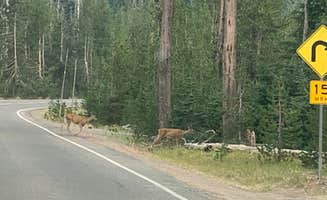
Wildlife encounters: Visitors should prepare for potential wildlife interactions. "We had a toddler and weren't willing to stick around to see how much more friendly he could be," explains a camper at Diamond Lake regarding bear activity. Proper food storage remains essential at all dog friendly campgrounds near Fort Klamath.
Look for designated swimming areas: Some campgrounds offer safer water access for children. "The kids loved playing in the water and the playground," notes a visitor from Waterwheel RV Park & Campground. Water temperatures remain cold even during summer months, so brief swimming periods are recommended.
Consider camping during shoulder seasons: Visiting in September can reduce both crowds and insect populations. "We ended up there after tragic news, connecting with nature is something that is so healing for me. My boyfriend, dog, and I made it home for two nights. We had brought our kayaks and launched right off the bank. It was also an off time at the end of September so we were practically the only ones," shares a camper from Jackson F. Kimball State Recreation Site.
Select campgrounds with developed facilities: For families with young children, established campgrounds offer more amenities. "Bathrooms are nice, but it was recommended by the parks employees to keep the doors open for circulation. Every spot had room for a fire and a table," reports a visitor from Jackson F. Kimball, one of several dog friendly campgrounds near Fort Klamath Oregon.
Check site layout before arrival: Some RV sites have awkward configurations that affect usability. "We could not use the BBQ because the RV next to us had a slide that came out over the BBQ," reports a camper from Waterwheel RV Park & Campground, highlighting the importance of understanding site dimensions.
Verify hookup availability: While many campgrounds offer RV sites, hookup services vary significantly. "Sites 12-20 are full hookup; the others have water and electricity. Sites 1-11 have Williamson River front views," explains a visitor at Waterwheel RV Park, providing specific site numbers for planning purposes.
Be prepared for road noise: Several campgrounds sit near major highways, affecting the camping experience. "This park is located on Highway 97 and you will hear road-noise, especially at night when everything else quiets down," notes a camper from Waterwheel RV Park & Campground. Similarly, Collier Memorial State Park campers report hearing "Jake brakes" from passing trucks.
Frequently Asked Questions
Which is the most popular dog-friendly campsite near Fort Klamath, OR?
According to TheDyrt.com, the most popular dog-friendly campground near Fort Klamath, OR is Annie Creek Sno-Park with a 4.7-star rating from 30 reviews.
What is the best site to find dog-friendly camping near Fort Klamath, OR?
TheDyrt.com has all 121 dog-friendly camping locations near Fort Klamath, OR, with real photos and reviews from campers.
Keep Exploring