

D
Dawn D. Guide
Guide
GuideRainbow Point Campground
Rainbow Point
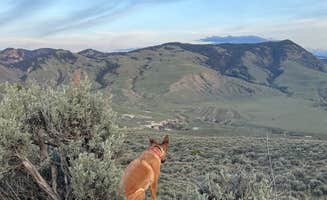
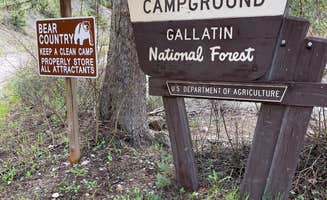
Nice campground in Custer Gallatin national forest. Road coming in was terrible wash board bumpy
Travertine Road Dispersed Camping offers free pet-friendly camping near the Yellowstone National Park entrance. Several sites suitable for tents accommodate dogs on leashes, with no specified pet limits found in campground policies. Canyon Campground, located 16 miles from Gardiner, provides additional pet-friendly options with designated sites nestled between large boulders that many dogs enjoy exploring. The campground charges $10 per night ($5 with America the Beautiful pass) and includes bear boxes at each site, important for pet owners carrying dog food. Carbella Rec Site features riverfront camping where pets can cool off in the Yellowstone River during hot summer months. Sites include fire rings, picnic tables, and bear boxes at each location, with most spots spaced adequately to prevent pets from neighboring campsites bothering each other.
Yellowstone River access at Carbella Recreation Area provides excellent opportunities for dogs that enjoy water, though owners should be cautious of the current which moves at a swift pace during certain seasons. The nearby hiking trails in Custer-Gallatin National Forest accommodate leashed pets, offering alternatives to Yellowstone National Park's strict pet restrictions. Mammoth Campground, though located within Yellowstone, allows pets but significantly restricts where they can go within the park boundaries. Pet owners should prepare for wildlife encounters by keeping dogs securely leashed and storing pet food in provided bear boxes. Extreme temperature fluctuations in the region require preparation—vehicles can quickly become dangerous for pets during summer visits, while winter camping necessitates appropriate gear for dogs accompanying overnight trips. The boulders at Canyon Campground provide interesting terrain for dogs to explore while remaining within the designated camping areas.
"Great spot for travelers or people who didn't book a site in or close to Yosemite."
"Great views into the valley around Gardiner with easy access to Yellowstone (North Entrance). Plenty of space for a few tents or a camper."
$25 / night
"Access to so many great wonders this park has to offer. Also on a don’t miss drive into Montana for one of the most beautiful mountain drives ever."
"Beautiful campground near Mammoth Hot Springs and the surrounding village."
$26 - $35 / night
"We have a small camper and scored one of the spots near the south end, which is also close to the Elkhorn Creek Trailhead."
"Easy access to big sky Montana and a hour ish drive to west Yellowstone. Sites are easy to access with smaller rv. But have bigger sites for larger rigs. No t mobile or att service."
$10 / night
"The proximity to Yellowstone, the price, and the charm of this place made me love it, but I think there are a few things that would annoy people."
"This place is right outside the northern entrance to Yellowstone."
$15 / night
"Our “go to” camping spot near Yellowstone NP. It is convenient to hwy but away from noise of traffic, near Yellowstone River. Winds consistent overnight but temps only down to 40°s."
"Camp site was 20 feet away from the Beautiful Yellowstone River. The river was moving at a very good clip, as was the wind! Clean vault toilet, didn't see any water hook ups or pumps."
"You cannot hear traffic from the highway which is about 1/3 miles away. There are wooden horse fences and corrals which are for public use."
"Right next to the Gallatin River. Sleeping with that as background noise is bliss. If you are tent camping you’ll need to be careful with food storage as this is grizzly country."
$133 / night
"Great little camp ground next to the river. Clean bathrooms, hot showers, laundry, wifi. A bit pricey, but probably due to the location being near the Yellowstone entrance"
"My dog loved the back acres to run and do her business too!"
"Several roadside sites along this road that branches off Travertine Rd. A few sites are large enough for multiple tents/vans. Good Verizon service, poor AT&T service ."
"Pulled into a spot less than an 1/8 of a mile before the marker, positioned on a hill with a clear view of the mountain range. Looks like plenty of spots in this area and pretty easy drive in."
$26 - $35 / night
"Nice campground in Custer Gallatin national forest. Road coming in was terrible wash board bumpy"
"We happened on this campground when the one nearby was full. Happy to have spent the night here. It is further off the road: about 4 miles of paved road and about 2 miles unpaved."
$122 / night
"We visited in a 30’ class 3 with 3 dogs. The location was PRIME— walking distance to all of the best spots in town!"
"Within walking distance of everything in town and the entrance to Yellowstone."









 Guide
GuideNice campground in Custer Gallatin national forest. Road coming in was terrible wash board bumpy
 Guide
GuideAbout 20 minutes south of Bozeman, MT on scenic Hyalite Canyon Road sits Langohr Campground. There are 19 spacious single sites and the 20th site is a group picnic site for day use. Langohr Campground runs along Hyalite Creek and is tucked inside Custer Gallatin National Forest in a small open meadow with Douglas fir, Lodgepole pine, and Englemann Spruce.
I was fortunate to find a campsite as a walk-in even after arriving mid-afternoon at the beginning of June 2019 because it was too late to reserve online. Each site does have a picnic table and fire ring, and electrical sites are available. Some are drive-in or back into sites, and a few are literally next to Hyalite Creek which is an added bonus. A heavy snowfall occurred a week before and remnants of it were scattered along the campground. Good thing I brought a snow scraper to clear the picnic table of snow. The fee is $20.00 per campsite for two vehicles and $8.00 for any additional vehicles. The group picnic site is $45.00 for day use. I paid cash for the site, but I believe you may also pay by credit card.
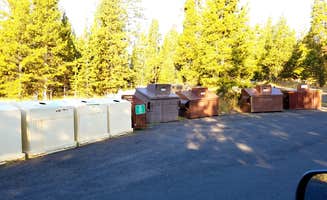
Many of the campers were settling in and had parked RVs and pop-ups. Pets are allowed but must be on a leash as wildlife such as bears, deers, moose, and elk frequent the area. Bear lockers should be used for food storage or properly stored in vehicles. There are huge bear safe trash and recycling containers near the entrance for campers to use. The bathroom is clean, free of odor and bugs, and it is a vault toilet. There are no showers, dump station, or camp store, but you are close to Bozeman. The camp host was settled on site 11 and sells firewood for $6.00. You can take a walk along the Hyalite Creek or drive 3.5 miles south down to Hyalite Reservoir for other activities such as fishing, kayaking, canoeing, climbing, hiking, and boating. The night sky was pretty spectacular especially with the trees around on a clear day.
GuideWe visited in a 30’ class 3 with 3 dogs. The location was PRIME— walking distance to all of the best spots in town! Wild elk walked through camp on occasion, and with a slight elevation the view of the mountains was absolutely prime! They also had TWO off leash dog parks, which is what drew us to this particular spot to begin with— they did not fail us!!
 Traveler
Very close to Yellowstone park. The RV spot was huge (patio space, plus grassy area with trees which was great for the dogs!) although we paid for the premium spot. Dog park was nice for the pups. No complaints at all.

 Scout
ScoutWe have our own Internet and didn't check the site for the Internet. Has a small dog park and showers
 Guide
GuideGreat little KOA. Awesome views of the Absaroka range. Book early. Tent sites were great. Nice dog park, small though.

 Legend
This is a pretty campground. Lots of trees, grass, paved roads, and convenient to the interstate. Full hookups (30/50) playground, dog park, clean shower/bathroom, laundry. There s a train right across the road, and it passes several times a day. Nd the sign at the entrance is hard to see so be alert.
 Guide
GuideNot the best experience. The entrance is quite tricky and very steep. We missed the entrance and had to find a place to unhook and turn around. (We’re in a 36’ RV pulling a Jeep) The hookup spaces are so close together you can touch your neighbor, so we missed the beautiful views the partial hook up guys were able to enjoy. It’s a little run down and quite pricy. The dog “park” isn’t fenced, so if your hoping to let your dogs stretch there legs, this isn’t the place for you. We will find another stop next time we come through.
GuideNice dog park across the street, sites are a little tight but its perfect for a couple night stay. Awesome that its only 35 miles to Big Sky and its a gorgeous drive. Our sire only had electric/water but i know there are some with full hookups. Picnic tables and fire rings and sites are gravel.
Dispersed camping opportunities near Custer Gallatin National Forest offer varied terrain from alpine meadows to riverside sites at elevations ranging from 5,000 to 9,000 feet. Weather patterns can shift rapidly, with summer highs reaching 85°F and nighttime temperatures dropping into the 40s even in July and August. National forest dispersed sites typically allow 14-day stays before campers must relocate.
Wildlife viewing access points: Several campsites near the forest provide excellent wildlife observation opportunities. At Taylor Fork Road Dispersed, campers report "Quiet, breathtaking view of the creek, mountains and forest. About 40 minutes to west Yellowstone entrance" according to Jennifer C. The secluded location creates natural wildlife corridors for viewing.
Bouldering adventures: The unique rock formations at Canyon Campground create natural climbing challenges. "Beautiful tucked away campsites in large boulders" notes Lilly E., making it ideal for informal climbing sessions. The bouldering areas are accessible directly from several campsites.
Fishing at multiple elevations: Access to varied fishing spots makes this region distinctive. "Carbella Rec Site provides "Right on the Yellowstone River with boat launching ramp" says Adam B., offering direct water access for anglers. Fishing license requirements vary by location, with Montana licenses needed for most areas.
Budget-friendly options: Several campsites offer excellent value compared to park lodging. "We were the camp hosts in 2024 and again now in 2025" at Carbella Rec Site Camping, mentions Ron, who notes it "has 17 numbered sites plus a tent area. It was free but has now gone to a fee system of $15 a night."
Proximity to Yellowstone: Campers appreciate locations that provide park access without park prices. "Only 15 minutes from the Mammoth Hotsprings visitor center. Easy to access, no crazy potholes or anything, just a dirt road," shares Ellie M. about Travertine Road Dispersed camping. This creates convenient staging areas for day trips.
Stargazing conditions: The dark sky conditions make stellar viewing exceptional. "The stars at night are worth the open space, the view is incredible," notes Nicole D. about Mammoth Campground. Limited light pollution in these areas creates optimal night sky viewing from May through September.
Bear safety infrastructure: Bear management is a primary consideration in this region. At Rainbow Point Campground, "there are bear boxes at each site," shares Kimberly N., though "we didn't see bears, but each site had a bear box." Bear-resistant containers are required at most sites.
Road conditions vary seasonally: Access roads to many sites require preparation. "The road up isn't bad - it has your typical washboard and a few potholes here and there," notes one camper at Custer-Gallatin National Forest Dispersed Camping. Spring conditions often create additional challenges after snowmelt.
Temperature fluctuations: Daily temperature swings can be extreme. "It did rain the night we were there and we woke up to 34 degrees. That was shockingly cold for us Arizonans in August," says Joshua M. about Taylor Fork Road. Evenings frequently drop 30-40 degrees below daytime highs.
Dog friendly campgrounds Custer Gallatin National Forest: Most sites welcome pets with proper management. "My dog loved the back acres to run and do her business too!" shares Laurie W. at Yellowstone RV Park. Dogs should be leashed in all developed areas due to wildlife activity.
Open spaces for play: Some locations provide natural play areas without playground equipment. "The sites I stayed at had a fire pit with lots of room to setup a tent or camper if you're interested," notes Tristan S. about Taylor Fork Road Dispersed, providing space for children to explore safely.
Cell connectivity for emergencies: Service varies dramatically by location. "T-Mobile home internet worked well here, as did our AT&T hotspot and Xfinity phones—strong coverage for all three providers," reports Kimberly N. about Rainbow Point Campground, which helps families maintain emergency communications.
Pad length restrictions: RV sites often have strict size limitations. "Site lengths are strictly enforced—there are concrete barriers at the back of each pad, so no overhang is possible," warns Kimberly N. at Red Cliff Campground, adding "If we had a dually, our truck would not have fit in the site with us."
Partial hookup availability: Water access points may require planning. "Water is available at nearby spigots, and our site had plenty of space plus a small trail that led down to the river," notes Stefanie I. about Red Cliff Campground, though most forest sites offer no hookups at all.
Wind exposure considerations: Open sites can create challenges for larger vehicles. "It is windy. It keeps the bugs away," observes Line G. at Dailey Lake, explaining the trade-off between insect reduction and wind exposure. Open meadow sites provide less wind protection than forest locations.
Frequently Asked Questions
Which is the most popular dog-friendly campsite near Custer Gallatin National Forest?
According to TheDyrt.com, the most popular dog-friendly campground near Custer Gallatin National Forest is Travertine Road Dispersed - Yellowstone with a 4.5-star rating from 58 reviews.
What is the best site to find dog-friendly camping near Custer Gallatin National Forest?
TheDyrt.com has all 160 dog-friendly camping locations near Custer Gallatin National Forest, with real photos and reviews from campers.
Keep Exploring