



Kylie R. Guide
Guide
GuideTravertine Road Dispersed - Yellowstone
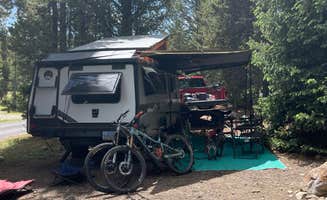
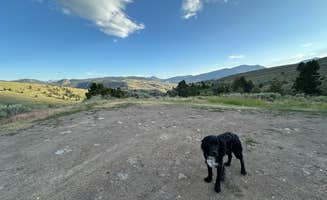
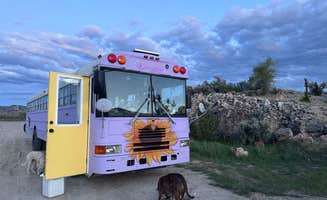
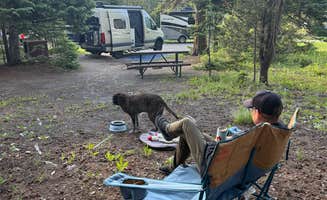
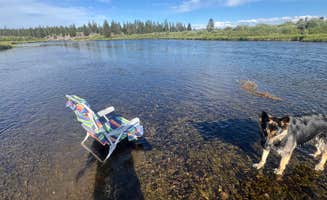
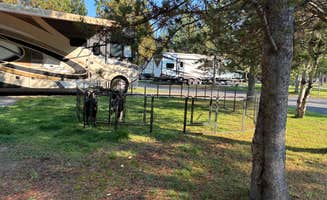
Great spot
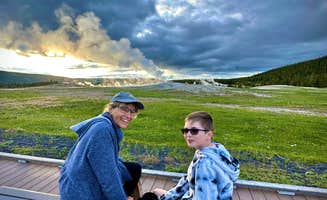
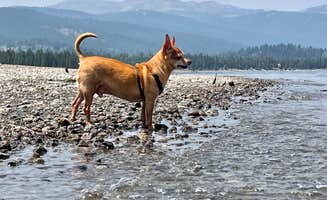
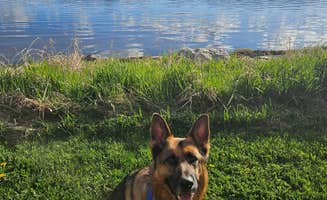
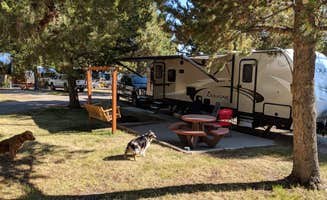
Nice quiet spot a little bit off the beaten path, but not too far from Yellowstone National Park.
Yellowstone National Park's pet-friendly campgrounds maintain consistent regulations for dog owners camping within park boundaries. Mammoth Campground, open year-round, allows pets in tent and RV sites but requires them to be leashed at all times. Dogs must remain within developed areas including campgrounds, picnic areas, parking lots, and within 100 feet of roads. Norris Campground, temporarily closed, previously offered similar pet accommodations with bear-proof storage boxes at each campsite. While pets are permitted, they cannot be left unattended and are prohibited from most trails, boardwalks, and backcountry areas to protect wildlife. Sites include bear boxes for food storage, and pet owners must properly store pet food to prevent wildlife encounters. Bison frequently visit these campgrounds, requiring extra vigilance with pets.
Multiple dispersed camping options exist outside park boundaries where dogs enjoy more freedom. Custer-Gallatin National Forest Dispersed Camping and Travertine Road Dispersed areas allow pets without the strict limitations found within Yellowstone. These free camping locations provide more spacious environments for dogs but lack amenities like restrooms and trash collection. Baker's Hole Campground near West Yellowstone offers a middle ground with pet-friendly sites plus amenities including fire rings, picnic tables and access to water recreation where many campers allow their dogs to swim. Temperatures at these higher-elevation campgrounds can fluctuate dramatically, reaching near freezing even in July, requiring proper preparation for pets' comfort and safety. Wildlife encounters remain a constant consideration, with bear spray recommended for all hiking activities with dogs.
$25 / night
"Mammoth is not my first choice campground, but if you're looking for good proximity to enjoy Yellowstone national park, have an RV that you're ready to drop as soon as you get in so you can spend more"
"It's not as big as Bridge Bay or Grant Village, in fact it is one of the smallest campgrounds in Yellowstone National Park."
"The location and the lake views make this campground a perfect spot to stay while exploring the lower region of Yellowstone National Park."
"This campground is centrally located in Yellowstone National Park. It has quite a few loops. We stayed at sites in loop C and loop G."
$10 - $25 / night
"There are a couple loops as well as some walk in sites."
"Great campground close to a couple rivers and nice meadows. I’ve seen moose, bison and bears in and around the area. The walk in site are in a great spot and not far from the car."
"Nice quiet spot a little bit off the beaten path, but not too far from Yellowstone National Park."
"Great views into the valley around Gardiner with easy access to Yellowstone (North Entrance). Plenty of space for a few tents or a camper."
$20 / night
"I believe this is supposed to be the Indian Creek Campground in Yellowstone National Park (which would put it in Wyoming), so I'm going to put that review here."
"We felt so lucky to get a spot with a couple of days advance notice for Yellowstone National Park. The campground was serene, beautiful, and remote. "
$89 / night
"One must plan in advance for a reservation at Fishing Bridge RV Park in Yellowstone National Park. Full hookups available on paved sites."
"Fishing Bridge RV Park in Yellowstone National Park is, in my opinion, the best home base for exploring Yellowstone."
$20 / night
"This is a cool campground that is nestled up a small draw on the ridges above Tower Falls in Yellowstone National Park."
"It's a great spot to camp when exploring the Northern or Eastern edges of Yellowstone."
"This campground is just minutes away from West Yellowstone and the west entrance to Yellowstone National Park. the camp was clean and well maintained."
"There is a lot of road noise but you are less than five miles to the West Gate to Yellowstone National Park."
$20 / night
"During our visit we got to see Bison on our drive coming in, deer feeding at the edge of the campground and watched a black bear for 30 minutes just a mile down the hiking trail."
"Very nice little campground for peace and quiet away from the bustle of the main campgrounds in the park, but it is primitive. Vault toilets, no showers."
"The view up the road is DROP DEAD GORGEOUS... you can see Mammoth Hot Springs in the distance! The road is pretty well maintained and windy."
"free -pet friendly -dispersed campsites -no water, toilets, amenities of any sort -just a fire ring at each site -some good trails -great phone service (Verizon)"






 Guide
GuideNice quiet spot a little bit off the beaten path, but not too far from Yellowstone National Park.

 Scout
ScoutThis is a campground used by people wanting to fish the river and have a home base. Not much shade and only pit toilets but easy in and out with all pull through sights. Great TV and Cell coverage and one hour from Yellowstone National Park north entrance at the Roosevelt Arch.

 Traveler
There are 3 or 4 sites at this location. One vault toilet services all of them. The site closest to the vault had the best stargazing view in my opinion. There is a picnic table and fire pit accomodating each site. A large open field is on site for activities (frisbee, playing catch, etc) but be careful of the large rocks. Exciting location as your just a quick drive down the mountain from Yellowstone National Park. Great for the avid "backcountry" camper.

 Legend
Forested campground 30 minutes from Yellowstone National Park
Beaver Creek Campground is the good spot for a Yellowstone National Park jumping off point. Located 30 minutes form the park the distance improves your chances of finding a campsite in the busy season. The campground sits above Quake Lake, if you enjoy fishing there is a steep trail leading to the lake from the“A” loop, however there is no boat launch at the campground, you will need to drive a½ mile down the highway to find a boat launch for the lake. The campground features paved roads with gravel parking pads, vault toilets, picnic tables and metal fire rings at each site, and their are bear proof food storage if you need it, but you might need to share space with another spot. Campsite can be reserved. The campground has 62 sites spreed apart in 3 loops. Two fully ADA sites are available. Drinking water is available at three locations in each loop. The camp hosts are very friendly and helpful, they also have firewood for sale if needed for$6 A word of caution about the road driving in. The road is paved but narrow, so drive slow and watch out for cars.
Ranger review Outdoor Element's Woolly Mammoth Survival Braid
Got my wife the Woolly Mammoth Survival Braid and have to say that this is a nice survival bracelet. We did wonder if the Jute it is made with would be a little itchy when put on, but found it to be quiet comfortable. We like the idea to place the ferro rod and striker in in the bracelets buckle. It sparks up very nicely making our charred cloth and cotton balls with Vaseline easy to get started. We then tried to start a fire with the sample piece of jute, made a little nest and gave the striker a try and after a few attempts got a spark to take hold and had a fire. Nice to now that we now have a wrist full of fire starting material if we ever need it. Might just want to take this off when starting fires as it didn't take much to get the sample burning. All in all a great survival tool to have around.
GuideThis campground is just minutes away from West Yellowstone and the west entrance to Yellowstone National Park. the camp was clean and well maintained. A great recommendation if your visiting Yellowstone National Park.
GuideWe loved this place. Very cool area with lots to do and see. Only a couple of miles.from the west entrance to Yellowstone National Park. It borders a forest with plenty of trails. Big campground and very busy. Food and amentities for trips to the park are close by.
 Legend
I believe this is supposed to be the Indian Creek Campground in Yellowstone National Park (which would put it in Wyoming), so I'm going to put that review here.
This is one of the best campgrounds in Yellowstone. It is seculded, and recently renovated. It is close to Mammoth and everything on the North end, plus most people ignore it's existence. Unfortunately (or fortunately) you cannot reserve here.
GuideAbout 25 minutes outside of West Yellowstone, MT, this campground is tucked away along the Madison River between Hebgen Lake and Earthquake Lake. This was a busy campground with nearly every site full (holiday week close to Yellowstone National Park). There was a nice trail from loop A that allowed us to access Earthquake Lake. We also hiked off trail on our own and could easily get to the Madison River and stay close to the campsite. Numerous bathrooms, bear proof trash bins, and bear storage lockers. Camp host was very friendly and sold firewood either at their site or would drive around the campground 6-7pm offering wood. Each site had a parking spot for 2 vehicles, fire ring, picnic table, and tent location. Only needed to travel 0.5-1 mile on a gravel road but could easily get back to town for groceries, etc. Gorgeous drive along the lakes and rivers to access campground. Earthquake Lake Visitor Center is only a few miles down the road and offers a nice history on the natural disaster that caused "Quake Lake" to form.
GuideRight outside Yellowstone and perfectly positioned between the Grand Tetons and Yellowstone National
parks. I definitely will be coming back. Near the banks of snake river you have hiking trails near the resort. My only suggestion is buy before you go, everything is expensive. I dropped over $15 on smore making food. The resort offers educational activities for children and adults.
Dispersed camping outside Yellowstone National Park's boundaries provides greater flexibility for pet owners than the strictly regulated campgrounds inside the park. At elevations ranging from 5,000 to 8,000 feet, these areas experience temperature swings of 30-40 degrees between day and night, even during summer months. National Forest lands surrounding Yellowstone offer numerous free camping options with fewer restrictions but require proper preparation.
Wildlife viewing at dawn/dusk: Lamar Valley in the northeast corner of Yellowstone is prime for wolf and bison spotting. "We heard wolves and moose during the night. No light or noise pollution," notes a visitor at Indian Creek Campground.
Fishing in mountain streams: The Madison River near West Yellowstone offers excellent fishing opportunities. "There was a river really close that we walked along and fished," reports a camper at Indian Creek Campground.
Hot springs visits: After a day of hiking, soak in nearby natural hot springs. "Got in around 5 pm, hooked up, put our suits on and headed to the hot springs," shares a guest at Yellowstone RV Park.
Privacy between sites: While many Yellowstone campgrounds are crowded, some offer more secluded options. "It felt more secluded and a lot less busy than the main ones offered in the park," explains a camper at Slough Creek Campground.
Riverside locations: Many sites offer water access for recreation and ambiance. "On the Madison river! Great space, quiet & fantastic location!" reports a visitor at Bakers Hole Campground.
Mountain views: Dispersed camping areas provide panoramic vistas without the crowds. "We picked one of the first we saw. A little bit windy but absolutely stunning mountain views," notes a camper at Travertine Road Dispersed.
Early arrival recommended: First-come, first-served sites fill quickly during peak season. "The campground is first come which made me nervous but the staff was extremely helpful and accommodating," shares a camper at Norris Campground.
Road conditions vary: Access roads to dispersed sites can be challenging. "Washboard road for a bit but it's ok," reports a camper at Travertine Road.
Temperature fluctuations: Prepare for cold nights even in summer. "It was absolutely freezing though, the inside of the truck bed had frost in the morning (22°!)," warns a camper at Custer-Gallatin National Forest Dispersed Camping.
Limited facilities: Many free camping areas lack amenities. "No bathrooms or amenities. But this space is worth it," notes a visitor at Custer-Gallatin.
Ranger programs: Take advantage of educational activities for children. "Campfire programs both during the day and night, plus the ranger station has fishing poles and nature backpacks to check out for kids for free," recommends a visitor at Tower Fall Campground.
Swimming areas: Look for campgrounds with safe water access. "A huge sand beach with swimming area, docks with boat slip rentals," notes a camper at Tower Fall.
Bear safety education: Teach children proper food storage procedures. "There are bear proof boxes in each site for your food items, be sure to use them," advises a camper at Mammoth Campground.
Leveling challenges: Some sites require extra work to set up properly. "Sites were not leveled. There were ElK droppings in our site. Part of the rustic experience since Elk were everywhere," shares an RVer at Yellowstone RV Park.
Size restrictions: Many campgrounds have limitations for larger vehicles. "Bigger rigs will not be able to turn around," cautions a camper at Slough Creek Campground.
Utility management: Plan for limited or no hookups at many sites. "We moved to an electric site our last night to charge up. We are in a 28' camper," notes a visitor at Bakers Hole Campground.
Water pressure considerations: Bring necessary equipment for hookup sites. "You will need a water pressure regulator," advises a camper at Fishing Bridge RV Park.
Frequently Asked Questions
Are there pet-friendly RV resorts near Yellowstone National Park?
Yellowstone Grizzly RV Park and Resort in West Yellowstone is an excellent pet-friendly option just minutes from the park's west entrance. The resort offers full hookups, is well-maintained, and borders forest areas with trails where you can walk your pets. Bakers Hole Campground is another pet-friendly option close to the west entrance that welcomes RVs and pets. Most RV parks near Yellowstone allow pets but have specific designated pet areas and require leashes. Remember to check each campground's specific pet policies when making reservations.
What are the rules for bringing dogs to Yellowstone National Park campgrounds?
In Yellowstone National Park campgrounds, pets must be kept on a leash no longer than 6 feet at all times. Dogs are only allowed in developed areas including campgrounds, parking areas, and within 100 feet of roads. Pets are never permitted on boardwalks, hiking trails, in the backcountry, or thermal areas. Pet owners must clean up after their animals and cannot leave them unattended, even inside vehicles. At Indian Creek Campground — Yellowstone National Park, like all park campgrounds, these restrictions are strictly enforced to protect wildlife and your pet.
What pet-friendly lodging options exist near Yellowstone's entrances?
Near Yellowstone's north entrance, Loch Leven offers pet-friendly camping about an hour from the Roosevelt Arch with pull-through sites suitable for RVs. Near the south entrance, Headwaters Campground at Flagg Ranch provides pet-friendly accommodations perfectly positioned between Yellowstone and Grand Teton National Parks. Most gateway communities like West Yellowstone, Gardiner, and Cody offer pet-friendly motels, cabins, and vacation rentals. Always check specific pet policies as restrictions on size, breed, and number of pets vary by accommodation.
Where can I find pet-friendly camping in Wyoming near Yellowstone?
For pet-friendly camping in Wyoming near Yellowstone, Fishing Bridge RV Park offers the only campground with hookups inside the park, though standard pet restrictions apply. For more flexibility with pets, explore camping options in nearby national forests. Slough Creek Campground in the northeast section of Yellowstone allows pets within the developed campground areas. Outside the park, the areas around Cody and Jackson offer numerous pet-friendly campgrounds with fewer restrictions. Remember that even at pet-friendly Wyoming campgrounds near Yellowstone, leash rules typically apply and waste cleanup is required.
Keep Exploring