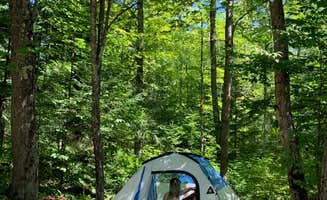
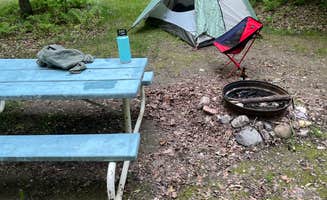
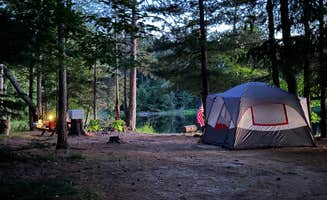
Tent camping in Ottawa National Forest offers a genuine wilderness experience in Michigan's Upper Peninsula. The forest spans over 990,000 acres with elevations ranging from 1,000 to 1,800 feet. Winter arrives early in this region, with first snows often appearing by mid-October, and summer temperatures typically reach 70-80°F during peak camping months of June through August.
What to do
Explore waterfalls and rapids: Union River Outpost at Porcupine Mountains Wilderness State Park offers direct access to scenic water features. "Keep walking past campsites and over the bridge. Take the right trail and it connects with the Union River mine trail. It's 1 mile long and perfect for relaxing after dinner," notes Art S.
Search for wildlife: Big Lake State Forest Campground provides opportunities to spot unique animals. "Getting to Big Lake leads you through some marvelous pine meadows and wetlands with browsing deer and pheasants," writes Shari G., while Amy K. mentions "Enjoyed listening to the sandhill cranes every morning."
Visit Paulding Light: Though basic camping facilities exist, Robbins Pond Campground offers a unique paranormal attraction. Carrie C. explains: "This campground is located at the end of Robin's Pond road where the Paulding Light is seen... The atmosphere is cool if your into the spooky factor, but the campsites don't offer much, basic and primitive."
What campers like
Remote solitude: Many campers appreciate the isolation found at Sturgeon River Gorge Wilderness. Will H. notes it's "Remote and not well traveled. I highly recommend heading over to nearby Silver Mountain," while Rebecca P. describes it as "Beautiful beyond belief."
Canoeing accessibility: Sylvania Wilderness Backcountry Camping attracts paddlers with its interconnected lakes. Ann M. shares: "We did it the easy way, loaded our canoe, crossed the lake to our campsite and set up camp. No portaging with our gear. We rented our canoe and a bear barrel from the Sylvania Outfitters."
Riverside camping: The sound of moving water enhances the camping experience at Paint River Forks NF Campground. Clint B. describes "5 or so campsites. Clean out house right on river. Just a mile or so down the dirt road," while other campers note the free camping and riverside setting.
What you should know
Bug protection essential: Biting insects are universally mentioned across reviews. Art S. reports at Burned Dam Campground: "The flies were quite bothersome so we decided to move on... This would be an amazing place if the flies would leave us alone."
Vehicle considerations: Several campgrounds require navigating unmaintained roads. At Blockhouse Campground, Clint B. cautions: "Requires driving down a dirt road that branches off another dirt road. It's 8 miles down the road with major washouts."
Camping permits: Some areas require permits obtained in advance. Union River Outpost campers should "Don't forget to make that reservation and see what is available," advises Art S., noting "Sites 2 and 3 are right on the gravel road. Site 1 has its own 80 foot spur."
Seasonal limitations: Weather changes rapidly, especially in fall. Shari G. experienced "full on winter one morning" in mid-October at Big Lake State Forest Campground, recommending visitors "be prepared for anything in the shoulder season."
Tips for camping with families
Multi-site booking strategy: For families seeking privacy at Sylvania Wilderness Backcountry Camping, Jess R. suggests: "Book both sites for the nights you're staying. At $15 a night per site, it still ends up being a cheap investment for peace and quiet."
Water access points: Families appreciate swimming opportunities during summer months. At Big Lake State Forest Campground, Tracy W. notes "sites are HUGE! Quiet setting right on Big Lake," while Art S. advises to "Go all the way to the boat launch and you can find a beach."
Cell service awareness: Prepare for limited connectivity. Jenna L. at Union River Outpost warns: "Note that there is no cell service here or really nearby. Not an issue if you're prepared for that!" Similar limitations exist at most remote sites throughout the forest.
Tips from RVers
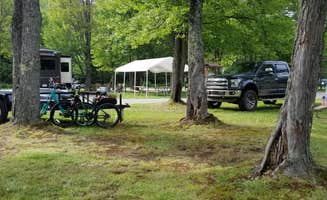
Site leveling challenges: RVers should bring leveling blocks for most Ottawa National Forest campgrounds. Scott D. at Union River Outpost observed: "Site was not that level. If you were tent camping, you would likely be sleeping on a slope of some kind."
Clearance requirements: High-clearance vehicles are strongly recommended. Shari G. cautions about Big Lake State Forest Campground: "The entrance to this campground is not for low clearance vehicles...it is full of HUGE flooded potholes (small ponds really). Not recommended for 2 wheel drive, low clearance vehicles."
Water fill locations: No direct hookups exist, but potable water can be found at designated points. Art S. notes: "More amenities can be found at the main campground in the state park. We filled up with water there."








 Guide
Guide


