Ottawa National Forest's dispersed camping areas span across the rugged Upper Peninsula terrain, with most sites situated on small lakes at elevations between 1,500-1,900 feet. The forest encompasses over one million acres with more than 500 lakes, where primitive camping opportunities range from easily accessible roadside spots to secluded walk-in sites. Winter camping is possible at many locations, though snow can make access challenging from November through April.
What to do
Paddling adventures: Wolf Lake Campsite provides excellent water access via a small sandy beach that's perfect for launching kayaks or canoes. Kay K. notes, "The small lake belongs to a pair of loons that will share their fish and sandy beach."
Hiking nearby trails: Several dispersed sites connect to forest trails. The FR 2140 site offers direct trail access as one camper explains, "There is hiking trail access from campsite, but no water access to butternut lake or it would have been 5 star." Indian Lake campsite also serves as a good base for exploration with a reviewer commenting, "Many hiking opportunities are nearby."
Swimming in remote lakes: Woodbury Lake Campsite offers a sandy beach suitable for swimming away from crowds. According to Kay K., "This remote site has a sandy beach great for swimming or paddling."
What campers like
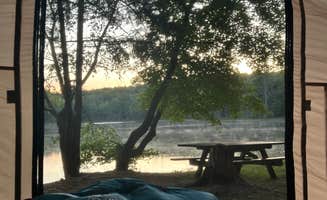
Privacy at smaller sites: McKinley Lake Dispersed offers a single campsite with lake access, making it perfect for campers seeking solitude. One reviewer simply states, "A single campsite can park next to tent only. Access to lake."
Diverse wildlife viewing: Wolf Lake visitors frequently observe loons and other water birds. Interesting nocturnal wildlife adds to the experience across the forest, with some sites offering better wildlife viewing opportunities than others.
Budget-friendly accommodations: Robinson Lake Dispersed Campsite provides free camping with extended stay options. As one camper notes, "Two sites on lake some distance apart. Sand bottom on shore, picknick table and fire ring. No fee for camping can stay 14 days."
What you should know
Road conditions vary significantly: Access to many sites requires careful navigation. For Bose Lake Campsite, a reviewer warns, "Road to get in is narrow and pot holed." Similar issues exist at other locations.
Limited or no facilities: Most sites lack amenities beyond fire rings. Three Johns Lake Dispersed requires a short walk to reach the site, with a reviewer mentioning, "Tents only. Short walk to campsite only one on lake. 5 dollar parking national Forest."
Seasonal considerations: Winter camping requires extra preparation. A FR 2140 camper reports, "Winter camped here, was a nice spot pic nik table, fire ring, wilderness toilet." Summer brings heavy mosquito activity, particularly near water bodies.
Cell service limitations: Coverage varies significantly across the forest. FR 2140 offers minimal connectivity with one visitor noting they "Did get one bar of cell (cricket) full with 20 foot ant."
Tips for camping with families
Beach access options: Lake Perrault offers shoreline areas suitable for children. A visitor describes, "Nice n open for pulling in and doing dispersed camping, nice overview of the lake from the hill, quite too, fire pit made of rocks."
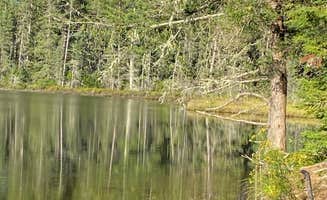
Shallow water areas: Some lakes feature sandy, gradually sloping entry points ideal for younger swimmers. Robinson Lake includes "Sand bottom on shore" according to one reviewer.
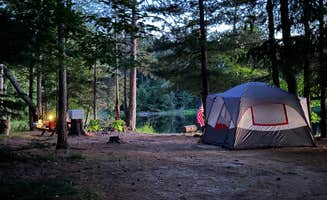
Space considerations: Families need adequate space for multiple tents. Wolf Lake Campsite offers sufficient room with one camper stating, "I had 8 foot pop up could fit a 20 footer easy or tent camp."
Animal encounters: Wildlife sightings can provide educational opportunities. Several reviewers mention interesting animal calls during overnight stays, creating memorable experiences for children.
Tips from RVers
Size restrictions: Most dispersed sites accommodate only smaller RVs and trailers. For Harriet Lake Campsite, a reviewer specifies, "Room for small camper 10 to 15 foot also tents wilderness toilet."
Parking surfaces: Many sites feature unimproved parking areas that may become problematic in wet conditions. For Wolf Lake, a camper notes, "Small campsite along paved road, fire ring and picnic table, wilderness toilet."
Leveling challenges: Uneven terrain at most sites requires leveling blocks and preparation. Some sites offer more level parking than others, with paved road access sites generally providing better surfaces.





 Guide
Guide


