








A
Anthony M. Guide
Guide
GuideTurkey Springs
Plenty of spaces after you continue left!
Rio Grande National Forest features a mix of established campgrounds and dispersed camping areas, with options ranging from primitive tent sites to full-hookup RV resorts. Park Creek Campground sits along the South Fork of the Rio Grande River, offering tent and RV camping with picnic tables and fire rings. West Fork Dispersed camping provides free primitive sites near Pagosa Springs for self-sufficient campers. Several developed areas like Big Meadows Reservoir Campground and Lower Beaver Creek Campground provide basic amenities including vault toilets, picnic tables, and fire rings.
Camping season generally runs from late May through early September, with most established campgrounds closing after Labor Day. As one camper noted, "We stayed 3 nights. 2022 rate is $24 per night. Gravel road and gravel sites. I wouldn't bring a trailer over 23 ft and expect to fit." Many campgrounds feature bear-proof food lockers, essential for storing food and scented items securely. Elevations typically range from 8,000-9,000 feet, resulting in cool nights even during summer months. Cell service is limited throughout the forest, particularly at more remote sites. Forest Service roads accessing dispersed camping areas often require high-clearance vehicles, especially after rain or snowmelt.
Riverside camping proves particularly popular among visitors to Rio Grande National Forest. Several reviewers highlighted the appeal of sleeping near flowing water. "We chose upper loop for a quick overnight. A little highway noise but not bad. Huge site and very level, beautiful view," noted one camper. Sites along creeks and rivers tend to fill quickly during peak summer weekends. Many campgrounds provide access to fishing opportunities, with trout fishing being a primary draw. A visitor commented, "The site has a fairly high elevation which can provide cool summer temps and early frost even in September." Family-friendly campgrounds with creek access are highly rated, though visitors seeking full amenities like showers and hookups should look to private resorts in nearby towns like South Fork rather than Forest Service campgrounds. The diverse camping options throughout Rio Grande National Forest accommodate both solitude-seeking backpackers and families looking for accessible outdoor recreation.
$29 - $103 / night
"It's everything we wanted in a Colorado vacation. The mountains were spectacular. The water was cold and clear. It was perfect. To start, we stayed in site 38."
"The campground was a bit off the highway and we saw countless waterfalls along the way to the campground entrance Immediately upon getting to our site my heart sank because I realized our site didn't"
$12 - $54 / night
"Park Creek Campground Rio Grande National Forest Elevation: 8500
Directions: In South Fork, Colorado, at intersection of State 149 and US 160, take Road 160 west 7.8 miles to Park Creek campground sign"
"It will surprise you to know the campground is next to a creek (kinda gave it away in the name), which thankfully drowns out the noise of the highway."
"There were 4 spots right near the water after the bridge then if you take the 303 road on the left right after the bridge there’s two more spots further down the road on the left hand side."
"Te river passes right next to you and the views are amazing! There are a few trails next (like the Rainbow trail). Awesome place to stargaze!"
"Tho the road to Beaver Reservoir is close by, it is a quiet campground even during the day and pretty much dead silence at night."
"Some sites are very close to a road, country road so not tons of traffic but not super private."
"They also have great trails close that you can drive to via atv or ohv's. Wonderful views all around from our campsites! Great mom and pop business that is reasonably priced."
"Only an hour from the Sand Dunes, 45 min from Creede, and close to Three Barrel Brewing Co! The cabin was perfect, full bathroom, half kitchen, and plenty of sweetness that makes you feel cozy!"
"Beautiful location on the Rio Grande River. 12 spots, 26$ per night. Flat parking lots for fishing and overflow parking."
"The cabins are very cute from the outside and they match the office and other buildings. The location is easy to find. "
"Close to grocery and restaurants, hiking, fishing, ATV! Internet is not great. ATT Cell phone coverage sporadic."
$32 / night
"Annie, you've gotten the Campgrounds backwards, as there are No ATV or off road trails at Westfork and there is easy access to the river from multiple sites and a public path behind the 2nd bathroom."
"Far enough away from the hustle of Pagosa Springs, far enough from the highway. Old growth forest reminded me of CA."
$32 / night
"Camp location was as close to heaven on earth I could find! 10 min drive from town if needed— we were surrounded by forests and mountains."
"Sound of creek in distance. Toilets extremely well kept. MANY hikes w/in walking distance. Silver Falls 8mi drive away. Some free sites outside of campground along drive to Silver Falls."
"This is a great area that’s near a few private ranches. The app mentioned a steep incline but we managed no issues with a 04 Toyota sienna FWD"
"I wanted a spot while driving north from New Mexico and this was perfect. sat right above town, it was an awesome little spot."
GuidePlenty of spaces after you continue left!
GuideJust pulled in trying to beat the weather there could be more spots up the rd but I found this one! Really pretty drive in and real close to the springs in town about 13 min away

 Scout
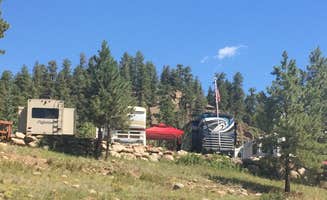
ScoutLovely tree lined campground on the Rio Grande. Surrounded by pine trees and aspens. Each RV site has full hookups, fire ring, picnic table. Nice, clean, bath house with showers. There are also cute covered wagon “cabins” and one cabin. We stayed in a RV site along the river. Owners very nice and welcoming.

 Ranger
Wow, I really love this place. And also certain spots have a great view of the San Luis valley along with the Western side of the sangria de cristos It is quiet but I did see 1 or 2 motorcycles. But not many, the road was very decent. We have a twenty five foot mercedes sprinter camper and made it no problem.
ScoutBeautiful campground, great service, but after staying for 7 days I returned to my campsite (after being gone for less than 3 hrs) and someone had stollen all my items. Reported to forest service. (Literally stole a felony amount, I have never had this happen and I camp on dispersed lands a lot)
 Legend
Would have given a 5 star but numerous sites not very level: Those listed are either level, or 'good enough/level-ish': 22, 21, 11, 12, 13, 14, 7 (group site?), 8. 9, 10, 16. Vault toilets (2 pairs on either edge of campground) were CLEAN!, well-stocked, very nice and as good as it gets for vaults. Well tree'd, quiet, not busy at all in late September. Camp host was great and when we realized site 17 was not level (nor would orange levelers have worked), she let us switch with no problem (of course, it was not busy either). Potable water: 1 station available. Some sites not very close to bathrooms. Bears active in area (see pick below!). Very close to Chimney Rock ruins (go see if you have time). Would stay here again.

 Traveler
Good road coming into the reservoir. There is only one spot to camp.
 Guide
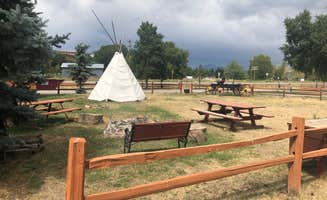
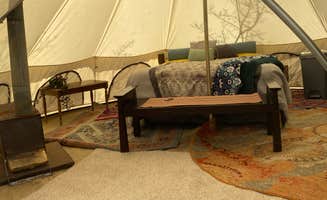
GuideSlept like a baby in this lovely new tipi. Decorated so cute, with plenty of good vibes. Beautiful, spacious composting toilet, outdoor prep sink and milkbarn converted cookshack is awesome even for several nights stay. Del Norte is a quiet, charming little town with all the things I needed for a quick stopover!
 Traveler
One of our new favorites. Remote, quiet, and great staff. Very welcoming. Spent a week there and absolutely loved it. Scenery is amazing.
Rio Grande National Forest campgrounds typically sit at elevations between 8,000-10,000 feet, resulting in dramatic temperature fluctuations even during summer months. Dispersed camping areas often require high-clearance vehicles to access, especially after spring runoff creates muddy, rutted forest roads. Many sites feature bear-proof food lockers due to active black bear populations throughout the forest.
Fly fishing opportunities: Big Meadows Reservoir Campground provides excellent trout fishing access with campers reporting consistent success. "We caught our bag limit every time we fished. The campground is nicely treed and the spaces are more private than most," shares one visitor at Big Meadows Reservoir Campground.
Hiking to hot springs: The Rainbow Hot Springs trail near West Fork Campground offers a challenging but rewarding experience. "Rainbow Hot Springs Trail is spectacular in spite of the massive forest damage. Go for the hike, not the springs, though you'll probably enjoy them as a break before returning to camp," advises one hiker. The full hike covers 12 miles round trip.
Wildlife viewing: Mule deer are commonly spotted throughout the forest campgrounds. One visitor to Big Meadows notes, "Lots of mule deer, birds, hummingbirds, chipmunk army." Early morning and dusk provide the best wildlife viewing opportunities at most campgrounds.
River sound for sleeping: Campsites adjacent to water are consistently rated highest. "Slept right alongside the river. The sound of the running water put me to sleep quickly," writes a camper at Park Creek Campground. Riverside sites typically fill first during peak season.
Clean facilities despite remote location: Multiple campers note well-maintained vault toilets at most established campgrounds. "The vault toilets are the cleanest and nicest I have ever seen," reports a visitor at Big Meadows Reservoir Campground. Many campgrounds feature water pumps for filling containers, though hookups are rarely available.
Star-gazing opportunities: The limited light pollution and high elevation create ideal star-viewing conditions. A camper at Forest Road 614 reports, "Beautiful views and starry nights." Clear nights even during summer months may require extra layers due to rapid temperature drops.
Temperature fluctuations: The high elevation means nighttime temperatures drop significantly even in summer. "36 degree mornings, 70 degree days," reports a camper at Big Meadows Reservoir Campground. Pack appropriate cold-weather gear even for summer camping trips.
Mosquito precautions needed: Several dispersed camping areas report significant mosquito activity, particularly at dusk. "Do you like mosquitos come here and enjoy the feast that come when the sun starts to set! We stayed here before and forgot how bad it was," warns a camper at West Fork Dispersed. Bring effective repellent, especially for riverside camping.
Limited connectivity: Cell service is spotty throughout the forest. One camper at Big Meadows notes, "Limited cell service with AT&T and T-Mobile." Download maps and campground information before arrival as many areas have no service.
Choose creek-access sites: Families consistently rate riverside camping spots highest for keeping children entertained. "The site has a fairly level ground for a tent, but hard! At the campsite itself, the creek is a perfect source of white noise at night," notes a camper at West Fork Dispersed.
Easy waterfall hikes: Several campgrounds offer access to waterfall hikes suitable for children. "There's a short hike to a waterfall that's easily accessible to the base. If you're feeling adventurous, it's fairly easy to climb up to the top. So fun! My 8 year old LOVED this and begged to go back," shares a visitor at Big Meadows Reservoir Campground.
Bring warm clothing for children: Due to the high elevation, nights get cold even in summer. One camper advises, "The site has a fairly high elevation which can provide cool summer temps and early frost even in September." Pack extra layers for children, especially for nighttime star-viewing activities.
Size restrictions: Many forest campgrounds have limited space for larger vehicles. "I wouldn't bring a trailer over 23 ft and expect to fit," advises a visitor at Lower Beaver Creek Campground. Check individual campground restrictions before arrival.
Full hookup alternatives: For those needing full amenities, private campgrounds near towns provide better options than forest service sites. "We love it here so much we came back another year. Great RV park everything works as it should. You're spaced out so you're not on top of your neighbors," reports a camper at South Fork Lodge & RV Park regarding their full hookup facilities.
Water availability: Most forest service campgrounds have limited water facilities. "Be advised that if you are in an RV, you must bring your own water. There are no water hookups, only to fill containers," notes a camper at Big Meadows. Plan accordingly for water needs during your stay.
Frequently Asked Questions
Are there cabins for rent in Rio Grande National Forest?
While Rio Grande National Forest itself has limited cabin rental options directly managed by the Forest Service, there are several cabin accommodations near forest boundaries. Riverbend Resort offers lodging with access to 3/4 miles of private river frontage stocked with rainbow trout, perfect for fly fishing enthusiasts. Grandview Cabins and RV near South Fork provides cabin rentals with amenities including water and toilets. For those seeking a camping experience with some cabin comforts, Pagosa area resorts offer alternatives while still providing easy access to the national forest. When planning a cabin stay, reservations are strongly recommended, especially during peak summer months when availability becomes limited.
Where are the best dispersed camping areas in Rio Grande National Forest?
Rio Grande National Forest offers excellent dispersed camping opportunities, with West Fork Dispersed being one of the top choices for those seeking free, primitive camping. This area provides drive-in access and is located near Pagosa Springs. Another popular option is Forest Road 614, which offers drive-in dispersed sites. For those looking to avoid crowds, dispersed camping areas near Buffalo Pass provide a more secluded experience. Remember that dispersed camping in Rio Grande National Forest typically requires you to camp at least 100 feet from water sources, stay on existing sites, and practice Leave No Trace principles. Most dispersed areas have no facilities, so come prepared with plenty of water and supplies.
Can you camp near Rio Grande Reservoir in the national forest?
Yes, camping is available near Rio Grande Reservoir in the national forest. Highway Springs Campground is located along State Highway 160 near South Fork and provides access to the reservoir area. This National Forest Service site offers basic facilities including fire rings, picnic tables, pit toilets, and bear-proof food lockers. The fall season is particularly beautiful here with golden aspen trees. For those seeking RV accommodations near the reservoir, South Fork Lodge & RV Park provides more amenities including water and toilets. Camping around the reservoir area is typically best from late spring through early fall, as mountain weather can be unpredictable and access roads may be affected by snow during winter months.
What campgrounds are available in Rio Grande National Forest?
Rio Grande National Forest features numerous developed campgrounds catering to different preferences. Park Creek Campground sits at 8,500 feet elevation and is located 7.8 miles west of South Fork along US 160. River Hill Campground offers shady sites alongside Little Squaw Creek and the upper Rio Grande River. Other options include East Fork Campground with nearby hiking trails, Highway Springs Campground with bear-proof food lockers, and West Fork Campground with river access. For those seeking more remote experiences, Buffalo Pass Campground provides a less crowded alternative. Most forest campgrounds feature basic amenities like fire rings, picnic tables, and vault toilets, with camping fees typically ranging from $10-20 per night.
Keep Exploring