
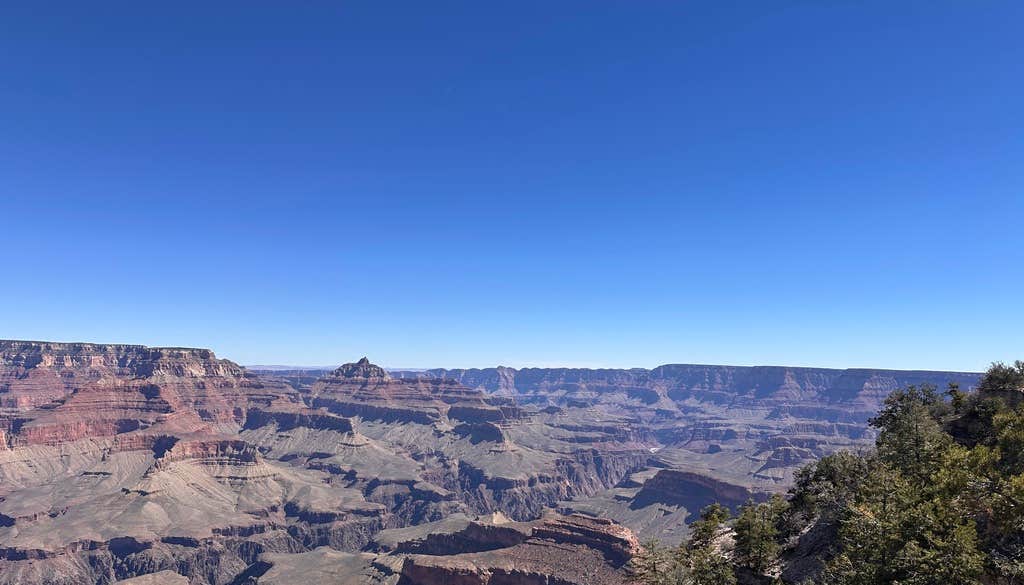
 Photo by Kathy B.
Grand Canyon National Park Camping Guide
Grand Canyon National Park draws campers for its scale, depth, and a range of setups that span from drive-in campgrounds on the South Rim to permit-only backcountry sites along the Colorado River. The South Rim stays open year-round, offers the most services, and has the highest concentration of campgrounds. The North Rim sits higher, runs cooler, and operates a shorter season -- though the North Rim Campground is closed for the 2026 season following the 2025 Dragon Bravo Fire. Below the rim, camping shifts into permit-only backcountry zones tied to major corridor trails and river access points. Planning matters here more than most parks. Distances are long, temperatures swing dramatically between rim and canyon floor, and campground availability depends heavily on season and reservation timing. This guide covers everything you need to know about planning, booking, and enjoying a Grand Canyon camping trip, with practical advice from campers who've been there.
Grand Canyon National Park Camping at a Glance
All Grand Canyon campgrounds require advance reservations during peak season, with the booking window opening 6 months ahead on Recreation.gov. South Rim campgrounds fill quickly from March through November, and the expanded Tusayan-Montane Campground (formerly Ten-X) in Kaibab National Forest provides a strong overflow option just 4 miles from the entrance. Campground fees increased by 67% effective May 1, 2025 -- the first fee change since 2005. Standard sites at Mather and Desert View now cost $30 per night. For 2026, the North Rim Campground remains closed due to damage from the Dragon Bravo Fire, which burned 145,504 acres in July 2025. The Trans-Canyon Waterline replacement project also continues to affect inner canyon trail and campground access through at least 2027.
Sites range from $20 per night at Tusayan-Montane to $30 at Mather and Desert View, while Trailer Village RV Park (the only in-park option with full hookups) runs $79-89 per night. South Rim campgrounds operate year-round at Mather and seasonally at Desert View (approximately mid-April through mid-October). Summer days on the South Rim reach 70-84 degrees F, but the inner canyon at Phantom Ranch routinely tops 100-110 degrees F in July and August -- plan below-rim hiking for spring or fall.
Grand Canyon National Park Campground Quick Facts
| Quick Facts | Details |
|---|---|
| Number of Campgrounds | 4 frontcountry campgrounds plus multiple backcountry zones and Kaibab National Forest options nearby |
| Total Campsites | Mather: 327 sites, Trailer Village: 123 full-hookup sites, Desert View: 50 sites, Tusayan-Montane: 142+ sites |
| Campsite Costs | $20-$30 per night standard; $30 hiker/biker site ($6/person); Trailer Village $79-89/night full hookup |
| Reservation Platforms | Recreation.gov for Mather, Desert View, and Tusayan-Montane (6-month window); visitgrandcanyon.com for Trailer Village (up to 13 months ahead) |
| Camping Seasons | Mather and Trailer Village year-round; Desert View mid-April through mid-October; North Rim closed for 2026 |
| Temperature Ranges | South Rim: Days 70-84 degrees F (summer), nights 45-55 degrees F; Inner Canyon: Days can exceed 110 degrees F in summer |
| 2026 Updates | North Rim Campground closed (Dragon Bravo Fire damage) Cottonwood Campground closed (waterline construction through May 2026) Bright Angel Campground open (reopened November 2025) Campground fees increased 67% in May 2025 |
Grand Canyon Campgrounds: Complete Guide
South Rim Campgrounds
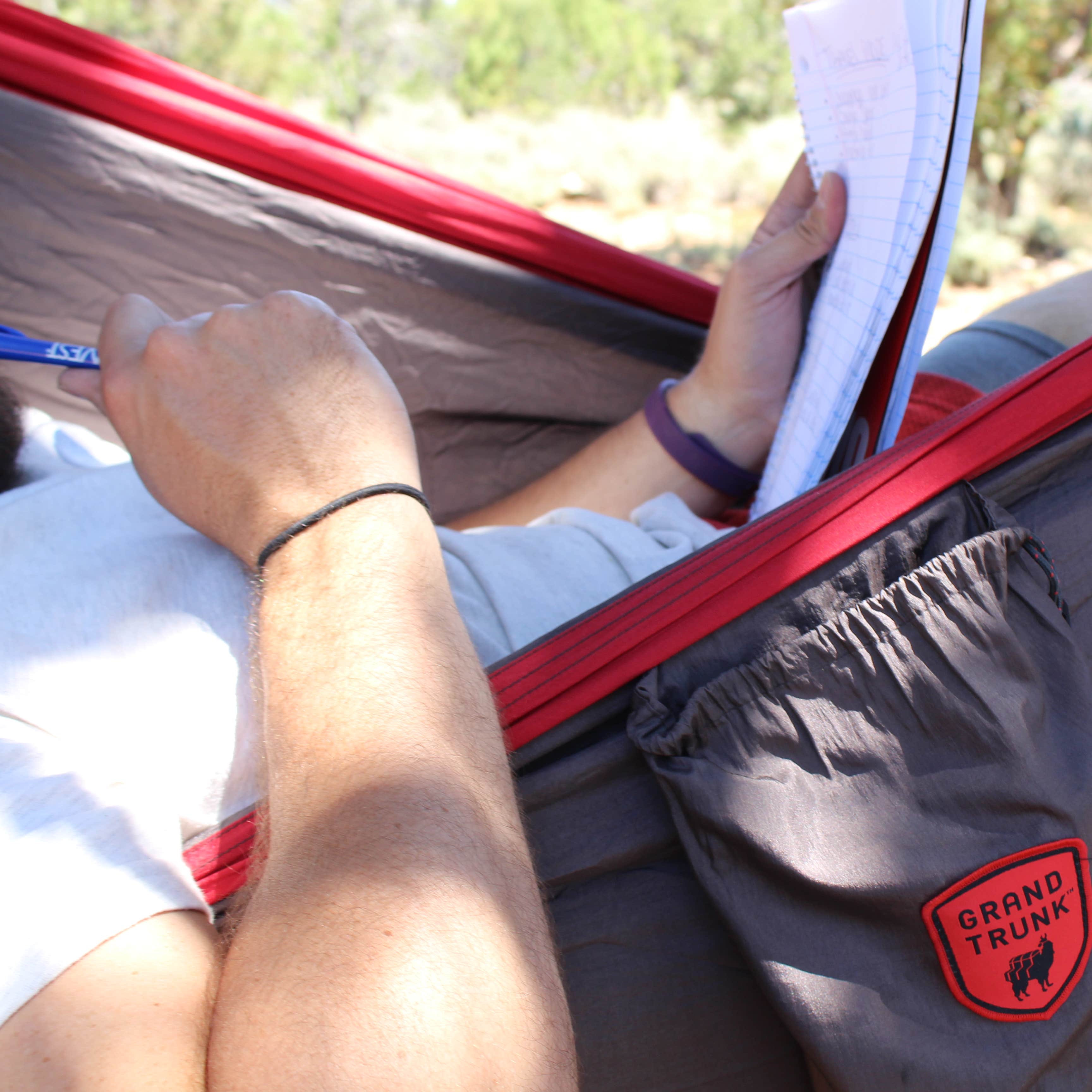
Mather Campground — Grand Canyon National Park
Mather Campground sits near Grand Canyon Village on the South Rim and is the largest campground in the park, with 327 total sites across six loops. It accommodates tents and RVs up to 30 feet with picnic tables, fire rings, restrooms, and water access at central facilities. No hookups are available, but a free dump station and water fill are located at the on-site Camper Services building. Coin-operated showers ($2.50 per 5 minutes) and laundry are available at Camper Services. The free Village shuttle stops at the campground entrance, connecting to all South Rim restaurants, viewpoints, and trailheads. Most loops are open year-round; the Pine and Sage Loops serve winter visitors. Site fees increased to $30 per night in May 2025, with a 50% discount for Senior and Access pass holders.
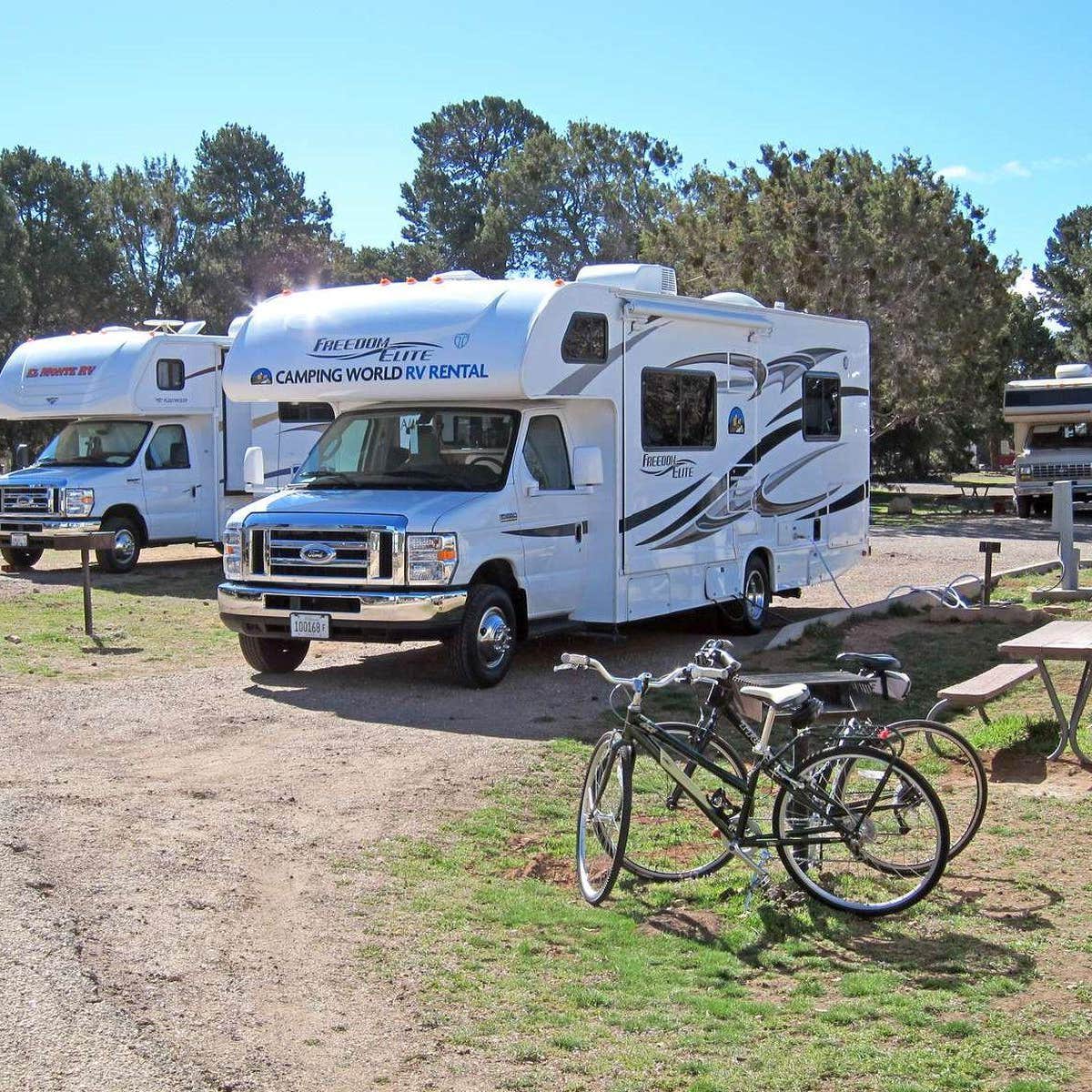
Trailer Village RV Park — Grand Canyon National Park
Trailer Village is the only campground inside Grand Canyon National Park with full hookups -- water, sewer, and 30/50-amp electric service at all 123 paved pull-through sites. Maximum RV length is 50 feet. It operates year-round and is managed by Delaware North through visitgrandcanyon.com, where reservations can be made up to 13 months in advance. Rates run $79-89 per night depending on season. Each site has a picnic table and charcoal grill -- wood fires are not permitted. Showers and laundry are available at the Mather Campground Camper Services building, about a half-mile walk. The free Village shuttle stops at the entrance.
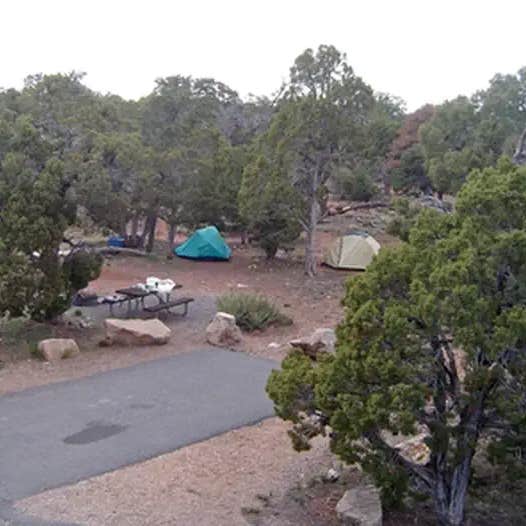
Desert View Campground — Grand Canyon National Park
Desert View Campground sits 25 miles east of Grand Canyon Village at 7,463 feet elevation, near the Desert View Watchtower on the eastern edge of the South Rim. It has 50 sites for tents and RVs up to 30 feet, with flush toilets and potable water spigots but no hookups, no showers, and no dump station. Fees are $30 per night. The campground now requires reservations through Recreation.gov during its mid-April through mid-October season -- it no longer operates as first-come, first-served. The Desert View Market and Trading Post are nearby. Sites are quieter and less crowded than Mather, with quicker access to Desert View Drive overlooks heading east.
North Rim Campgrounds
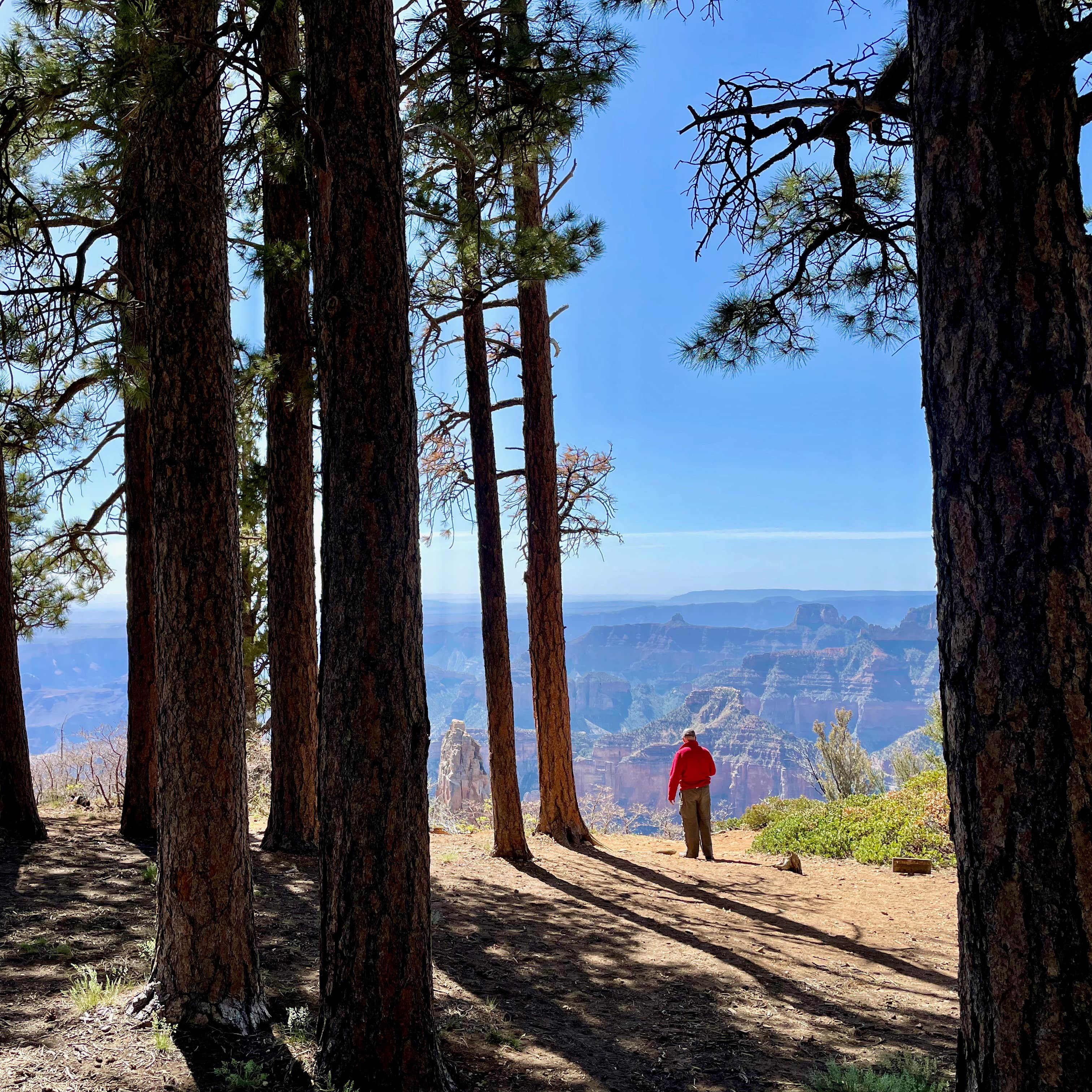
North Rim Campground (Closed for Remainder of 2025)— Grand Canyon National Park
North Rim Campground sits at 8,200 feet elevation and normally operates May 15 through October 15, offering 87 sites with flush toilets, a dump station, coin-operated showers and laundry, and a camp store. No hookups are available. The 2026 season is cancelled due to damage from the Dragon Bravo Fire, which burned 145,504 acres in July 2025 and destroyed the historic Grand Canyon Lodge and North Rim Visitor Center. Check nps.gov/grca for reopening updates before planning any North Rim trip.
Inner Canyon and Backcountry Campgrounds
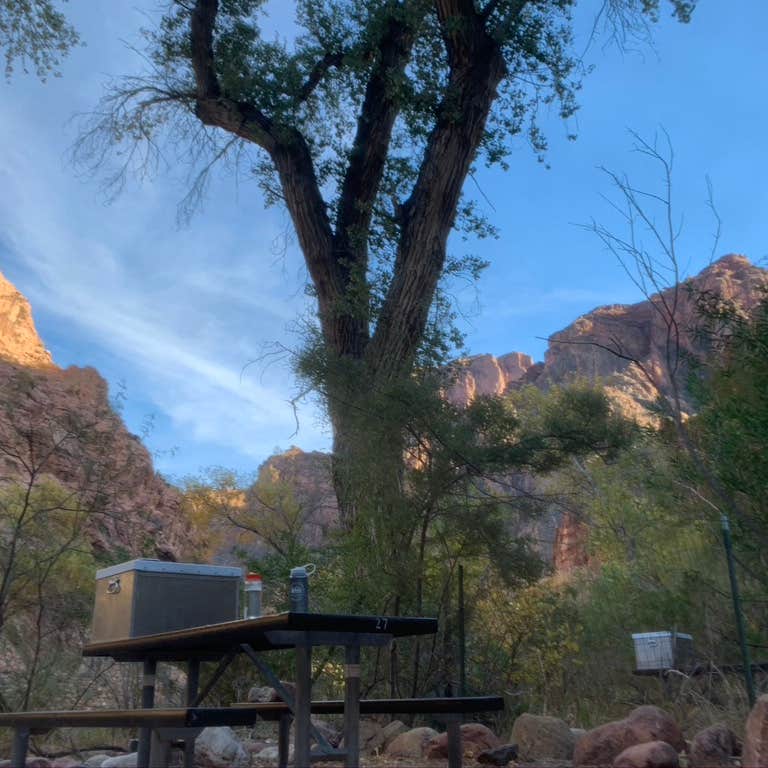
Bright Angel Campground — Grand Canyon National Park
Bright Angel Campground sits near Phantom Ranch along Bright Angel Creek at 2,480 feet elevation and is the primary backcountry camping destination in the inner canyon. It has 32 permit sites with potable water, flush toilets, metal food storage cans, pack poles, and an emergency phone. Access requires a strenuous hike: 9.5 miles via Bright Angel Trail or 7 miles via South Kaibab Trail. A backcountry permit is required year-round; the maximum stay is 2 consecutive nights. The campground closed in 2025 due to Dragon Bravo Fire impacts and a chlorine gas leak, and reopened November 1, 2025. Note that the River Trail and Silver Bridge connecting Bright Angel Campground to the South Kaibab Trail remain closed through June 30, 2026 -- use Bright Angel Trail for access until then.
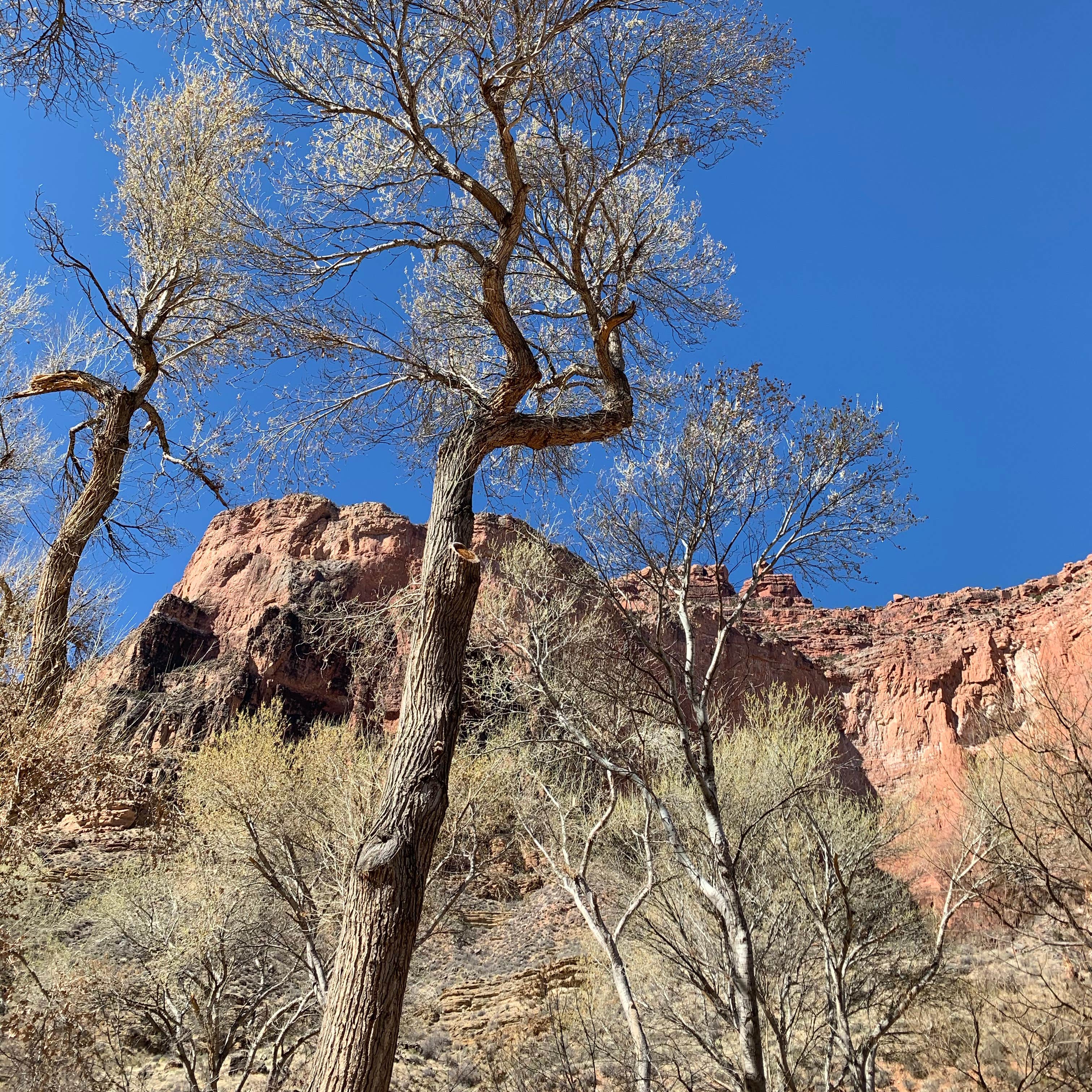
Havasupai Gardens Campground — Grand Canyon National Park
Havasupai Gardens Campground (formerly Indian Garden, renamed November 2022 at the request of the Havasupai Tribal Council) sits on the Bright Angel Trail 4.5 miles below the South Rim at about 3,800 feet elevation. It offers 16 permit sites in a cottonwood-shaded setting with year-round potable water, composting toilets, shade structures, food storage cans, and a ranger station. A backcountry permit is required. The Plateau Point side trail departing from this campground is closed through June 30, 2026 due to Trans-Canyon Waterline construction.
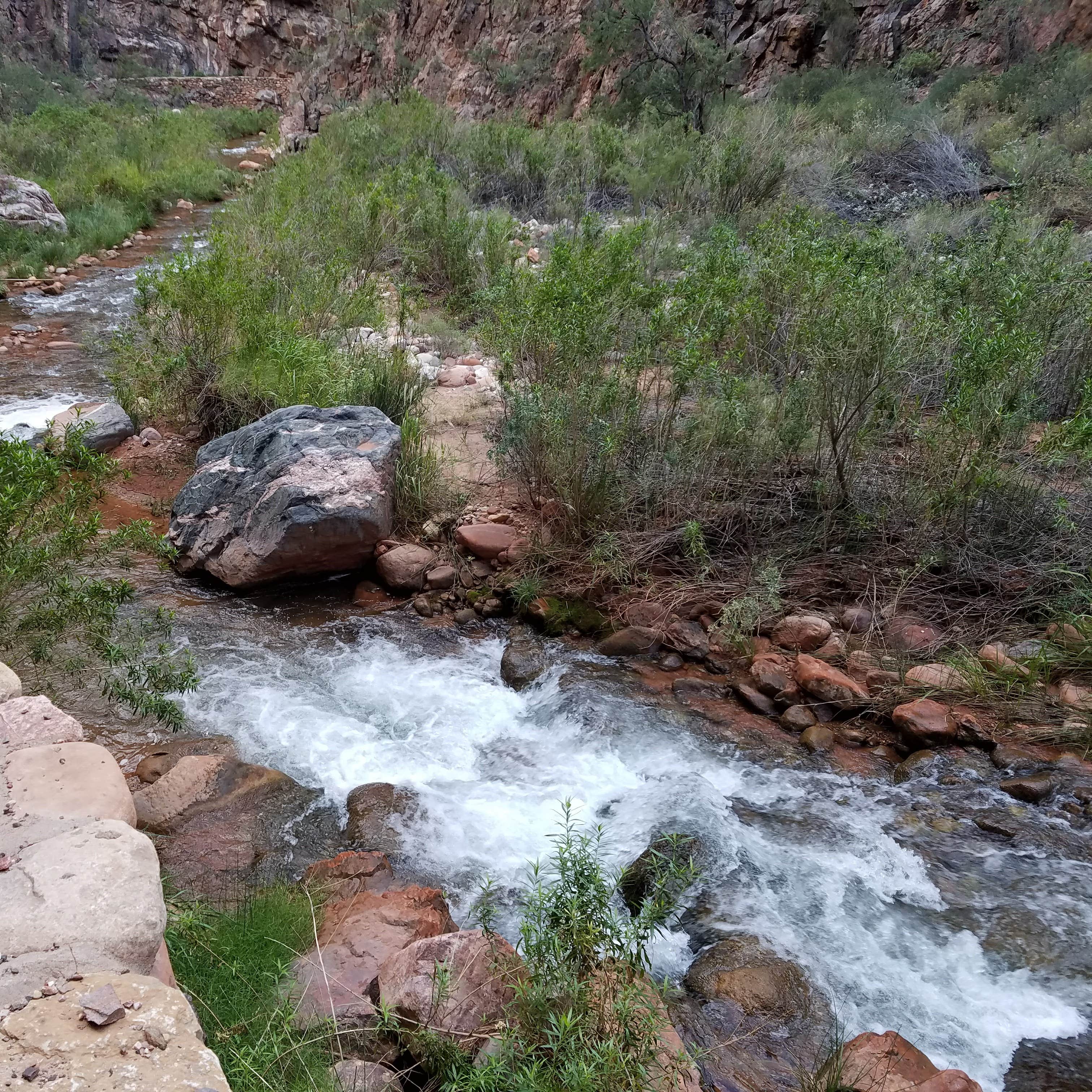
Cottonwood Campground — Grand Canyon National Park
Cottonwood Campground sits along the North Kaibab Trail 6.8 miles below the North Rim at 4,080 feet. It has 12 permit sites with seasonal potable water (mid-May through mid-October), composting toilets, and food storage cans. A backcountry permit is required. As of 2026, the campground is closed due to Trans-Canyon Waterline sliplining work (scheduled through May 14, 2026) and residual fire impacts from the Dragon Bravo Fire. The North Kaibab Trail north of the Ribbon Falls junction is also closed, making rim-to-rim hiking from the North Rim impossible in 2026.
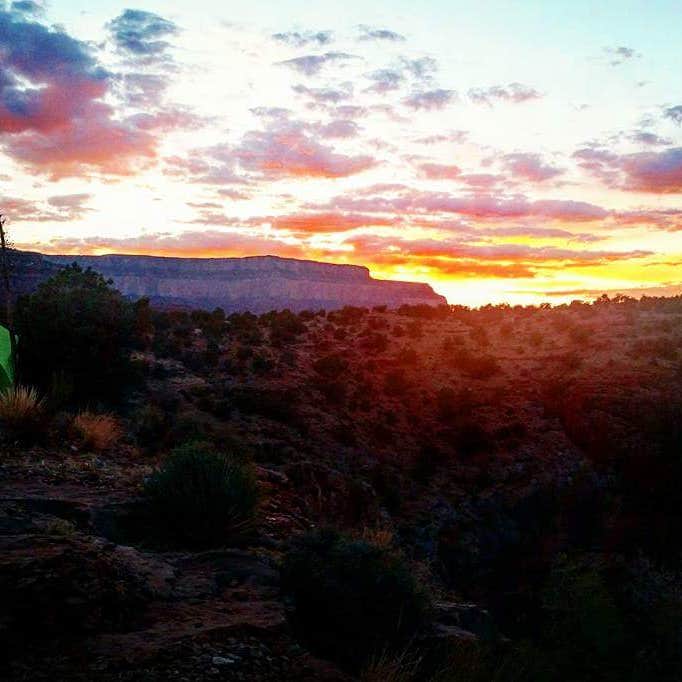
Horseshoe Mesa Campsites — Grand Canyon National Park
Horseshoe Mesa Campground is a remote backcountry site accessed via the Grandview Trail, one of the steeper and less-traveled routes into the canyon. It requires a permit and a demanding 3.2-mile descent from Grandview Point on the South Rim. Facilities are minimal with no guaranteed water source -- pack in all water. This campground suits experienced hikers who want a less crowded inner canyon route with canyon views from the mesa top.
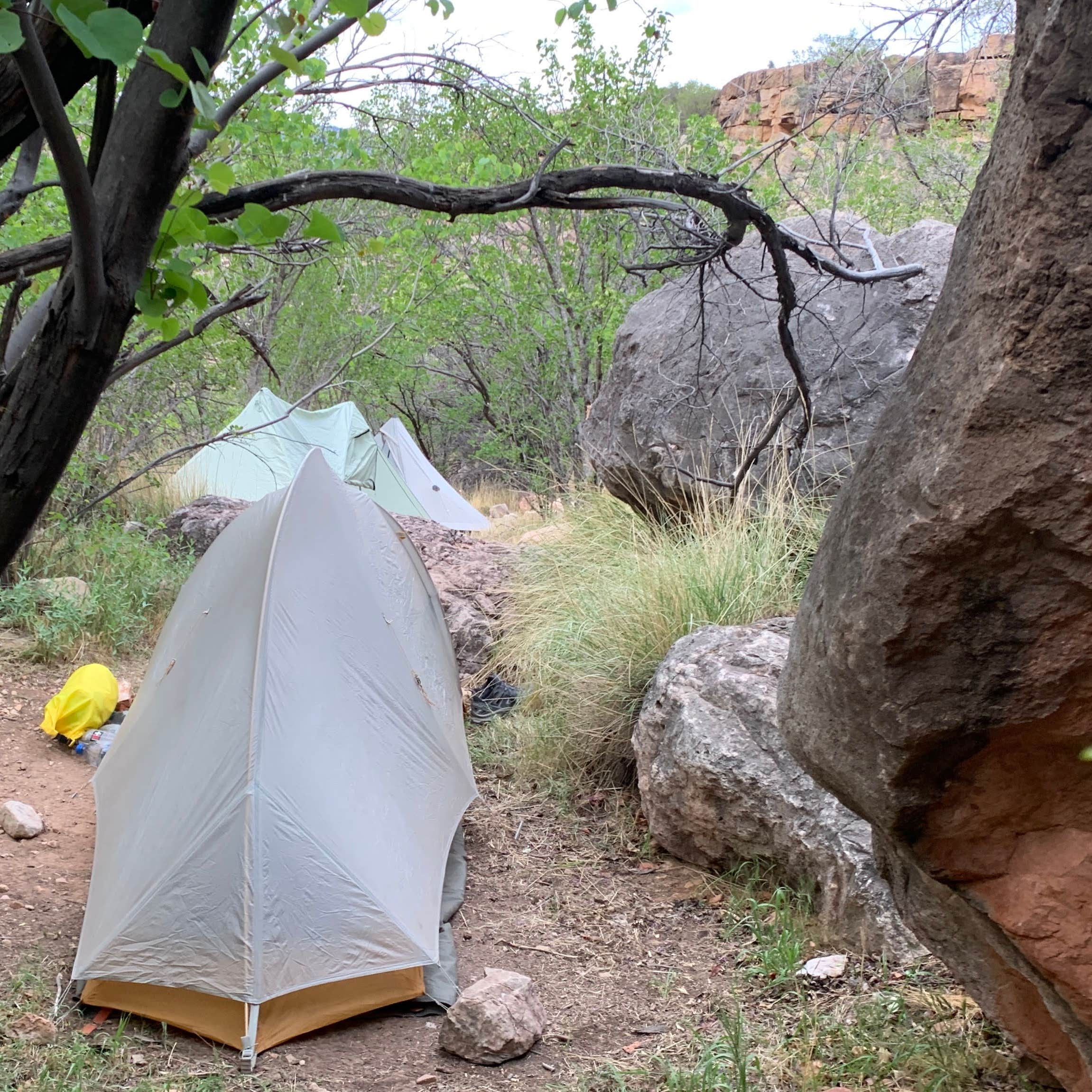
Horn Creek Campsites — Grand Canyon National Park
Horn Creek campsites sit along the Colorado River corridor and are reached by extended hikes along the Tonto Trail or river trips. These sites have no developed facilities and require full backcountry preparation including packing in all water. They work best for multi-day Tonto Trail traverses or experienced river campers on private rafting permits.
Dispersed and Nearby Camping Options
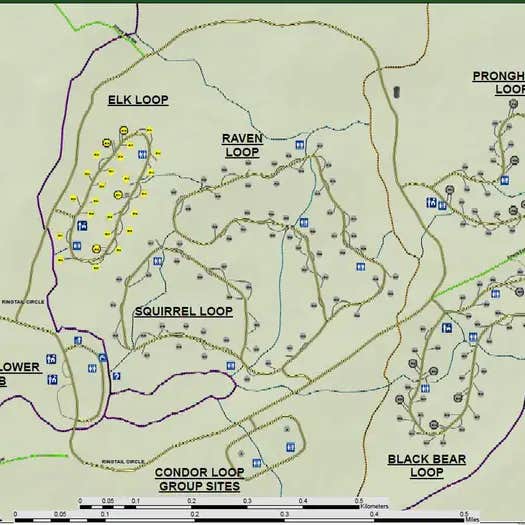
Tusayan-Montane — Grand Canyon National Park
Now operating as Tusayan-Montane Campground (renamed and expanded April 2025), this Kaibab National Forest campground sits 4 miles south of the South Rim entrance. It reopened with 142 single sites, 18 double sites, and 2 group sites across five loops -- roughly triple its former capacity. Fees are $20 per night for single sites. No hookups. Vault toilets and seasonal potable water. Pull-through sites accommodate RVs up to 35-38 feet. Reservations are available through Recreation.gov, with some first-come, first-served sites held daily. Season runs approximately May through October.
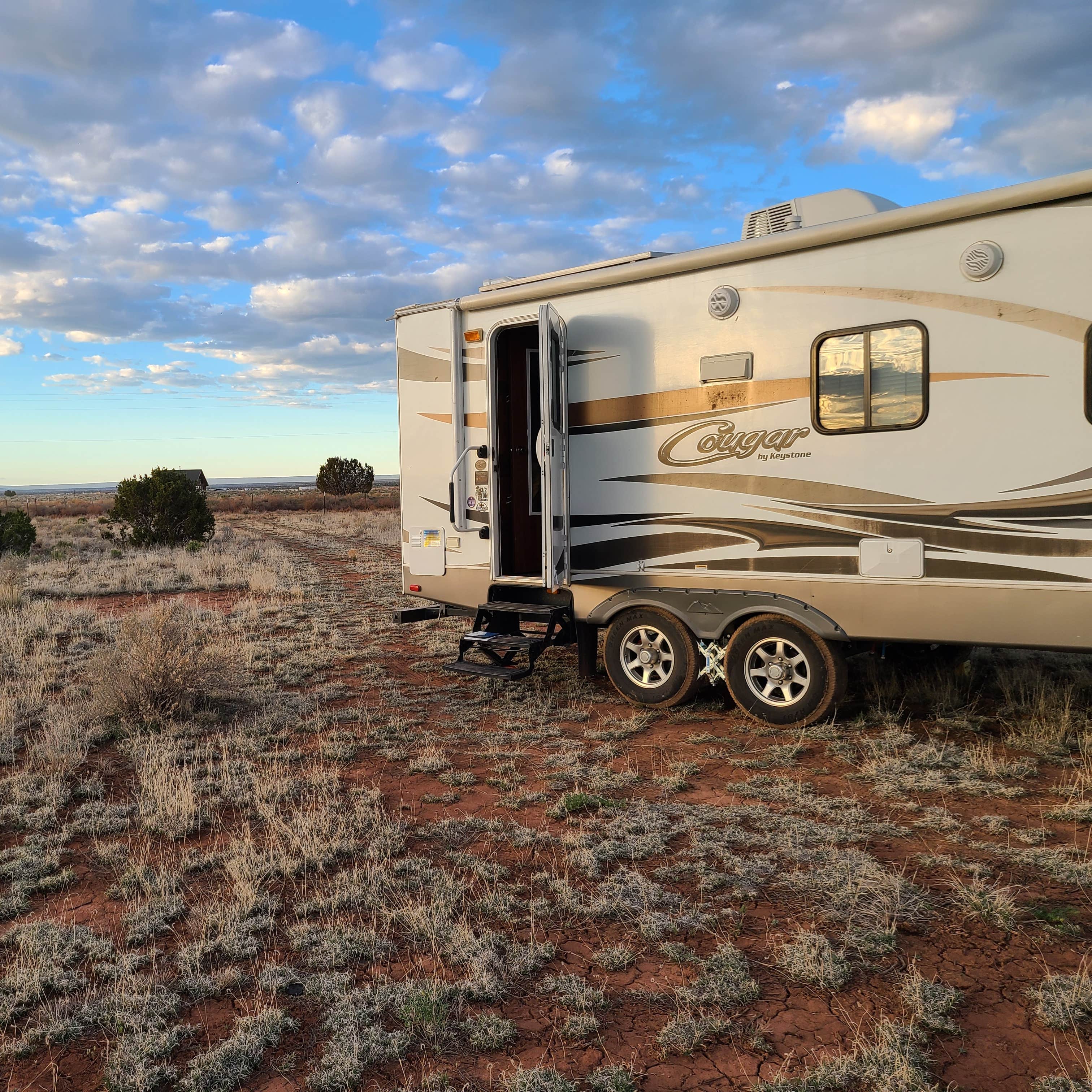
Grand Canyon Junction - Boondocking
Grand Canyon Junction offers dispersed camping areas just outside the South Rim entrance in Kaibab National Forest. Sites are informal with no services -- campers must bring all water and pack out all waste. Roads are generally accessible for most vehicles. It works well for campers who want free camping close to the park with flexibility on arrival timing.
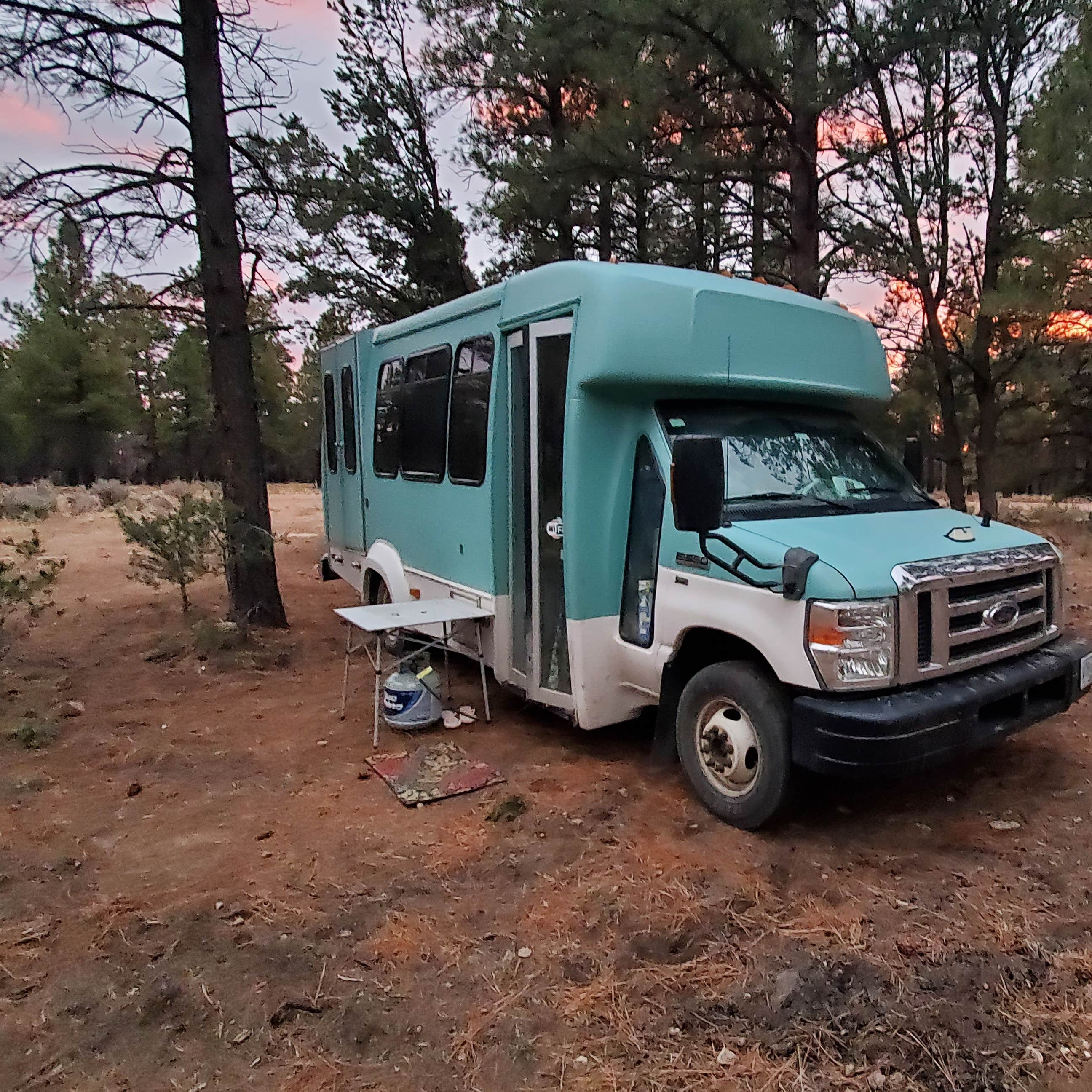
Forest Service Road 302 Dispersed
Forest Service Road 302 provides dispersed camping in Kaibab National Forest, located about 3 miles from the South Rim entrance station. Sites vary in size and surface, and there are no facilities. Conditions depend on weather and season. It works well for self-sufficient campers who want space and privacy within a short drive of South Rim access points. No permit is required; 14-day maximum stay applies.
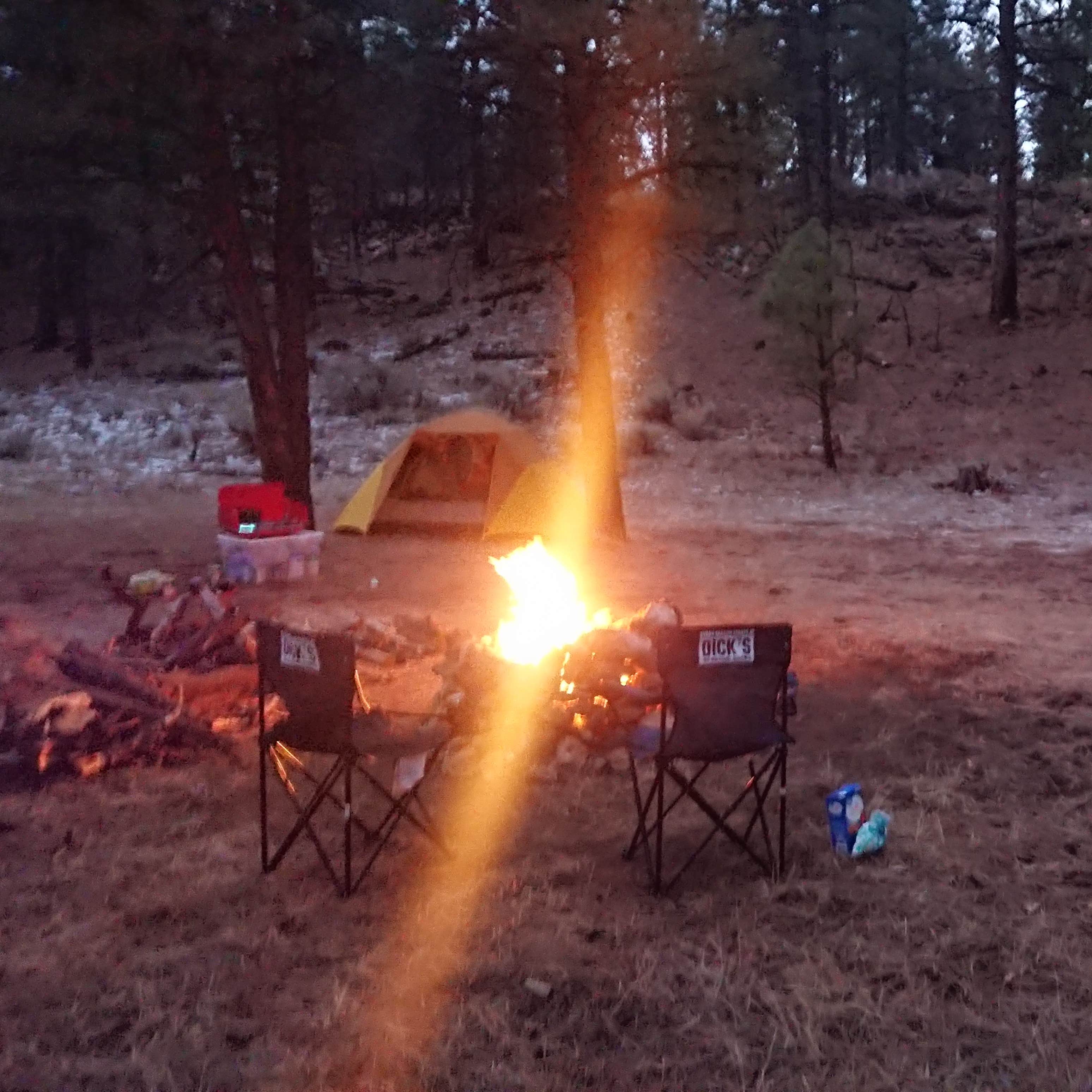
Forest Service Road 328 Dispersed
Forest Service Road 328 offers additional dispersed camping areas in Kaibab National Forest with similar conditions to other forest roads near the South Rim. No services and variable road conditions. Good for campers prepared for self-sufficient camping who want a quieter setup close to the park.
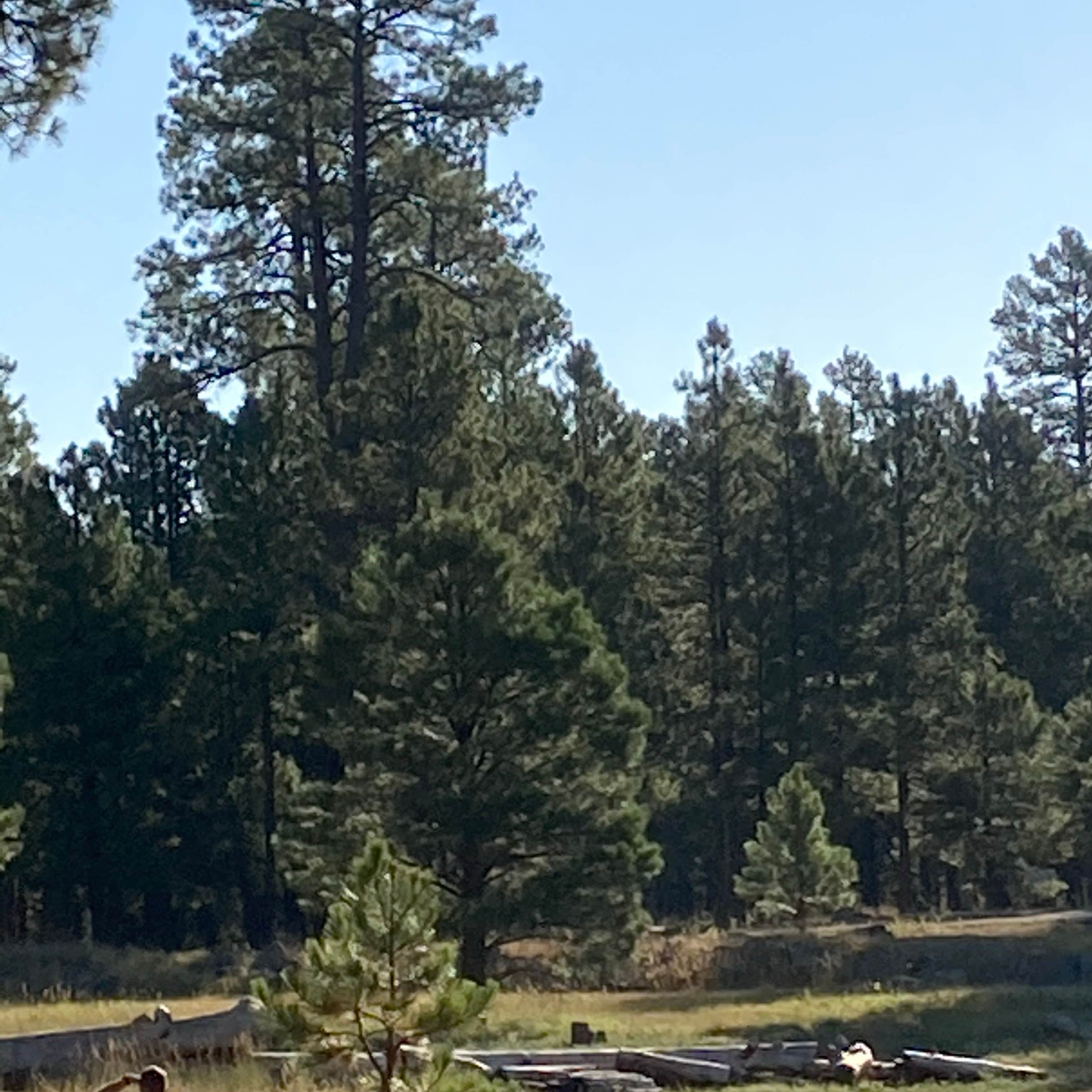
Grand Canyon Under Canvas
Under Canvas Grand Canyon provides a glamping setup with furnished tents, beds, and on-site dining just outside the South Rim. It offers a structured stay with fewer logistics than traditional camping for travelers who want comfort and easy park access.
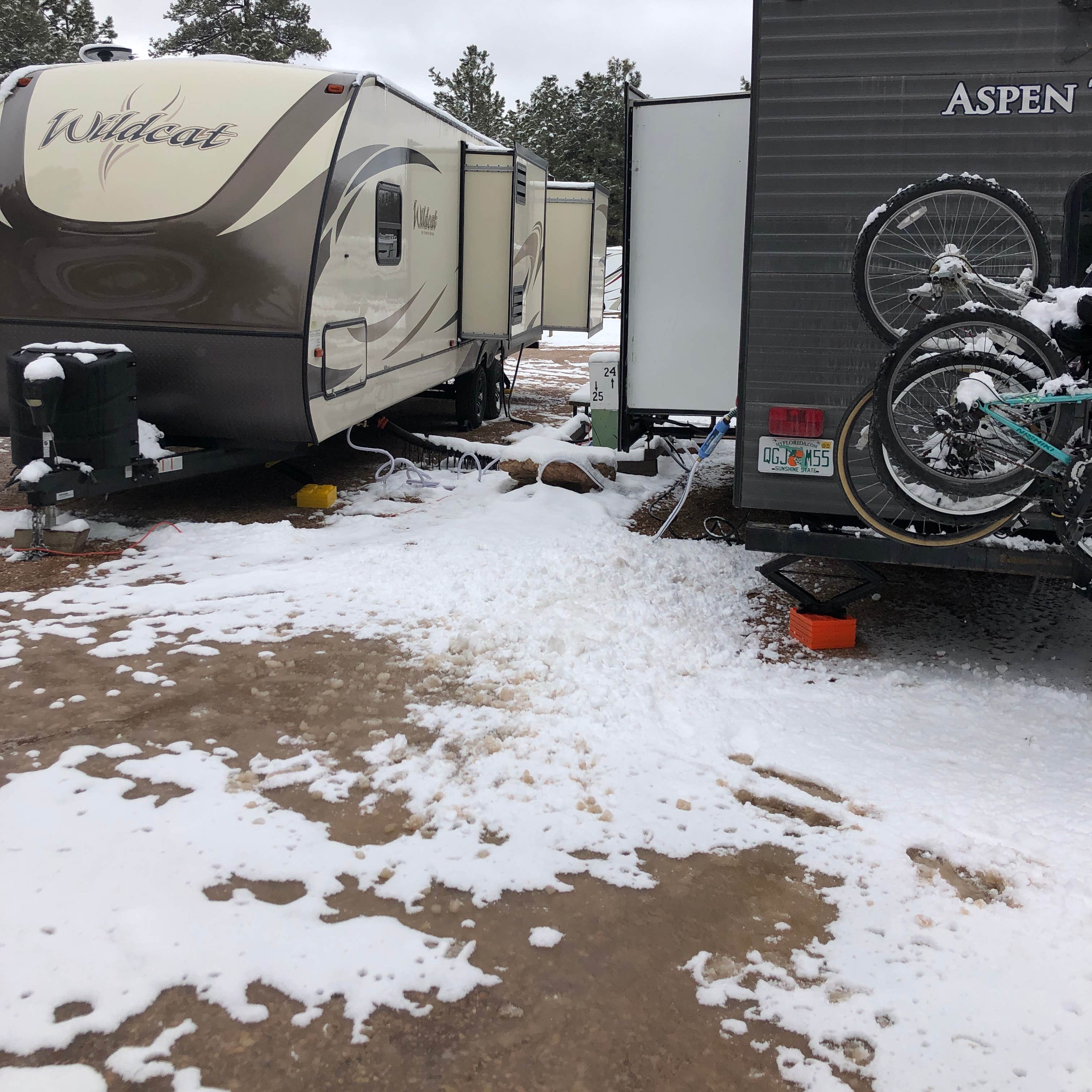
Grand Canyon Camper Village
Grand Canyon Camper Village sits in Tusayan, about 1 mile south of the park entrance. It offers RV sites with hookups, tent sites, restrooms, and basic services. It works well for RV travelers who need utility hookups and want to stay near the South Rim without camping inside the park.
Campground Comparison Table
| Campground | Location and Sites | Cost and Reservations |
|---|---|---|
| Mather | South Rim / Grand Canyon Village 327 sites, max RV 30 ft | $30/night Recreation.gov (year-round) |
| Trailer Village | South Rim / Grand Canyon Village 123 full-hookup sites, max RV 50 ft | $79-89/night visitgrandcanyon.com (year-round) |
| Desert View | East South Rim, 25 miles from Village 50 sites, max RV 30 ft | $30/night Recreation.gov (mid-April to mid-October) |
| North Rim | North Rim, 8,200 ft elevation 87 sites -- CLOSED FOR 2026 | $30/night when open Recreation.gov (check nps.gov/grca) |
| Tusayan-Montane (Ten-X) | Kaibab National Forest, 4 mi south of entrance 142+ sites | $20/night single Recreation.gov (May-October) |
| Bright Angel | Inner Canyon / Phantom Ranch 32 backcountry permit sites | $10 permit + $15/person/night Recreation.gov lottery |
| Havasupai Gardens | Bright Angel Trail, 4.5 mi below rim 16 backcountry permit sites | $10 permit + $15/person/night Recreation.gov lottery |
Campground Amenities and Best Uses
Mather Campground is the best starting point for most visitors -- it sits walking distance from Grand Canyon Village services, connects to the free shuttle network, and stays open year-round. The campground works for both tent camping at Grand Canyon National Park and smaller rigs up to 30 feet without hookups. For RV travelers who need full utility service, Trailer Village RV Park at Grand Canyon is the only in-park option with water, sewer, and electric connections, and it accepts rigs up to 50 feet. For a quieter alternative on the South Rim, Desert View Campground sits 25 miles east of the Village near the Watchtower and provides easier access to Desert View Drive overlooks and the East Entrance. The expanded Tusayan-Montane (formerly Ten-X) in Kaibab National Forest is worth knowing -- it provides a solid backup when South Rim sites are full, and its lower nightly rate makes it attractive for budget-conscious campers. There is also a strong collection of Grand Canyon dispersed camping spots on surrounding Kaibab National Forest land for free camping with no hookups. Campers interested in glamping near Grand Canyon National Park will find furnished options just outside the South Rim. Backcountry options -- Bright Angel Campground and Havasupai Gardens -- require permits and a strenuous hike but deliver an inner canyon experience that no rim campground can replicate. Important for 2026: The North Rim Campground is closed, Cottonwood Campground is closed, and the River Trail between Bright Angel and South Kaibab is closed through June 30, 2026. Check nps.gov/grca for current trail and campground status before finalizing any trip.
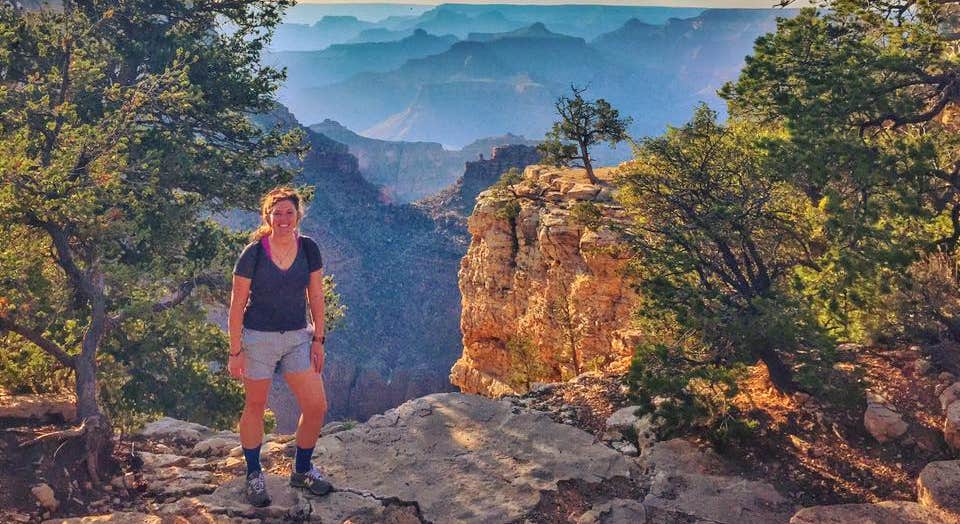 Photo by Eby H
Planning Your Grand Canyon Camping Trip 
When to Visit Grand Canyon
| Season | Temperatures | Camping Conditions |
|---|---|---|
| Spring (March-May) | South Rim: Days 50-70 degrees F, nights 28-42 degrees F Inner Canyon: Days 55-82 degrees F | Best season for below-rim hiking and backcountry camping Desert View opens mid-April Wildflowers on the North Rim in May |
| Summer (June-August) | South Rim: Days 70-84 degrees F, nights 45-55 degrees F Inner Canyon: Days 100-115 degrees F | Peak demand -- book South Rim sites months ahead Below-rim hiking dangerous midday Monsoon storms July through early September |
| Fall (September-October) | South Rim: Days 50-76 degrees F, nights 30-44 degrees F Inner Canyon: Days 70-92 degrees F | Second-best season for rim and inner canyon Desert View closes mid-October Crowds thin after Labor Day |
| Winter (November-February) | South Rim: Days 36-45 degrees F, nights 16-24 degrees F Inner Canyon: Days 56-62 degrees F, nights 36-42 degrees F | Mather and Trailer Village open year-round Inner canyon mild and uncrowded North Rim closed; snow possible on South Rim |
Spring (March-May):
Spring is the most popular season for below-rim hiking and backcountry permits. The inner canyon temperature rule of thumb -- roughly 5 degrees F warmer per 1,000 feet of descent -- means a pleasant 65-degree day on the South Rim translates to approximately 88 degrees at Phantom Ranch. Water sources on Bright Angel Trail are seasonal (rest houses close water in winter and open by April), so verify conditions before heading down. Mather Campground operates all loops by March. Desert View opens around April 11 each year. South Rim crowds build through April and Memorial Day weekend, but midweek sites at Mather are still available with advance booking on Recreation.gov. Spring also brings dispersed camping near Grand Canyon at its most comfortable -- temperatures in the forest are mild and the roads are dry.
Summer (June-August):
Summer is peak demand season on the South Rim and the most dangerous time for inner canyon hiking. The NPS strongly discourages hiking to the Colorado River and back in a single day from May through September. Temperatures at Phantom Ranch routinely exceed 110 degrees F in July and August; the canyon floor holds heat through the night, with lows around 72-78 degrees F. Mather Campground and Trailer Village fill weeks or months ahead for summer weekends -- book at the 6-month mark on Recreation.gov. Tusayan-Montane in Kaibab National Forest is a reliable fallback. The free South Rim shuttles operate most frequently in summer, reducing parking pressure throughout the Village area. Afternoon monsoon storms arrive from mid-July through early September -- carry a rain layer on any hike.
Fall (September-October):
Fall offers the best balance of good weather, lighter crowds, and full access to South Rim facilities. After Labor Day, Grand Canyon National Park camping becomes considerably easier to book with shorter advance notice. The inner canyon cools enough for comfortable multi-day hikes by mid-September -- backcountry permit competition is still fierce for Bright Angel Campground, but success rates improve slightly compared to peak spring. Desert View Campground typically closes mid-October. Fall is also the best season for photography at the rim, with low-angle light and the occasional monsoon cloud lingering into September.
Winter (November-February):
Winter camping on the South Rim is underrated. Mather Campground runs the Pine and Sage Loops year-round, and Trailer Village stays fully operational with hookups. The inner canyon in winter is mild compared to the rim -- Phantom Ranch sees daytime highs of 56-62 degrees F and is comfortable for hiking December through February. Backcountry permit competition drops significantly in winter, and maximum stay limits increase to 4 nights at corridor campgrounds (November 15 through February 28). Snow on the South Rim is possible but rarely accumulates for long. The North Rim and Highway 67 remain closed to vehicles through mid-May.
Grand Canyon Reservation Systems Explained
Understanding two separate reservation systems is essential for Grand Canyon camping:
NPS-Managed Campgrounds (Recreation.gov) include Mather Campground and Desert View Campground inside the park, plus the Tusayan-Montane Campground in Kaibab National Forest. Book these at Recreation.gov, where reservations open on a 6-month rolling window. Create your Recreation.gov account before the booking window opens. Peak summer weekends at Mather fill quickly once the window opens -- have your dates, site preferences, and payment ready. Cancellations appear regularly 7-14 days before arrival as the 7-day cancellation deadline passes.
Concessionaire-Managed (visitgrandcanyon.com) covers Trailer Village Grand Canyon RV Park, managed by Delaware North. Reservations open up to 13 months in advance at visitgrandcanyon.com or by calling 877-404-4614. Peak months (May-October) should be booked as early as possible -- full-hookup sites inside a national park are rare and in constant demand from Grand Canyon National Park RV campers.
Backcountry Permits (Recreation.gov lottery) are required for all overnight stays below the rim at Bright Angel Campground, Havasupai Gardens, Cottonwood, and designated corridor and non-corridor campsites. The lottery opens on the 16th of each month and closes at 5:00 PM MST on the 1st of the following month, for trips beginning 4 months later. Winners are notified on the 2nd. A $10 non-refundable permit fee applies, plus $15 per person per night for below-rim camping. Walk-up permits are available at the Backcountry Information Center (South Rim, open daily 8 AM-noon and 1-5 PM MST) for a limited number of last-minute spots. See The Dyrt's Grand Canyon backcountry permit guide for step-by-step application tips.
Colorado River permits for private rafting trips use a weighted lottery at grcariverpermits.nps.gov, opening February 1 each year for the following season. Commercial guided Colorado River trips run through NPS-authorized outfitters and typically require booking 1-2 years out. See The Dyrt's guide to Grand Canyon river permits for more detail.
Grand Canyon Campground Costs and Budgeting
| Campground Type | Nightly Cost | Key Features |
|---|---|---|
| Mather Campground (standard site) | $30 (50% discount with Senior/Access pass) | Year-round access, flush toilets, showers available at Camper Services, max RV 30 ft, no hookups |
| Mather Campground (hiker/biker) | $6 per person | Communal tent site, walk-in only, shared facilities |
| Trailer Village RV Park | $79-89 (seasonal) | Full hookups (water, sewer, 30/50-amp electric), max RV 50 ft, year-round |
| Desert View Campground | $30 (50% discount with Senior/Access pass) | Seasonal (mid-April to mid-October), quiet eastern setting, no hookups |
| Tusayan-Montane (Ten-X) | $20 single / $40 double | Kaibab National Forest, 4 miles from entrance, no hookups, vault toilets |
| Backcountry (below rim) | $10 permit + $15 per person per night | Corridor and non-corridor zones, permit required, reservation lottery |
Additional Fees and Budget Tips
Park Entrance Fees: The current entrance fee is $35 per vehicle (valid 7 days), $30 per motorcycle, or $20 per person on foot or bicycle. The America the Beautiful Annual Pass covers entry at $80 per year. The Senior Annual Pass is $20 (Lifetime: $80). Military passes are free. Beginning January 1, 2026, non-U.S. residents aged 16 and older pay an additional $100 surcharge per person at Grand Canyon and 10 other high-demand parks. Entrance stations no longer accept cash -- credit or debit card only.
Fee-Free Days (U.S. residents): February 16, May 25, June 14, July 3-5, August 25, September 17, October 27, and November 11.
Facility Fees: Showers cost $2.50 per 5 minutes at Mather Camper Services (hours 7:00 AM-6:00 PM, last shower at 5:45 PM). Laundry runs $2.50 for a standard washer, $5.50 for large loads, $1.25 per 30 minutes for drying. Firewood must be purchased at the Canyon Village Market or camp stores -- gathering wood anywhere inside the park is prohibited.
Budget-Friendly Options: Dispersed camping near Grand Canyon National Park in Kaibab National Forest is free with a 14-day maximum stay and no permit required. Popular free spots along Forest Road 302, Forest Road 328, Fire Road 688, and near Grand Canyon Junction boondocking areas put you within a short drive of the park entrance. Staying at Tusayan-Montane ($20/night) and driving to the rim each day saves $10 per night compared to Mather and a considerably larger margin compared to Trailer Village.
Essential Gear for Grand Canyon Camping
Water is the most critical planning variable at Grand Canyon. Rim campgrounds have water spigots and nearby stores, but below-rim water sources are seasonal and trail-dependent. Carry 1 liter of water per hour of hiking as a baseline and more in summer heat.
Water and Sun:
- Water bottles or a hydration reservoir with at least 3-4 liters capacity for any inner canyon day hike
- Electrolyte tablets or sports drink mix -- salt loss is significant in canyon heat
- Wide-brim hat, UV-protective long-sleeved shirt, and SPF 50+ sunscreen
- Sunglasses rated for UV protection
Shelter and Sleeping:
- Tent with rainfly -- monsoon storms arrive with little warning July through early September
- Sleeping bag rated for 20-30 degrees F for South Rim nights year-round (rim temperatures drop sharply after dark)
- Sleeping pad with good insulation (R-value 3 or higher)
- Extra stakes and guy lines for windy rim conditions
Kitchen and Food:
- Bear-proof food container or use the provided metal food storage boxes at each campsite
- Camp stove and fuel -- fires are frequently restricted by late summer; do not count on a campfire
- Water filter or treatment for inner canyon creek sources
- Minimum 2 days of extra food for any backcountry trip beyond what you plan to use
Navigation and Safety:
- Offline maps downloaded before arrival -- cell service is unreliable throughout the park
- First aid kit with moleskin and blister treatment for canyon hiking
- Headlamp with extra batteries for predawn and evening trailhead departures
- Bear spray is not required but a whistle is a useful safety signal
Clothing Layers:
- Lightweight layers for temperature swings -- the South Rim can be 40 degrees F cooler than the inner canyon
- Rain jacket and waterproof pants for monsoon season
- Sturdy, broken-in hiking boots with ankle support for steep canyon trails
- Camp shoes or sandals for around the campground
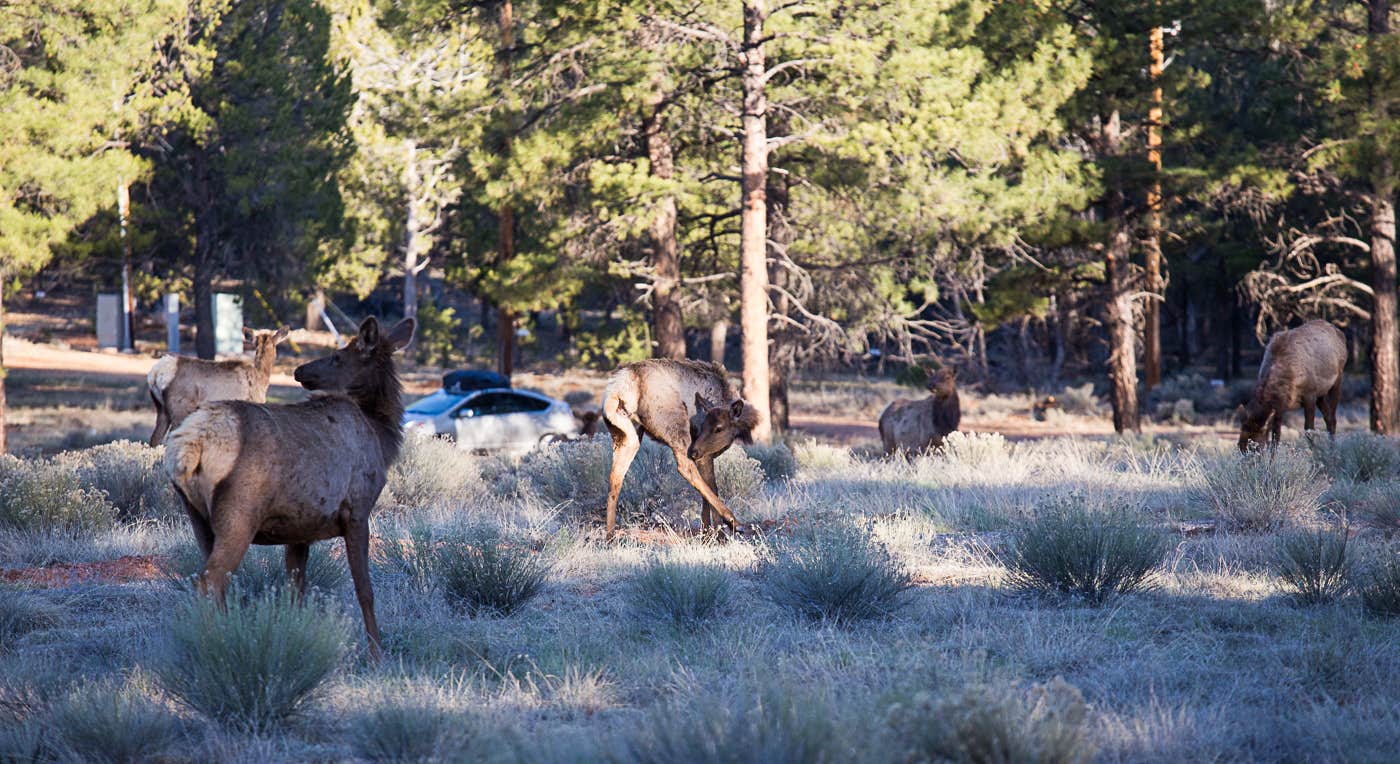 Photo by Meg S
Wildlife Safety and Grand Canyon Regulations 
Wildlife at Grand Canyon
Grand Canyon supports a remarkable range of wildlife across its elevation zones. California condors -- with wingspans reaching 9.5 feet -- are frequently spotted soaring above both rims. Roughly 82 condors inhabit the northern Arizona and southern Utah canyon country. Best viewing spots include Yavapai Point, Lookout Studio, and the South Rim overlooks along Hermit Road. Condors are tagged with numbered wing markers; individual birds can be tracked at condorspotter.com. Mule deer are common on both rims, especially near meadows and parking areas at dawn and dusk. Elk -- a non-native species -- appear regularly around Grand Canyon Village and can be aggressive, particularly during the fall rut. The Kaibab squirrel, found only on the North Rim's Kaibab Plateau, is a unique subspecies visible nowhere else in the world. Desert bighorn sheep inhabit the inner canyon walls and are occasionally seen from overlooks. In the inner canyon and backcountry, ringtail cats, coyotes, and ravens are persistent camp visitors that will exploit any unsecured food. Six species of rattlesnake live in the park, primarily below the rim during warmer months. Arizona bark scorpions are also present -- shake out shoes left outside overnight.
Food Storage Requirements:
All food, coolers, trash, toiletries, and any scented items must be stored in a hard-sided vehicle or the metal bear boxes provided at each campsite when not actively in use. Trailer Village does not allow wood fires -- charcoal only. Inner canyon sites provide metal ammunition cans and pack poles for hanging packs. Ravens are particularly aggressive food thieves at rim campgrounds and picnic areas -- never leave food unattended on a table, even briefly.
Condor Safety:
Do not approach condors at any time. They are federally protected and accustomed to humans, which means they may land near camp or on the rim walls within a few feet. Keep food and trash secured; condors have learned to forage human food sources. Report any condor that appears ill or injured to a ranger.
Park Regulations and Etiquette
| Regulation Category | Specific Rules | Penalties |
|---|---|---|
| Campfires | Permitted only in designated fire rings at developed campgrounds No wood gathering in the park Fire restrictions frequently in effect late summer Charcoal fires only at Trailer Village | Citations and fines Possible campground eviction |
| Quiet Hours | 10:00 PM to 6:00 AM at all campgrounds Generator hours: 7:00-9:00 AM and 6:00-8:00 PM only Pine Loop at Mather is generator-free | Warnings, then possible eviction |
| Wildlife | Do not feed any wildlife Stay on designated trails Maintain distance from all animals | Significant fines and citations |
| Maximum Stay | 7 consecutive nights at developed campgrounds (30 nights per calendar year at Mather) 2 consecutive nights at backcountry corridor sites (4 nights November 15-February 28) | Eviction and forfeiture of remaining reservation |
Additional Grand Canyon Park Regulations
Heat Safety: The NPS designates below-rim hiking as a Category 1 heat risk from May 1 through September 30. Rangers actively discourage hiking to the Colorado River and back in a single day during this period. Carry more water than you think you need; hyponatremia (low sodium from drinking too much water without replacing electrolytes) is as dangerous as dehydration below the rim.
Waste Disposal: Pack out all trash from backcountry sites. Greywater must be disposed of at utility sinks or packed out -- not scattered on the ground at any campsite. Human waste at backcountry non-corridor sites requires a WAG bag (Waste Alleviation and Gelling) -- these are available at the Backcountry Information Center.
Pets: Leashed pets are permitted at developed campgrounds and on the South Rim paved trails (including the Rim Trail). Pets are not permitted below the rim on any inner canyon trail -- not even to the first rest house on Bright Angel. Service animals follow separate rules under ADA policy.
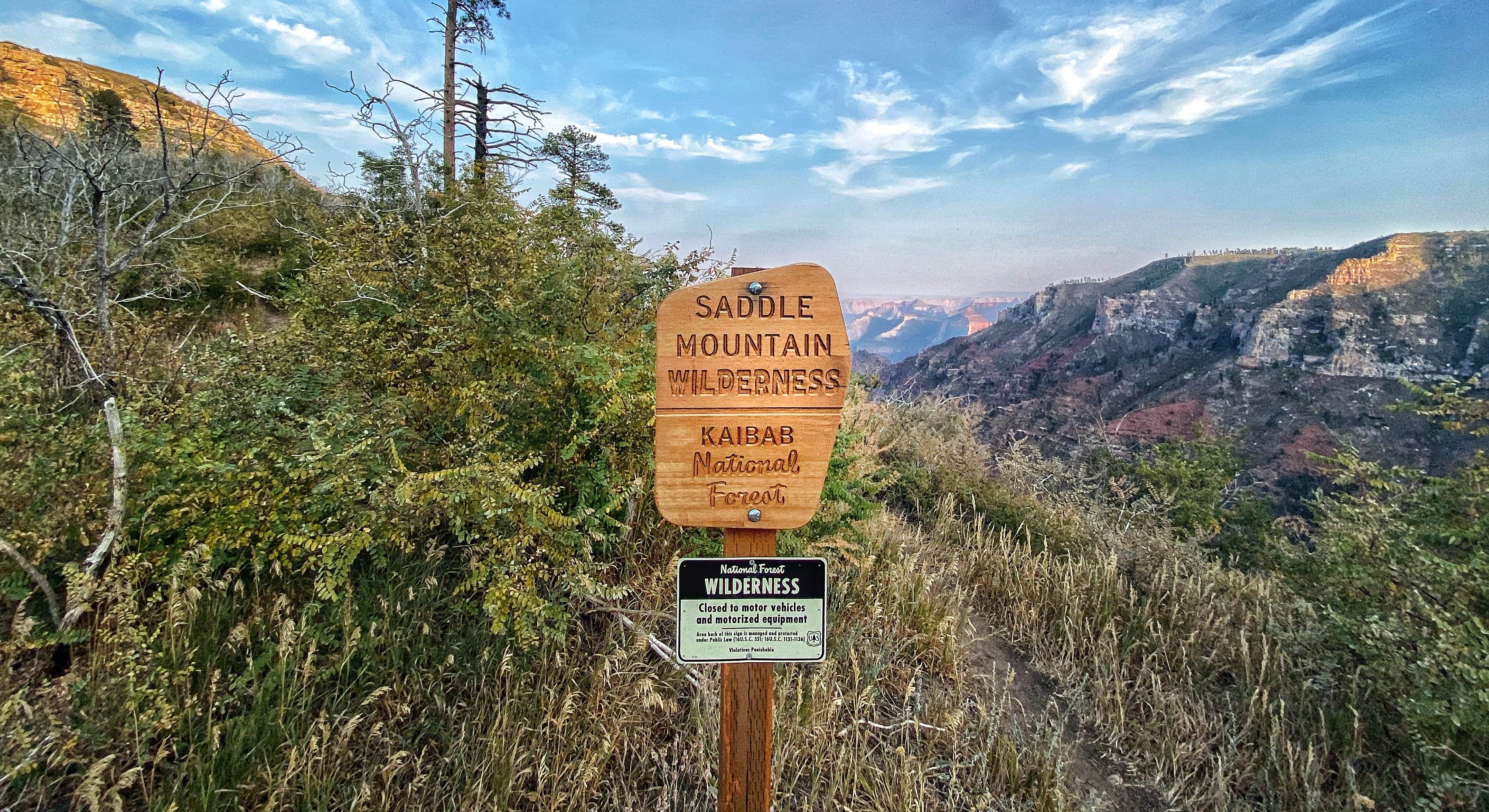 Photo by Tori G
Beyond the Campground: Activities and Exploration 
Day Trips from Grand Canyon Campgrounds
From Mather Campground and Grand Canyon Village:
Mather's central location makes it the best base for day trips in every direction. The free Hermit Road (Red Route) shuttle connects you to nine rim viewpoints including Hopi Point -- widely regarded as the best sunset spot on the South Rim -- Mohave Point, and Pima Point, covering 7 miles of the western rim. Hermit Road is closed to private vehicles March through November; the shuttle runs every 8-15 minutes during that period. For a 26-mile drive east, Desert View Drive stays open year-round to private vehicles and passes Grandview Point, Tusayan Ruin and Museum (an 800-year-old Ancestral Pueblo site), Lipan Point, and the Desert View Campground area. Toroweap Overlook on the North Rim's remote western edge requires a high-clearance vehicle and long dirt road approach, but provides one of the most dramatic canyon viewpoints accessible by road.
From Desert View Campground:
Desert View Campground is the only in-park camp with direct private vehicle access to the eastern rim viewpoints. The Desert View Watchtower (Mary Colter, 1932) is a 5-minute walk from camp. Grandview Point, 12 miles west, offers canyon views and access to the Grandview Trail -- the route to Horseshoe Mesa Campground. Lipan Point (4 miles west) provides one of the best views of the Colorado River's course from any road-accessible viewpoint in the park.
From Bright Angel Campground (Inner Canyon):
Staying at Bright Angel Campground near Phantom Ranch places you in a completely different world from the rim. Phantom Ranch (a half-mile north) offers a canteen, snacks, lemonade, and limited meals by reservation. The Colorado River beaches near the campground are walkable for swimming and wildlife watching. With proper permits, the Tonto Trail running east and west from Phantom Ranch connects to Cedar Spring Camp, Horn Creek campsites, Hermit Rapids, and Granite Rapids camps along the river corridor. The Clear Creek backcountry site sits 8.9 miles east via a demanding side canyon route.
Top Hiking Trails Near Grand Canyon Campgrounds
| Trail Name | Difficulty and Distance | Key Features |
|---|---|---|
| Bright Angel Trail | Strenuous 9.5 miles to Bright Angel Campground (one way) | Most-used corridor trail, seasonal water at rest houses, shade in sections; Havasupai Gardens at 4.5 miles is a popular turnaround |
| South Kaibab Trail | Strenuous 7.0 miles to Bright Angel Campground (one way) | No water, no shade, dramatic exposed ridge views; Skeleton Point at 3.0 miles is the recommended day-hike turnaround; shuttle access only |
| Rim Trail | Easy to Moderate 13 miles (South Kaibab to Hermits Rest) | Mostly flat, partially paved, leashed pets allowed; passes Mather Point, Yavapai Point, Hopi Point, and other major overlooks |
| Grandview Trail | Strenuous 3.2 miles to Horseshoe Mesa (one way) | One of the steeper maintained trails, no water on route, access to Horseshoe Mesa backcountry camping and copper mine ruins |
| North Kaibab Trail | Strenuous 14.0 miles to Bright Angel Campground (one way) | Only maintained North Rim trail; closed north of Ribbon Falls junction in 2026 due to Dragon Bravo Fire; Supai Tunnel at 1.7 miles has seasonal water |
| Cape Final Trail (North Rim) | Easy 4.2 miles round trip | Views of eastern Grand Canyon and Vishnu Temple; flat, uncrowded; closed for 2026 along with all North Rim facilities |
Trail Access and Starting Points
Bright Angel Trail starts near Bright Angel Lodge in Grand Canyon Village and is accessible by the free Village (Blue) shuttle. The trailhead has restrooms, water, and an emergency phone. Water is available seasonally at Mile-and-a-Half Resthouse, Three-Mile Resthouse, and year-round at Havasupai Gardens.
South Kaibab Trailhead is accessible only by the Kaibab/Rim (Orange) shuttle or taxi -- no private vehicle parking is available at the trailhead. The shuttle departs from the Visitor Center Plaza and runs year-round. There is no water on the South Kaibab Trail -- carry all water from the trailhead. As of March 2026, a pipeline break has also cut water to the South Kaibab Trailhead -- verify status at nps.gov/grca before your hike.
Grandview Trail begins at Grandview Point, 12 miles east of the Village on Desert View Drive. Private vehicle access is available; parking is limited. No water on route.
Water Activities in Grand Canyon
The Colorado River is the defining feature of Grand Canyon, but water-based access is more demanding than at most parks.
Colorado River Rafting: Trips run April through October and range from 3-day motorized sections to 18-day full-canyon oar trips. Commercial guided trips cost $3,300-$6,300 per person depending on length and craft type, booking 1-2 years in advance through NPS-authorized outfitters. Private trip permits require winning the weighted lottery at grcariverpermits.nps.gov. The Dyrt's guide to Grand Canyon river permits covers the application process in detail. Hermit Rapids, Granite Rapids, and Tapeats Creek are among the most-requested river camping stops.
Fishing: The Colorado River within the park holds rainbow trout below Lees Ferry and in the section near Bright Angel Creek. An Arizona fishing license plus a trout stamp is required. Humpback chub and razorback sucker are endangered and must be released immediately. Fishing is not permitted within 100 yards of Bright Angel Creek to protect native fish habitat.
Swimming: No designated swimming areas exist within the park. The Colorado River runs cold (around 48 degrees F year-round below Glen Canyon Dam) and has powerful currents -- do not swim in the main channel. The Bright Angel Creek corridor near Phantom Ranch offers calmer wading in season.
The Dyrt Grand Canyon Community Insights 
Ranger Recommendations
The Dyrt Rangers -- experienced campers who document and review camping areas -- offer these tips for Grand Canyon:
Best Sites at Mather Campground:
Loop D (sometimes called the Juniper Loop) is frequently recommended for the most privacy and separation between sites. Sites in the outer rings of any loop put more space between you and neighbors. The Pine Loop is a quieter experience year-round since generators are not permitted in that loop at any time. For a reservation tip: if your first-choice dates are unavailable, check back 7-14 days before your target dates -- cancellations cluster around the 7-day cancellation window.
Free Camping Hidden Gem:
The forest road dispersed camping areas near Grand Canyon in Kaibab National Forest are a legitimate free option that many visitors overlook. Sites along Forest Service Road 302 sit within a 5-10 minute drive of the South Rim entrance and cost nothing. The trade-off: no water, no restrooms, and you carry everything in and out. But the ponderosa pine forest setting is genuinely pleasant and far less crowded than anything inside the park. Forest Service Road 328 dispersed sites and Grand Canyon Junction boondocking are two more free options worth checking on The Dyrt before your trip.
Backcountry Timing Tip:
Rangers consistently note that winter backcountry permits (November through February) are far easier to get than spring or fall dates, and the inner canyon in winter is genuinely comfortable for hiking -- Phantom Ranch daytime highs of 56-62 degrees F with no summer crowds. The 4-night maximum stay allowed November 15 through February 28 gives you more time below the rim. Enter the Recreation.gov backcountry permit lottery 4 months ahead and have a non-corridor backup itinerary ready if the corridor sites are taken.
Top-Rated Grand Canyon Sites from The Dyrt Community
| Category | Top Pick and Rating | Key Highlights |
|---|---|---|
| Highest-Rated In-Park Campground | Mather Campground 4.5/5 stars on The Dyrt | Central Village location, year-round access, full shuttle connection, Camper Services on site |
| Best for Full-Service RV Camping | Trailer Village RV Park 4.3/5 stars on The Dyrt | Full hookups inside the park, 50-ft max RV, year-round, only minutes from the rim |
| Best Backcountry Camp | Bright Angel Campground 4.8/5 stars on The Dyrt | Cottonwood shade, reliable year-round water, Phantom Ranch access, inner canyon solitude |
| Best Budget/Free Option | Kaibab National Forest Dispersed Community favorite | Free camping within minutes of the entrance, ponderosa pine forest setting, self-sufficient required |
Community Insights and Recommendations
Mather Campground reviews on The Dyrt consistently praise the shuttle access and Village proximity. Campers note that the D and E loops (Juniper and Fir) tend to have better site spacing than the loops closest to the entrance. Multiple reviewers flag that showers and laundry at Camper Services are worth the short walk -- facilities are well-maintained and reasonably priced. Read more in The Dyrt's guide to Grand Canyon campgrounds.
Backcountry camps -- especially Bright Angel Campground and Havasupai Gardens -- consistently earn the park's top community ratings for the experience they deliver, despite the permit complexity. Reviewers universally note that the hike out is more demanding than the hike in -- pace yourself and start the ascent very early in the day. Grand Canyon is designated as an International Dark Sky Park, and both rim and inner canyon sites offer remarkable nighttime skies well away from developed lighting.
North Rim options like North Timp Point, Timp Point, Point Sublime, Crazy Jug Point, and Toroweap Overlook draw dedicated fans for their remoteness and views -- though all require high-clearance vehicles and dirt road navigation. These sites are on the Kaibab Plateau away from the fire-affected North Rim lodge and campground areas, so check current access conditions before planning a trip. The North Rim vs. South Rim comparison on The Dyrt helps campers decide which side fits their priorities.
Glamping options near the South Rim include Under Canvas Grand Canyon, the Grand Canyon Eco Retreat, Grand Canyon Oasis, and Grand Canyon Tiny Home Rentals for visitors who want structured accommodations near the park. For cabin rentals near Grand Canyon National Park, The Dyrt's cabin filter surfaces multiple options in the surrounding forest and gateway communities. The Hull Cabin on the Kaibab Plateau is one historic option worth reviewing. Horse campers can check equestrian camping near Grand Canyon National Park for options that accommodate stock.
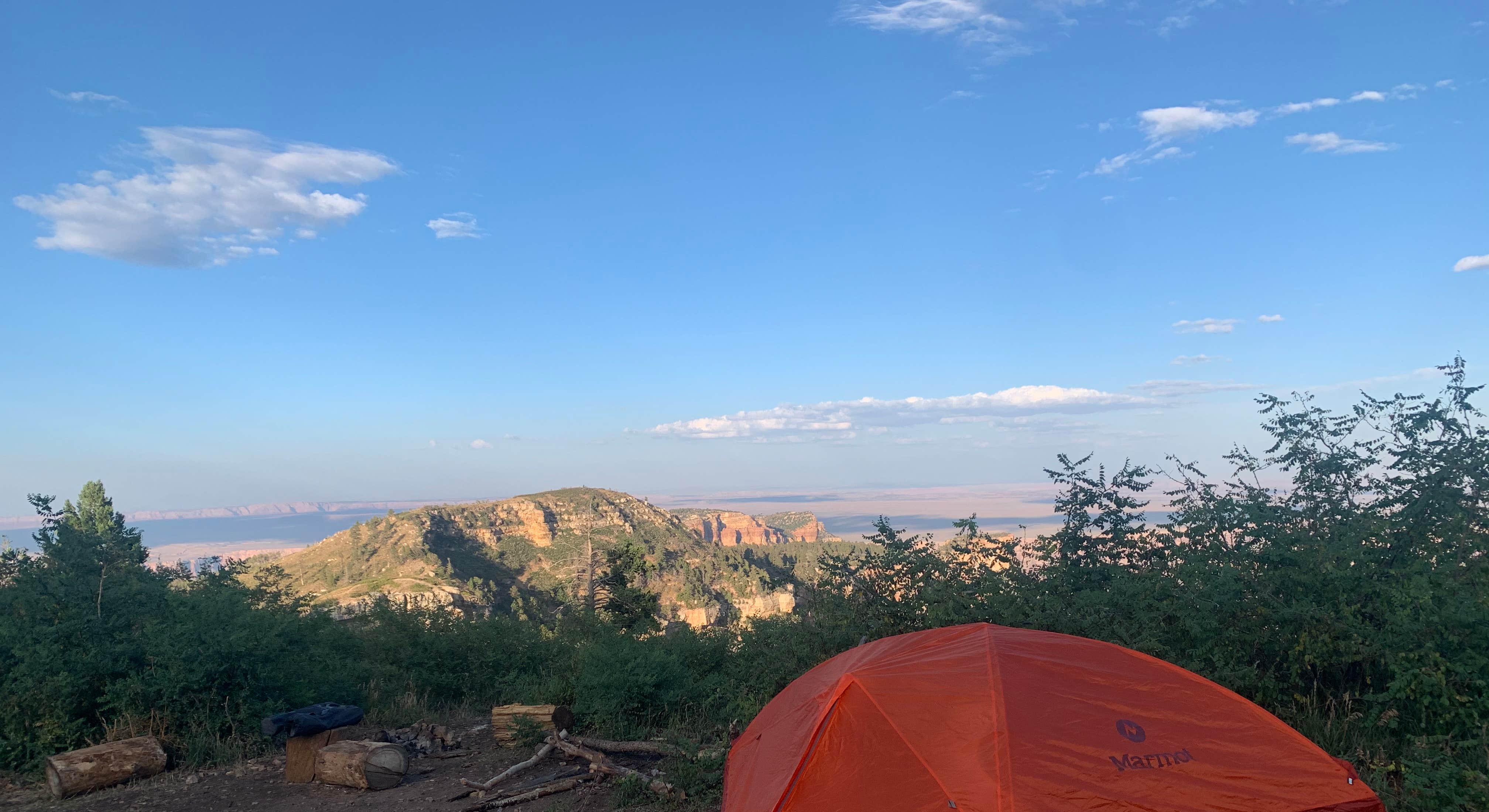 Photo by Kate L
Responsible Camping Practices 
Leave No Trace in Grand Canyon
Grand Canyon's backcountry and developed campgrounds both require a thoughtful approach to minimize impact in one of the most visited and most fragile landscapes in the national park system.
Pack It In, Pack It Out:
All trash, food scraps, and gear must leave with you. The inner canyon has no trash collection at backcountry sites -- everything you carry down comes back up. Micro-waste like wrappers and packaging fragments causes long-term damage to canyon soils. At developed campgrounds, use the provided trash and recycling containers. Leave your site cleaner than you found it.
Water Source Protection:
Wash dishes and filter and treat water at least 200 feet from any spring, stream, or creek. Biodegradable soap is still a pollutant in canyon water systems -- use it sparingly and scatter wastewater well away from sources. Bright Angel Creek is a critical native fish habitat; no washing, filtering, or wastewater disposal is permitted within 100 yards of the creek.
Fire Safety:
Follow all fire bans and restrictions -- they are in effect more often than not from June through September. Where fires are allowed, use only the designated fire rings and purchase firewood rather than gathering. Drown any fire with water, stir the ashes, and drown again until cold to the touch before leaving your site or sleeping. A dedicated water jug for fire use is good practice. Burn only wood and paper -- never trash, food packaging, or anything scented.
Wildlife and Leave No Trace Below the Rim:
In the inner canyon, hang or lock away all food, cooking gear, and anything scented in the provided metal ammo cans when not actively preparing meals. Ringtails and ravens will access a day pack left on a picnic table within minutes. Never feed any animal. Stay on the established trail between your campsite and restroom facilities to minimize trail braiding and vegetation damage. The canyon floor ecosystem is extremely slow to recover from human impact.
Waste Management in the Backcountry:
All human waste at non-corridor backcountry sites must be carried out using WAG bags (Waste Alleviation and Gelling bags), available at the Backcountry Information Center. Corridor sites (Bright Angel, Havasupai Gardens, Cottonwood) have flush or composting toilets -- use them. Catholes are not permitted at any designated backcountry camping area in Grand Canyon.
Grand Canyon Frequently Asked Questions 
Can you camp anywhere in Grand Canyon National Park? No. Camping is limited to designated developed campgrounds or permitted backcountry zones. Random dispersed camping is not allowed inside the park boundary. Free dispersed camping is available in adjacent Kaibab National Forest, at least a quarter mile from any water source and following National Forest rules.
Do you need reservations for Mather Campground? Yes, during peak season (March through November) reservations are required and available through Recreation.gov up to 6 months in advance. A limited number of first-come, first-served sites are released daily but typically sell out by late morning. Winter months now also accept reservations online.
Is RV camping available inside the park? Yes. Trailer Village RV Park offers full hookups (water, sewer, 30/50-amp electric) for RVs up to 50 feet. Mather Campground accommodates RVs up to 30 feet without hookups. Desert View also accepts RVs up to 30 feet without hookups during its seasonal operation. For a broader look at Grand Canyon National Park RV camping options, The Dyrt lists both in-park and nearby private campgrounds with hookups.
Are campfires allowed at Grand Canyon? Campfires are permitted in designated fire rings at developed campgrounds when restrictions are not in place. Fire restrictions are common from late spring through early fall -- verify current restriction levels with rangers or at nps.gov/grca before arrival. Gathering any firewood inside the park is prohibited. Trailer Village permits charcoal fires only.
When does the North Rim open? The North Rim normally opens around May 15 and closes October 15 each year. The North Rim Campground is closed for the 2026 season due to damage from the Dragon Bravo Fire. The entire North Rim lodge and services area remains closed while damage assessment and infrastructure work continue. Check nps.gov/grca for reopening news.
Do you need a permit for backcountry camping? Yes, a backcountry permit is required for all overnight stays below the rim and in non-developed areas of the park year-round. Permits are issued through a lottery on Recreation.gov, opening on the 16th of each month for trips starting 4 months later. The fee is $10 non-refundable plus $15 per person per night for below-rim sites. Walk-up permits for last-minute openings are sometimes available at the Backcountry Information Center. See The Dyrt's Grand Canyon backcountry permit guide for full application details.
Is dispersed camping allowed near the park? Yes, dispersed camping is available in Kaibab National Forest, which borders the South Rim. No permit is required, stays are limited to 14 days in any 30-day period, and campers must be at least a quarter mile from any water source and 30 feet or less from an established road or clearing. Popular areas include forest road dispersed camping near Grand Canyon, along Forest Road 302, Forest Road 328, and Fire Road 688. Call the Tusayan Ranger District at 928-638-2443 for current conditions.
How hot does it get in the canyon? Very hot. The inner canyon at Phantom Ranch routinely reaches 100-115 degrees F in July and August -- about 30-40 degrees hotter than the South Rim at the same time. Temperatures rise approximately 5 degrees F per 1,000 feet of descent. Night temperatures at the river stay around 72-78 degrees F in summer, offering minimal relief. Spring and fall are the recommended seasons for inner canyon hiking and camping.
Planning Resources for Grand Canyon
Essential Grand Canyon Links
- The Dyrt Grand Canyon Campground Finder - Reviews and listings for campgrounds in and around the park
- The Dyrt: Grand Canyon Campgrounds Guide - Community-sourced campground tips
- The Dyrt: Grand Canyon Backcountry Permit Guide - Step-by-step permit application
- The Dyrt: Grand Canyon River Permits Guide - Colorado River rafting permit process
- The Dyrt: North Rim vs. South Rim - Comparison guide for choosing your base
- Grand Canyon National Park Official Website - Current conditions, alerts, closures, and regulations
- Recreation.gov - Mather Campground, Desert View Campground, and backcountry permit reservations
- visitgrandcanyon.com - Trailer Village RV Park reservations (Delaware North)
- Grand Canyon River Permits - Private Colorado River trip permit lottery
Grand Canyon Reservation Timeline
| Time Period | Reservation Task | Platform and Details |
|---|---|---|
| 13 Months Before Trip | Book Trailer Village RV Park (full hookups) | visitgrandcanyon.com or 877-404-4614 Book this far ahead for peak summer dates |
| 6 Months Before Trip | Book Mather or Desert View Campground | Recreation.gov (opens 6-month rolling window) Set calendar reminder for exact opening date |
| 4 Months Before Trip | Enter backcountry permit lottery (if applicable) | Recreation.gov lottery opens 16th of month, closes 1st of following month Winners notified on the 2nd |
| 1-2 Months Before | Check for cancellations and secure Tusayan-Montane as backup | Recreation.gov for Mather/Desert View cancellations Recreation.gov for Tusayan-Montane sites |
| 2 Weeks Before | Final cancellation check; verify trail and campground status | Recreation.gov (7-day cancellation policy triggers openings) nps.gov/grca current conditions page |
| Day Before Arrival | Check road conditions, fire restrictions, and water availability | nps.gov/grca alerts page Verify South Kaibab Trailhead water if hiking below rim |
Grand Canyon Camping Checklist
Reservations and Permits:
- Campground reservation confirmation (printed and digital)
- National Park entrance pass or America the Beautiful Pass
- Backcountry permit (if camping below the rim)
- Arizona fishing license and trout stamp (if fishing)
- Vehicle information matching reservation
Water and Heat Safety:
- Water bottles or reservoir (minimum 3-4 liters capacity per person)
- Electrolyte tablets or drink mix
- Wide-brim sun hat and UV-protective clothing
- SPF 50+ sunscreen and lip balm
Camping Gear:
- Tent with rainfly and extra stakes
- Sleeping bag rated for 20-30 degrees F (South Rim nights year-round)
- Sleeping pad with R-value of 3 or higher
- Headlamp with extra batteries
- Camp chairs
Kitchen Items:
- Camp stove and sufficient fuel (do not count on campfires)
- Food storage containers or use provided metal boxes
- Water filter or treatment for inner canyon creek sources
- Cooler with ice (rim campgrounds have nearby stores)
- Biodegradable soap and wash basin
- Trash bags for packing out waste
Clothing:
- Lightweight layering system for 40-degree F temperature swings
- Rain jacket and waterproof pants (monsoon season July-September)
- Sturdy, broken-in hiking boots with ankle support
- Camp shoes or sandals
- Warm hat and gloves for South Rim evenings
Safety and Navigation:
- First aid kit with moleskin and blister treatment
- Offline maps downloaded before arrival
- Emergency whistle
- WAG bags for non-corridor backcountry use
- Prescription medications
Planning carefully, managing water and heat, and respecting the park's permit systems and regulations will make a Grand Canyon camping trip one of the most memorable outdoor experiences in the national park system. Whether you are watching the canyon walls change color at sunset from a South Rim site at Mather, waking up to the sound of Bright Angel Creek below the rim, or stargazing from a free dispersed site in the Kaibab pines, Grand Canyon delivers the most to campers who come prepared.