Camping options near Gifford Pinchot National Forest range from developed campgrounds to rustic lakeside sites across elevations from 1,800 to 5,000 feet. Most campgrounds remain accessible from late May through September, with seasonal closures occurring after first snowfall. Summer temperatures typically range between 50-85°F, with cooler nights requiring adequate sleeping gear even during warm months.
What to do
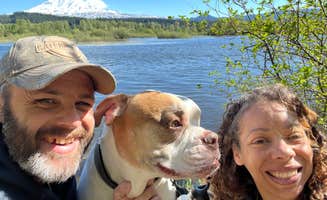
Fishing at Horseshoe Lake: Anglers find productive trout fishing at smaller bodies of water within the forest. "Great for paddle boards and kayaks... the lake is heaven for paddle boarding and kayaking and the view of Mt. Adams from the lake is AMAZING," writes Amanda C. about Horseshoe Lake.
Meteor shower viewing: August offers optimal stargazing conditions at higher elevation campgrounds. "We've camped here several years in a row to watch the perseid meteor shower and it was always so peaceful. the lake is beautiful and perfect for paddling," shares Amber B. about her experiences at Takhlakh Lake Campground.
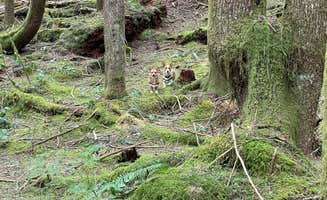
Old-growth forest exploration: Several campgrounds feature ancient trees and lush ecosystems. "The forest is so thick couldn't hear other campers. Vault toilet kept very clean and stocked. Had water a short walk away. Trees here are 600 years old. Huge," notes Ralph M. about Iron Creek Campground.
What campers like
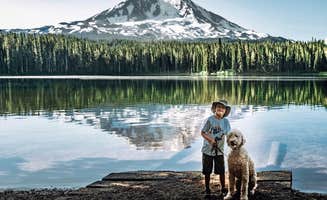
Reflection views: Several lakes offer mirrored views of nearby mountains. "The glassy smooth waters reflect Mt Adam's glacier like a mirror. The campsite we picked was large enough to accommodate our 22 ft trailer plus truck and a Jeep," explains Jason S. about his stay at Elk Meadows RV Park.
Secluded waterfront sites: Some campgrounds offer sites adjacent to water features. "I've never camped at the base of a waterfall before, it was beyond awesome! And the best part like 95% of the places I go is that it's FREE! If I remember right, there were about 5 walk in sites," reports Jess G. about Twin Falls.
Wildlife viewing: Multiple campgrounds offer opportunities to observe forest animals. "We saw elk and heard elk bugling every morning in the meadow. Very quiet and relaxed," writes Richard H. about his experience at Elk Meadows RV Park.
What you should know
Road conditions: Many forest roads require high-clearance vehicles. "It's a bumpy windy road down to the campground. I wouldn't take a car down to the campground without high clearance. Didn't need 4WD to get around but the ruts are deep in certain spots," cautions Juice B. about Twin Falls Campground.
Insect preparation: Mosquitoes can be numerous, particularly near lakes. "I expect bugs to be present while camping, but we all left with at least 20 mosquito bites (even after going through 4 bottles of bug spray) and the nearby hike had so many flies we had to turn around after 2 miles," warns Erica T. about Takhlakh Lake.
Limited facilities: Most remote sites lack running water. "There is no potable water here, the magical lake makes up for having to haul in your own water. No motors allowed on the lake, so you can spend hours just floating around the peaceful lake, with Mt Adams watching over you," explains Bek K. about Olallie Lake.
Tips for camping with families
Huckleberry picking: August offers wild berry harvesting opportunities. "Lots of wild huckleberries to pick when we visited in late July. Clean pit toilets. Drinking water available. Close to ice cave. Fishing at Goose Lake nearby," notes Steve F. about Peterson Prairie Campground.
Water activities: Several lakes provide safe areas for children. "We spent days on the river in the sun. It was truly amazing. The water is cold, clear, and so refreshing," shares Blaine B. about Lower Falls Campground.
Wildlife education: Multiple campground visitors report frequent deer sightings. "There were a couple deer that roamed the campground and wondered in and out of campsites. I had to shoo away 1 so he wouldn't stomp on my little dog while walking through my site," reports Ashley B. about Peterson Prairie.
Tips from RVers
Site selection: Some campgrounds offer better RV access than others. "While this place was beautiful, it's completely infested with mosquitoes. We had a bug canopy so got away from most of them, but I stopped counting my bites after 40. If you come, remember to bring ALOT of bug spray," advises Mary C. about Olallie Lake.
Length limitations: Forest roads often restrict larger RVs. "Our 30 ft TT filled the parking pad but we never unhooked the truck. I think a 40ft would be maximum length," notes Ralph M. about Iron Creek Campground.
Power management: Dense forest canopy impacts solar capabilities. "We use a solar panel to run out refrigerator. The trees were so thick we were on battery the whole time," explains Ralph M. about his experience at Iron Creek Campground.











 Guide
Guide


