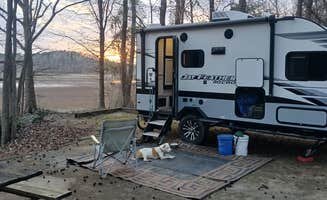
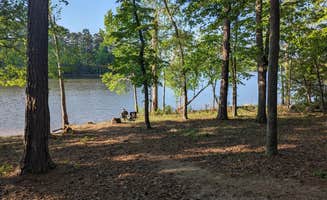
Springfield Campground offers waterfront sites on Lake Hartwell with water and electric hookups at most locations. The lake water level fluctuates seasonally, dropping 3-4 feet during winter months which exposes rock, sand, and dirt shorelines. Camping near Calhoun Falls provides access to multiple lakes including Clarks Hill Lake, Lake Hartwell, and smaller water bodies within state parks. Late summer temperatures regularly exceed 90°F with high humidity, making waterfront campsites particularly valuable.
What to do
Kayaking on Lake Hartwell: Springfield Campground provides lake access though some sites require walking to designated beach areas. According to a camper, "I love this campground. You have to walk to the beach access for kayaking though." Many waterfront sites offer direct boat access, particularly those in smaller coves.
Hiking mountain trails: Parsons Mountain Lake Campground features challenging hiking routes including one that "climbs to parson mountain and is recommended to only people who is fit enough because it is strenuous." The surrounding pine forest provides shade for most hiking routes.
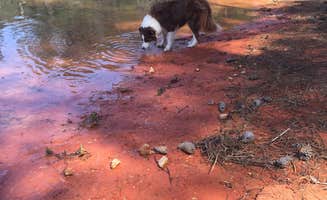
Fishing from shore: Most sites at Watsadler Campground provide direct water access, though rock riprap at some sites makes shoreline fishing challenging. "Lake access but has stone riprap at this site so no shore to land boat. Water down maybe 3 to 4' at winter level rock sand dirt shore line," notes one winter visitor.
What campers like
Privacy between sites: Hester's Bottoms Family Campground features well-spaced sites. "The campsites are all a good size and not right next to each other. A lot are tucked away off the road a little and most are right on the water," reports one reviewer. The campground's multiple loops help distribute traffic and reduce noise.
Clean facilities: Even in primitive camping areas, maintenance standards remain high. At Elijah Clark State Park Campground, "The bathrooms with shower stalls have AC and heat no matter the time of year you go." This climate control proves valuable during summer heat and winter cold snaps.
Affordable waterfront camping: Leroy's Ferry provides basic lakefront sites at minimal cost. A camper notes, "$10 bucks a night, sites spaced far enough apart to be comfortable, waterfront, not over crowded. I think it is worth the drive over some of the more crowded places."
What you should know
Cell service limitations: Several campgrounds have unreliable connectivity. At Hester's Ferry, one camper reported it's "Quiet...no cell service! Hester's Ferry campground is very quiet due to no cell phone service...which we loved!" Prepare for limited communications when camping with pets that might need emergency care.
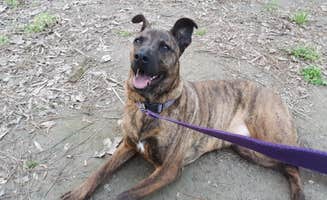
Breed restrictions: Richard B Russell State Park Campground maintains standard leash requirements without breed-specific restrictions. However, other properties enforce stricter rules. One camper reported, "Our week long trip was cut short when staff decided to call law enforcement instead of us when our (non aggressive) dog accidentally got loose. After being there for 3 days they then tell us our bully breed dogs are not allowed."
Limited water sources: At primitive sites, access to potable water requires planning. At Leroy's Ferry, visitors must "bring your own water" as facilities are minimal with "a pump for well water and open-pit latrines" being the only amenities available.
Tips for camping with families
Beach swimming options: Most lakefront campgrounds provide swimming opportunities without lifeguards. Parsons Mountain features "a roped off swimming area that has no life guard but is six foot deep at the most at the back of it. The brim in the lake will nibble at the hairs on your legs if you have any."
Seasonal activities: Mistletoe State Park Campground offers structured programs for children and families. "Free fishing pole for kids," notes one cabin guest. The park maintains stocked fishing areas specifically designed for younger anglers.
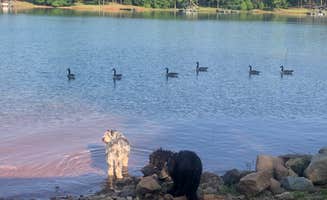
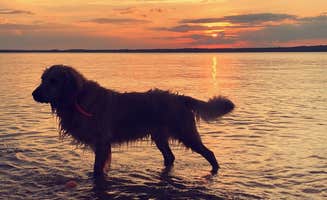
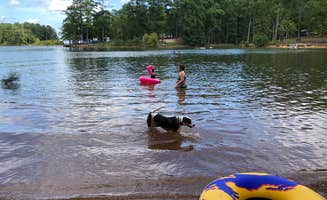
Dog-friendly swimming areas: Despite leash requirements, many waterfront sites allow supervised pet swimming. At Springfield, the small coves provide safer areas for dogs to swim with "decent water access. No problem to Launch the canoe and the sup." These protected areas typically have calmer water than main lake areas.
Tips from RVers
Variable site levelness: Bring adequate leveling equipment to most area campgrounds. At Watsadler, one RVer noted, "Bring leveling blocks. The spot I stayed in required about 4" side to side. Some spots were water view and quite spacious. Other spots were actually kind of awkward."
Water and electric only: Most campgrounds provide partial hookups without sewer connections at individual sites. Springfield has "nice level sites, clean bath house, not full hook up" with a dump station available when departing. During busy checkout periods, dump station lines can become lengthy.
Space considerations: Site dimensions vary widely between campgrounds and within loops. At Springfield, "We stayed on site 7 for 4 nights and then site 68 for 2 nights. Water access wasn't the best on 7, but we enjoyed it." Research specific site dimensions when bringing larger rigs to ensure adequate space.












 Scout
Scout


