Columbia River Gorge National Scenic Area spans 85 miles along the Columbia River with elevations ranging from 100 to 4,000 feet, creating distinct microclimates throughout the region. Summer temperatures average 75-85°F, while spring and fall camping often means dealing with the region's characteristic winds that can reach 35 mph. Campgrounds situated in protective valleys offer more shelter from these persistent gorge winds.
What to do
Historic highway cycling: Access the paved Columbia River Highway Trail from Wyeth Campground, which connects to over 6 miles of dedicated pathway. "Easy access to biking along the Columbia River," notes Elizabeth N., who adds that the "quiet campground is easily accessible from Portland."
Waterfall hiking: Several short trails lead to cascades directly from campgrounds. "There's a wonderful trail and stream to explore right from the campground," writes Dory K. about Wyeth Campground, while at Tucker Park Campground, "the day use and river access from the camping area were lovely and the water was perfect to cool off after a hot day," according to Cerise D.
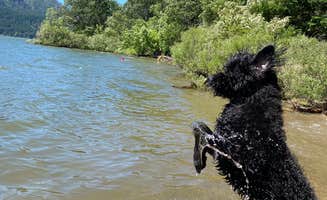
Cold water swimming: Many campers seek relief in the gorge's natural waters during summer months. At Toll Bridge Park, one camper reported "the river babbling close by" with "sandy beaches along the river for your fur companions to cool off," while Tucker Park offers "many places to sit in the water and play and it doesn't move too terribly fast."
What campers like
Private campsites: Several campgrounds offer secluded spots despite their popularity. At Lost Lake Resort and Campground, Katie B. appreciates that "the sites are large and private," while others specifically recommend site D022, which "was very secluded. Could fit at least 2 tents."
Clean facilities: Most campgrounds maintain well-kept amenities. Verizon State Park has "clean bathrooms and showers," and at Cascade Locks KOA, "the facilities were stocked and mostly clean" despite being a busy location. Tucker Park visitors consistently mention "bathrooms and showers were clean."
Fishing access: Several campgrounds offer direct fishing opportunities. Eric P. notes Lost Lake has "nice size trout in this lake that can be caught from the bank if you don't have a boat," while a Tucker Park camper had a local stop by who "said the salmon were biting - he even gave me a lure that he caught a fish on earlier that day."
What you should know
Train noise: Several campgrounds sit near active rail lines. At Cascade Locks KOA, "the freight train runs about every 30 minutes including overnight," with one camper noting "ear plugs provided!" At Viento State Park, "the train tracks are below the campground very loud."
Reservation timing: Popular spots fill quickly, especially on weekends. "Book well in advance. Very popular in the summer," advises one camper about Ainsworth State Park, while at Panther Creek Campground, campers suggest: "It fills up quickly on weekends, so if you don't have a site reserved I highly recommend getting there early."
Variable cell service: Coverage varies significantly between campgrounds. At Lost Lake Resort, "there is no Wi-Fi, Verizon was there but I don't know where. Not at the site. But as we walked around the phone would connect in my pocket." At Timberlake, visitors experienced "poor cell service but good WiFi."
Tips for camping with families
Playground access: Several family-friendly campgrounds include play areas. Tucker Park has "a great playground" and Toll Bridge Park offers "a children's park and covered picnic area." One camper specifically called Cascade Locks KOA "super kid friendly, as-in, there's kids running absolutely everywhere. Pool and playground were fine, too."
Swimming safety: Look for campgrounds with calmer water areas for children. Toll Bridge Park Campground offers "a perfect swimming hole" just under the bridge, while one family reports they "decided to pack up and go camping with no reservations and were able to snag one of the last sites" where they "spent most of the time down by the river."
Wildlife awareness: Prepare children for animal encounters. At Tucker Park, one camper was warned "of the chipmunks on the other end of the camp and how persistent they can be if you leave food anywhere they can get to," requiring proper food storage and supervision.
Tips from RVers
Size limitations: Many gorge campgrounds have strict length restrictions. Wyeth Campground has a "sign at entrance says 30 foot max length for trailers," while at Timberlake Campground & RV, "some of the sites are on the smaller side and a little tricky to back into but doable."
Road challenges: Campground access can be difficult for larger rigs. At Timberlake, "don't be scared away because there are no pull through spots. The management can coach you into the site," while at Lost Lake Resort, one RVer cautions: "DO NOT DRIVE YOUR RV DOWN TO THE STORE. Park at your site or somewhere near it and walk to the store. Not great for large equipment."
Hookup availability: Full-service sites are limited in the gorge area. Ainsworth State Park offers "40 full hook-up sites" making it a popular choice, while Toll Bridge Park provides water and electric, with campers noting they could "enjoy the sound of the river outside my door, cool AC running."














 Legend


