North Lake Reservoir offers free primitive camping sites along a dirt road within the Adirondack Forest Preserve. Located approximately 30-40 minutes from Route 28, campers must navigate a gravel road to reach this remote destination. Temperatures in the Old Forge region range from 70-80°F in summer to below freezing in winter, with July and August being peak camping months when reservations are essential at most established campgrounds.
What to do
Paddling on calm waters: Eighth Lake Campground features two lakes where motorized boats are restricted, creating perfect conditions for kayaking and canoeing. "The lake is gorgeous and pristine. We kayaked and canoed," notes Debbie P., who appreciated the peaceful atmosphere. Canoe and kayak rentals are available at the campground.
Winter camping options: Old Forge Camping Resort maintains winter operations with heated cabins and cottages when most area campgrounds close for the season. "Snowmobiling is the real reason to come here. Dry cabins or cottages with bath and shower are available. Snowmobile trails are accessible from the campground and seasonal rentals are available," reports Carrie H., highlighting the resort's year-round appeal.
Hiking nearby trails: Several campgrounds provide access to trail networks throughout the region. "There are 130 miles of marked and maintained trails within the Moose River Plains complex," writes Carlyne F., noting the extensive recreation opportunities in this less-developed area for campers seeking solitude.
What campers like
Wildlife viewing opportunities: Nicks Lake Campground offers frequent wildlife encounters minutes from downtown Old Forge. "Though just moments away from the heart of Old Forge, Nicks Lake provides a nice balance between the hustle and bustle of Main Street and the tranquility of the Adirondacks," explains Rachel P., adding that "you can catch sight of deer or a bear at any moment."
Private, wooded campsites: Limekiln Lake Campground features spacious sites with natural separation between neighbors. "We had site 270, which was close enough to walk down to the boat launch at night to look at the stars (and the Milky Way!) but a little too far to walk to the beach. Our site was spacious, with room for two cars, 4 kayaks, and two tents," reports Lena L., describing the ample space and tree cover that allowed for multiple hammocks.
Stargazing opportunities: Several campgrounds in the area offer excellent night sky viewing due to minimal light pollution. "As the sun sets and the stars come out, you'll look up and suddenly realize just how small you are as you stare at the heavens and see the Milky Way," writes John E. about Brown Tract Pond Campground, highlighting the exceptional darkness that makes astronomy activities popular.
What you should know
Bear activity varies by location: While bears are present throughout the region, their frequency varies significantly by campground. "Heed the warnings regarding keeping cars and camper locked keep food and cooler secure," advises Becky M. Most campgrounds provide bear-resistant storage lockers or guidelines for food storage.
Limited cell coverage: Most campgrounds have little to no cell service. Golden Beach Campground and similar locations offer true disconnection from digital distractions. "No cell service" is reported at multiple sites, requiring visitors to plan accordingly for emergency communications.
Site conditions vary seasonally: Spring camping often means dealing with mud and standing water, particularly at primitive sites. "The flies are actually pretty horrible - not sure if it's a late year for them or if they're just particularly bad this year, but they were relentless," notes Lena L. about early summer conditions at Limekiln Lake Campground. Black flies are typically worst from mid-May through June.
Tips for camping with families
Beach access: Golden Beach Campground features a sandy swimming area with lifeguard supervision until 6 PM daily. "This was a beautiful place to camp. The water is an amber/gold color and the beaches are sand," explains Dinah V., highlighting the family-friendly water access.
Playground facilities: Several campgrounds offer playground equipment for younger campers. "The grounds are a wonderful option for families, not only hosting a number of amenities (i.e. campers beach, hiking trails), but providing opportunities to observe the local wildlife," explains Rachel P. about Nicks Lake Campground.
Plan for insect protection: Biting insects can be particularly intense in early summer. "We were here in June and there was an invasion of biting flies. There were so many that you couldn't stand still for 5 seconds and it was just not enjoyable," warns Joel M. from North Lake Reservoir, suggesting high-DEET repellents for both skin and clothing.
Tips from RVers
Electrical capacity limitations: HTR Adirondacks (formerly Singing Waters) has reported power supply challenges during peak periods. "We used a surge protector when plugging in to electric. It wasn't long before our power kept kicking off," reports one camper, suggesting careful power management is required.
Site selection for larger RVs: Many campgrounds in the region have limited spaces for larger rigs. "We have a 37ft fifth wheel & fit into our site no problem!" reports Bella S. about Nicks Lake Campground, confirming that some locations can accommodate bigger vehicles despite generally tight conditions.
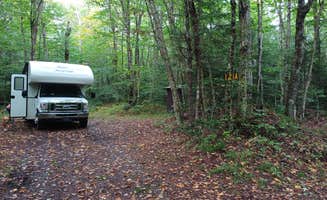
Road conditions to remote sites: Access roads to more primitive campgrounds require careful navigation. "The road to get here is ok, definitely manageable in a smaller RV, you'd just have to take it slow. We did fine in our 26ft class c," notes Laura M. about reaching the more remote camping areas, suggesting smaller rigs have better access options.












 Legend


