Dispersed and primitive camping near Phillipsburg, New Jersey primarily centers around the ridge systems of the Appalachian Mountains with elevations ranging from 300 to 1600 feet. Summer temperatures average 75-85°F during the day and 55-65°F at night, while spring and fall camping seasons experience significant temperature variations requiring adequate gear. Most backpacking sites in the region require hikers to pack out all trash and come prepared with water filtration systems as reliable water sources are limited.
What to do
Hike to panoramic vistas: The Bake Oven Knob area offers backcountry camping access with a short but challenging hike to scenic overlooks. As one visitor notes, "The hike to the overlook is really lovely; short and rocky." Bake Oven Knob serves as both an Appalachian Trail section and day hiking destination.
Explore trail networks: Thunder Swamp Trail System provides extensive hiking options for campers staying at the trailhead. "Trailhead parking was chill for a night. No trouble. Tons of hiking. Went down Saw Creek trail to a marsh," reports one camper who used the Thunder Swamp Trailhead as a base for exploration.
Wildlife observation: The forests surrounding primitive camping areas harbor diverse wildlife including white-tailed deer, black bears, and numerous bird species. Campers frequently report spotting wildlife near dawn and dusk. Bring binoculars for better viewing and maintain proper food storage practices.
What campers like
Hammock camping opportunities: The forested terrain provides good hammock setup options at designated backpacker sites. One camper mentioned, "I was in a hammock and it was a great place for that!" at the Appalachian Trail- Designated Backpacker Campsite 2.
Privacy options: Many backpacking sites offer a balance between community and isolation. According to one review, "There's plenty of space. We camped nearer to others but there are secluded spots too."
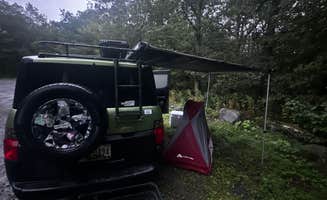
Vehicle access points: Some dispersed camping locations allow overnight parking for self-contained camping. "I've overnighted in my van here a bunch, no problems," reports a regular visitor to the Pennsylvania side of the region.
What you should know
Bear safety requirements: Bear boxes are provided at designated AT campsites but not at all primitive locations. "We'll maintained w bear boxes provided," notes one backpacker at the established sites.
Water planning essential: Limited water sources make advance planning critical. Sunfish Pond serves as a key water source for many campers, with one hiker noting it requires "about a 1 mile round trip" from some camping areas.
Parking considerations: Trailhead parking for overnight hikers is generally available but limited. "It's a gravel parking lot. Plenty of shade. No one bothered me," reports a visitor to Thunder Swamp Trailhead.
Tips for camping with families
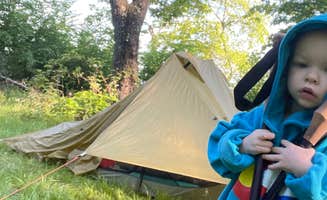
Choose camping areas carefully: Some sites have challenging terrain that might not suit younger children. Look for flatter areas suitable for family tents rather than sloped locations.
Consider shelter proximity: While true shelters are limited, some campers arrive expecting them. "We had thought there was a shelter (there isn't) but it was fine," notes one group after adjusting their plans.
Plan for temperature swings: The ridge systems around Phillipsburg experience significant day-to-night temperature variations, often 20-30 degrees. Pack additional layers for children who may be more sensitive to overnight cooling.
Tips from RVers
Limited RV accommodations: Most primitive camping near Phillipsburg is not suitable for recreational vehicles. Parking lot camping in vans or small conversion vehicles may be possible at certain trailheads with prior research.
Overnight parking guidelines: While some visitors report successful overnight stays in parking areas, official policies vary by location. One regular visitor notes, "You can park and sleep, or hike in and find a place for a tent," at certain trailheads across the Pennsylvania border.
Size restrictions: Any parking lot camping is limited to smaller vehicles. "No big rigs" is a consistent rule throughout the region's primitive camping areas, with most suitable only for vans or truck campers if vehicle camping is attempted.



 Scout
Scout


