Dispersed camping sites near Ironton, Minnesota provide low-cost options for self-sufficient campers throughout the Chippewa National Forest and surrounding state lands. Most sites lack developed facilities, requiring visitors to pack in water and pack out waste. Winter temperatures regularly drop below 0°F while summer highs average 75-85°F, creating distinct seasonal camping experiences across the region's mixed conifer and hardwood forests.
What to do
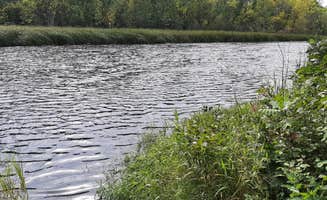
Paddling access points: Paul Bunyan Trail Canoe Campsite offers excellent water entry for canoes and kayaks. "My middle son and I did a bike packing trip on the Paul Bunyon Trail, we rode up from Crow Wing and stayed at this little gem for the night. Got there around 3PM, set up camp and then rode into Pine River for his birthday dinner," shares Brittany.
Winter cross-country skiing: The trails around Shingobee Recreation Area are groomed for winter recreation. Amy G. notes that "in the winter, this trail is groomed for Cross Country Skiing, so it would be super accessible as a camp if you were skiing."
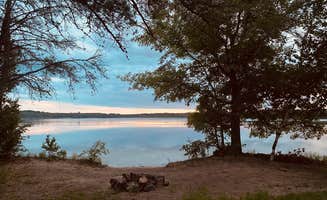
Wildlife observation: Many primitive camping areas provide natural habitat viewing. At Spider Lake Trail, one camper reports "lots of beaver activity as well when circling the near by lake" and the site "overlooks a tiny little lake with bird life."
What campers like
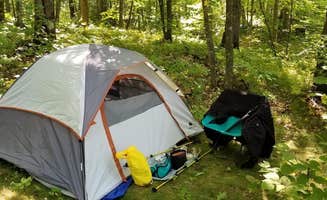
Private, secluded spots: Several forest roads offer pull-offs that provide surprising solitude. At Rum River State Forest, Skip H. discovered "the most secluded I could find. It was through a ditch and up a small hill and set back in the woods."
Cell connectivity: Despite remote locations, some sites have surprisingly good connectivity. Erin G. reports at Rum River State Forest Dispersed that "the cell service with Verizon is good enough to stream videos and work on your laptop with ease."
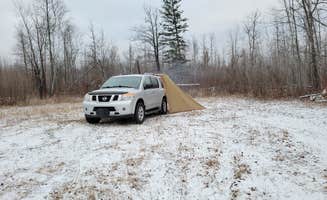
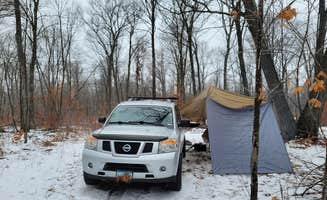
Natural soundscape: The absence of urban noise allows for unique nature sounds. Johnny H. shares from his winter camping experience: "I did hear wolves for the first time. They were howling after sunset. A little creepy, camping alone. But, I don't suspect they'd come too close."
What you should know
Road conditions vary seasonally: Many access roads become challenging in winter or after rain. At Hill River State Forest, Samuel C. advises "I made it fine with 2wd, just take it slow."
Limited amenities: Most dispersed sites have minimal to no facilities. As Rick M. notes about primitive camping near Ironton: "No potable water, grey dump, nor trash cans, but it's rugged wilderness along a gravel road with plenty of space to park."
Peak seasons: Summer weekends and fall hunting season see increased usage. "There aren't too many people in the area, even on a Sunday in July," reports Erin G. about Rum River State Forest Dispersed.
Insect awareness: Ticks and mosquitoes are common in warmer months. Joni Z. observed at Mabel Lake: "There is a large puddle and so many mosquitos."
Tips for camping with families
Beginner-friendly options: Some sites are ideal for introducing children to primitive camping. Amy G. recommends Shingobee: "If you have little ones that you are trying to 'wean' into camping, this would be a great place to take them to get a feel for the woods."
Multi-activity sites: Locations with both camping and recreation options work best for families. At Mabel Lake State Dispersed, Joni Z. found "a free dispersed camping site in the state forest with lake access. Large enough for multiple campers or a small group. There are four rings and a picnic table as well as a sandy boat launch."
Weather preparation: Temperature swings can be significant even in summer. Bring layers and appropriate shelter for all conditions, especially when camping with children.
Tips from RVers
Pull-through accessibility: Some dispersed sites can accommodate larger rigs. Ronney P. reports at Rum River State Forest Dispersed that there are "pull off sites big have a 37 ft fifth wheel no problem nice an quiet."
Site selection strategies: Finding level spots off forest roads requires planning. Skip H. advises that at Hill River State Forest, "I wouldn't recommend any trailers unless you have 4x4 and the trailer is set up for offroad. Ideally, this is a better straight vehicle spot."
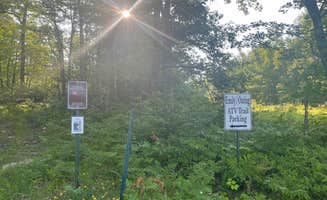
Overflow options: When primary sites are full, several parking areas allow overnight stays. Alexandra T. notes that at Shingobee Recreation Area, "You can park overnight in the lot by the trailheads in your RV to camp or you can hike in."





 Guide
Guide


